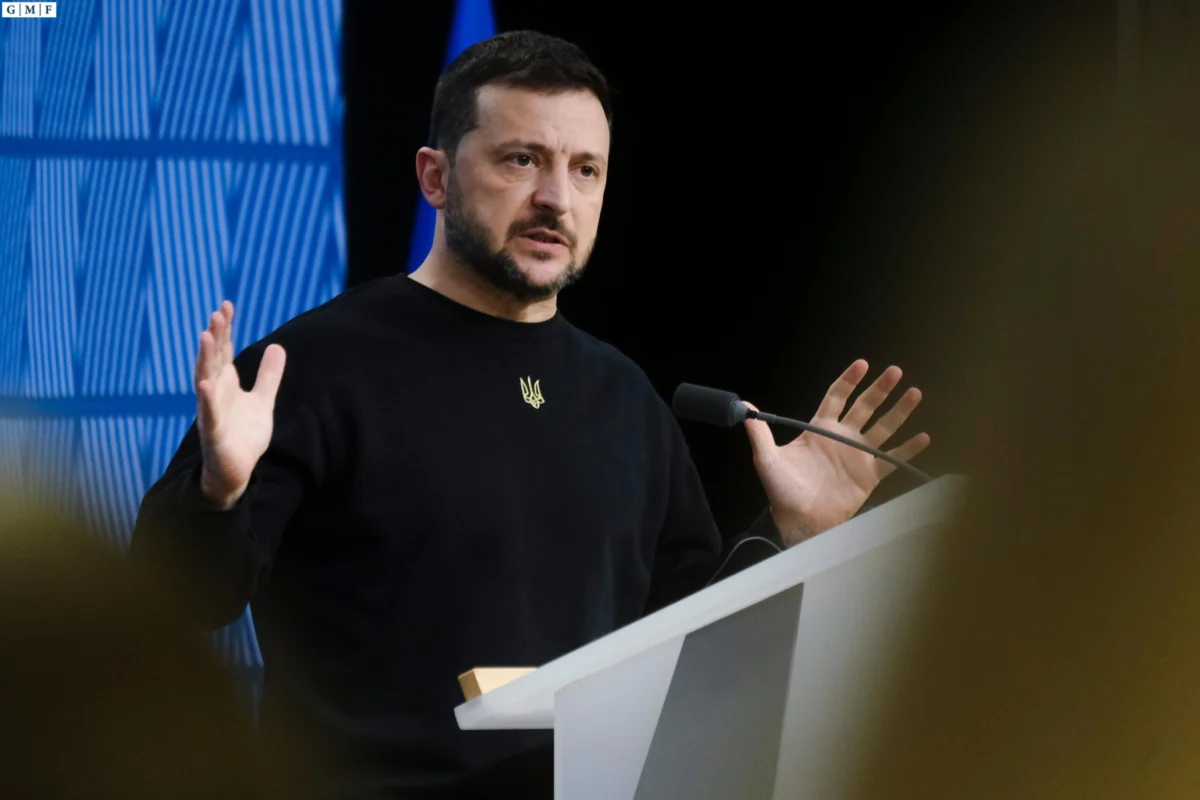
In keeping with Ukraine’s constitutional system, the July 14 dismissal of Prime Minister Yuliia Svyrydenko by President Volodymyr Zelenskyy triggered the automatic resignation of the entire Cabinet of Ministers, setting off a period of intense uncertainty regarding the nation’s executive stability. While President Zelenskyy framed the move in a cryptic social media post two days prior as a necessary shift in "political strategy," the lack of a detailed, transparent rationale from the Office of the President has left both domestic stakeholders and international observers questioning the internal mechanics of the Ukrainian government.
This sudden vacuum of communication is, in many respects, the most critical aspect of the story. It highlights a recurring pattern in which significant executive personnel changes are orchestrated unilaterally from the Office of the President, often bypassing substantive deliberation within the Verkhovna Rada (Ukraine’s parliament), civil society, or the broader public sphere. As the country remains locked in a grueling existential conflict, the opacity of these decisions raises urgent questions about the resilience of Ukraine’s democratic institutions during wartime.
A Chronology of the Executive Overhaul
The reshuffle was not an isolated event but rather the culmination of mounting pressures within the executive branch. The process began in earnest on July 12, when President Zelenskyy signaled a major change in direction through brief public statements. By July 14, the formal resignation of Prime Minister Svyrydenko triggered the dissolution of the entire cabinet.
The most controversial element of this transition was the removal of Defense Minister Mykhailo Fedorov. His dismissal arrived only six months into his tenure—a period characterized by high-stakes institutional reform. Fedorov had been spearheading a modernization campaign designed to transform the Ukrainian military from a legacy force into a digitized, high-efficiency fighting machine. His departure at the precise moment these reforms were shifting from the design phase to full-scale implementation has caused significant friction among military analysts and strategic planners.
For two days, the silence from the presidential office created a narrative void. It was only on July 16, amidst growing public protest and mounting pressure from media outlets, that President Zelenskyy offered a more comprehensive explanation. During a joint press conference with British Prime Minister Keir Starmer, Zelenskyy cited a fundamental breakdown in communication between the Ministry of Defense and Commander-in-Chief Oleksandr Syrskyi. The President characterized the split as a failure of unity, noting that the two leaders were allegedly incapable of cooperating without his personal intervention.
Strategic Implications and Defense Continuity
The dismissal of Minister Fedorov has sent shockwaves through Ukraine’s international defense partnerships. Among those expressing concern was Andrius Kubilius, the European Commissioner for Defense and Space. In a statement following the announcement, Kubilius described the move as entirely unexpected, emphasizing that the continuity of existing agreements regarding defense funding and drone manufacturing is non-negotiable.
The implications for the battlefield are significant. In modern warfare, the integration of technology—specifically drone warfare and command-and-control systems—is the difference between parity and defeat. Fedorov’s efforts were central to this integration. By removing a key architect of these programs during an active campaign, the government risks losing momentum in the technological arms race against Russia.
Furthermore, the "unity" argument presented by President Zelenskyy warrants scrutiny. In a democratic state, the relationship between the Minister of Defense and the Commander-in-Chief is governed by institutional protocols, not merely interpersonal chemistry. If these two pillars of national security cannot coordinate, analysts suggest the issue may be systemic rather than personal. By removing the minister rather than restructuring the command hierarchy, the executive office may be masking deeper issues of governance or civilian-military relations that are likely to persist regardless of who occupies the cabinet seats.
The Erosion of Institutional Memory
A persistent pattern has emerged throughout the conflict: the presidency initiates, executes, and justifies personnel changes with little regard for the formal parliamentary process. This approach carries long-term risks for the integrity of the state.
- Institutional Memory: Frequent, abrupt changes to the cabinet drain the government of institutional memory. When ministers are replaced every few months, the learning curve inherent in managing massive government portfolios—such as defense, energy, or economic recovery—creates a perpetual state of transition.
- The "Competence Tax": When capable officials are removed without clear cause or underperformance, it sends a dangerous signal to the civil service. It suggests that political loyalty, or the lack of personal friction with the president, is more highly valued than bureaucratic competence or long-term strategic success.
- Credibility with Donors: Ukraine’s survival depends on the continued financial and military support of the European Union, the United States, and other international partners. These partners require predictability. When the cabinet is reshuffled without warning, it forces foreign governments to reassess the stability of their counterparts, potentially complicating the delivery of vital aid.
The View from the Verkhovna Rada and Civil Society
While the constitutional framework allows for the President to dismiss the Prime Minister, the broader role of the Verkhovna Rada is intended to serve as a check on executive power. However, observers note that the parliamentary process has increasingly become a rubber stamp for presidential decisions.
Civil society organizations in Ukraine have been vocal about the need for greater transparency. Having successfully campaigned for the protection of anti-corruption agencies last year, these groups now argue that wartime necessity is not a blank check for administrative opacity. There is a growing consensus among political scientists that a government of national unity—which includes a broader coalition of political actors—would be far more effective than the current top-down, opaque model.
The Path Forward: Accountability and Inclusion
The events of mid-July serve as a stark reminder to the Zelenskyy administration: the pool of talent willing to serve in the Ukrainian government is not infinite. As the war continues to exact a heavy toll on the nation’s human capital, the ability to attract and retain high-integrity, professional figures is essential.
If the presidency continues to offer positions under terms that prioritize sudden turnover over long-term development, it will likely find it increasingly difficult to recruit top-tier talent. The individuals best suited for these roles are often those who require a clear mandate and the stability to implement long-term policy—neither of which is currently guaranteed.
To restore confidence, the government must move toward a more consultative approach. This involves:
- Substantive Debates: Engaging the Verkhovna Rada in open sessions regarding the rationale for cabinet changes.
- Clear Benchmarking: Establishing public-facing key performance indicators (KPIs) for ministerial roles, so that dismissals can be tied to objective performance data rather than vague assertions of "lack of unity."
- Inclusive Governance: Expanding the coalition to include diverse political perspectives, which would foster a sense of national ownership over the government’s strategic decisions.
Conclusion: A Pivotal Moment for Ukrainian Governance
The resignation of the Cabinet of Ministers is more than just a bureaucratic reshuffle; it is a signal that the administrative structure of the Ukrainian state is under significant strain. While the President has the authority to change his team, the manner in which he does so impacts the legitimacy of the government in the eyes of the Ukrainian people and their international allies.
As Ukraine prepares for the next phase of the war, the demand for institutional stability is growing. The lessons of this week suggest that opaque, abrupt personnel decisions are no longer tenable in a political landscape that demands resilience and accountability. Whether the President will heed these calls for a more inclusive, stable, and transparent government remains to be seen. However, the current trajectory suggests that the window for meaningful institutional reform is closing, and the stakes for the nation’s future could not be higher.
Ultimately, the goal of any government during a time of crisis must be the preservation of its institutions. By prioritizing institutional continuity over unilateral control, the administration can ensure that the resilience shown by the Ukrainian people on the battlefield is matched by the strength and integrity of the government in Kyiv.