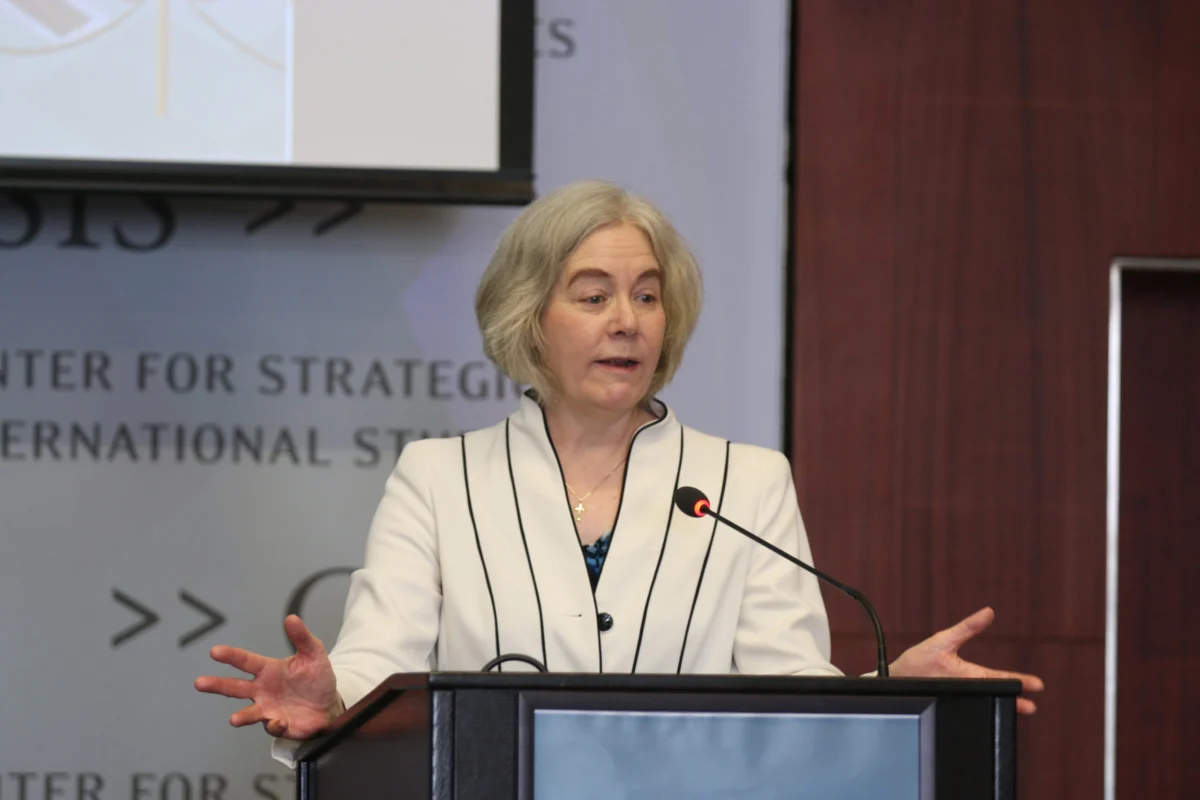
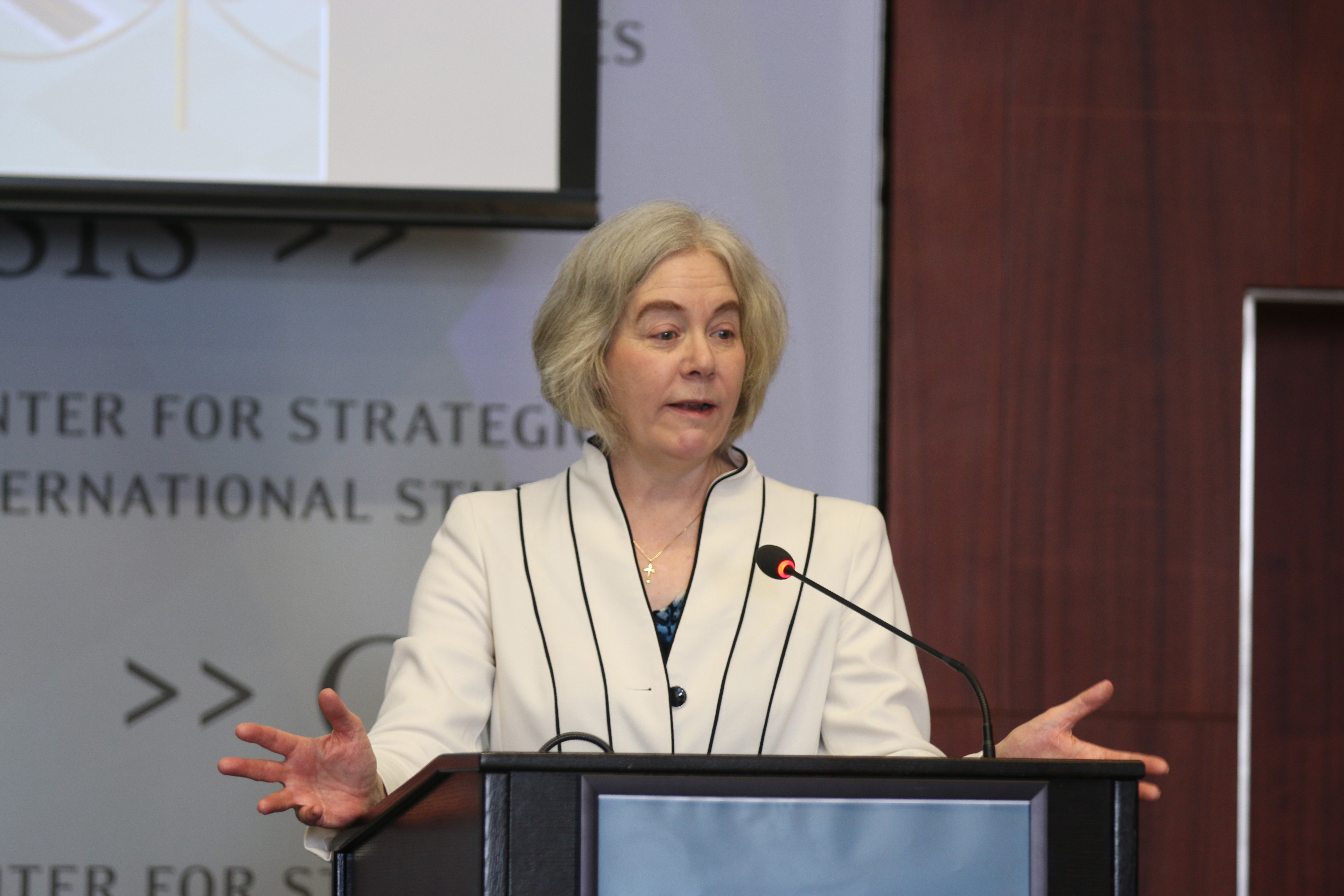
The Center for Strategic and International Studies (CSIS) hosted a pivotal discussion on March 10, 2016, featuring Dr. Ellen Williams, Director of the Advanced Research Projects Agency-Energy (ARPA-E) within the U.S. Department of Energy. The event, held from 10:00 to 11:30 a.m. EST, centered on the evolving landscape of energy technology incubation, with a primary focus on modernizing the nation’s electric grid, advancing grid storage capabilities, and examining new federal frameworks like Mission Innovation.
The session brought together prominent energy policy experts. Sarah Ladislaw, then Director and Senior Fellow of the CSIS Energy and National Security Program, provided the introductory remarks, framing the critical nexus between technological research, market deployment, and national security. The discussion was moderated by Frank O’Sullivan, Senior Associate with the CSIS Energy and National Security Program and Director of Research and Analysis at the MIT Energy Initiative.
Main Facts and the Role of ARPA-E in Modern Energy
At the heart of the March 10 forum was the ongoing mission of ARPA-E to fund high-risk, high-reward research projects that have the potential to fundamentally transform energy production, distribution, and consumption in the United States. Established to bridge the gap between basic laboratory discoveries and commercial market adoption, ARPA-E has historically targeted transformative technologies that traditional venture capital or private-sector research and development departments often bypass due to technological uncertainty or lengthy deployment horizons.
During her keynote presentation, Dr. Williams emphasized that while the United States has made substantial strides in renewable energy generation—particularly in wind and solar power—the supporting infrastructure has struggled to keep pace. The physical electric grid, largely built in the mid-20th century, faces unprecedented stress from decentralized power generation, fluctuating loads, and increasing weather-related disruptions associated with climate change.
Dr. Williams highlighted that solving the challenges of grid management and long-duration energy storage are foundational prerequisites for achieving deep decarbonization across the broader economy. Without advanced power electronics, dynamic grid management software, and cost-effective storage solutions, integrating higher percentages of intermittent renewable energy sources into the baseline power supply remains technically complex and economically inefficient.
Background Context: The 2016 Energy Landscape
The 2016 policy environment was defined by a shifting global consensus on climate change and clean energy investment. Just months prior, in December 2015, the international community adopted the Paris Agreement at the UNFCCC Conference of the Parties (COP21). Concurrently, world leaders launched "Mission Innovation," a global initiativepledging to dramatically accelerate public clean energy innovation to address global climate challenges, provide affordable energy to consumers, and create commercial opportunities.
Within the United States, the Department of Energy faced the dual mandate of reducing carbon emissions while maintaining grid reliability and national security. Traditional grid infrastructure was increasingly viewed as a vulnerability—susceptible to both physical failures and cyber threats. Consequently, agencies like ARPA-E were tasked with prioritizing programs that enhanced grid resiliency through decentralized architecture, automated restoration capabilities, and advanced analytics.
Dr. Williams’s address at CSIS served as a comprehensive window into how the federal government intended to deploy its research budget for fiscal year 2016 and beyond, aligning domestic agency goals with the newly minted international commitments under Mission Innovation.
Chronology of the Event and Key Programmatic Highlights
The morning event followed a structured format designed to unpack technical challenges and policy implications systematically:
- 10:00 AM – Introduction: Sarah Ladislaw opened the forum by outlining the geopolitical and economic dimensions of energy security, emphasizing that technological innovation is the cornerstone of modern energy policy.
- 10:15 AM – Keynote Address by Dr. Ellen Williams: The ARPA-E Director detailed the agency’s strategic vision for 2016. She showcased specific programmatic successes and outlined upcoming funding solicitations aimed at grid modernization and storage.
- 10:45 AM – Moderated Discussion: Frank O’Sullivan led a conversation probing the hurdles of scaling laboratory breakthroughs to commercial deployment, touching upon regulatory barriers, utility incentives, and capital costs.
- 11:15 AM – Q&A Session: Attendees, including representatives from industry, academia, and government, engaged the panel on specific technical parameters of grid-scale batteries and high-voltage direct current (HVDC) transmission.
- 11:30 AM – Conclusion: The formal program concluded, leaving participants with a clearer understanding of federal research priorities.
Supporting Data: The Grid and Storage Imperative
To contextualize the urgency of Dr. Williams’s remarks, energy analysts point to several structural shifts occurring within the U.S. power sector during the mid-2010s:
- Penetration of Renewables: Utility-scale solar and wind generation experienced exponential growth, growing from a negligible fraction of the U.S. electricity mix in the late 2000s to supplying nearly 8% of total generation by 2016, creating localized balancing challenges for grid operators.
- Storage Cost Reductions: Driven heavily by consumer electronics and automotive investments in lithium-ion technology, battery storage costs fell by more than 70% between 2010 and 2016, though stationary grid-scale storage still required specialized chemistries and longer cycle lives to be economically viable across diverse utility markets.
- Aging Infrastructure: According to American Society of Civil Engineers (ASCE) assessments from the era, much of the U.S. transmission and distribution network was operating past its designed service life, necessitating hundreds of billions of dollars in replacement and modernization capital.
ARPA-E’s portfolio during this period directly targeted these metrics. Programs such as GRIDS (Grid-Scale Rampable Intermittent Dispatchable Storage) and baXter aimed to develop storage technologies capable of discharging power over multiple hours or days, alongside programs focused on solid-state energy materials and power flow controllers.
Official Responses and Stakeholder Perspectives
The strategic direction outlined by Dr. Williams drew favorable responses from the broader energy research community, while also sparking critical discussions regarding market readiness.
The Federal Viewpoint:
The Department of Energy maintained that targeted federal intervention through high-risk research is essential to maintain American technological competitiveness. Dr. Williams frequently emphasized that ARPA-E acts as a catalyst, stepping in where private markets perceive excessive technical risk, thereby seeding industries that eventually attract multi-billion-dollar private investments.

Industry and Academic Analysis:
Moderator Frank O’Sullivan and other energy researchers from institutions like MIT noted that while ARPA-E excelled at funding "spark" innovations, the real bottleneck in the American energy ecosystem lay in the "valley of death"—the difficult phase between proving a technology works in a pilot facility and convincing risk-averse utility regulators and private investors to deploy it at scale.
Experts agreed that overcoming regulatory inertia at the state Public Utility Commission (PUC) level was just as important as engineering breakthroughs in material science or battery chemistry. Without regulatory frameworks that reward utilities for adopting innovative grid technologies, advanced hardware risks remaining confined to academic papers and laboratory shelves.
Broader Impact and Long-Term Implications
The initiatives discussed during the March 2016 CSIS forum cast a long shadow over the subsequent evolution of the American power sector. The emphasis on grid flexibility and storage laid the groundwork for subsequent regulatory milestones, such as Federal Energy Regulatory Commission (FERC) Order 841, which removed barriers to the participation of electric storage resources in organized wholesale electricity markets.
Furthermore, the integration of Mission Innovation commitments cemented a multi-lateral framework for clean energy research sharing among major global economies. The technological priorities identified by Dr. Williams—namely, advanced power flow control, situational awareness software for grid operators, and next-generation storage—matured over the subsequent decade to become foundational pillars of modern decarbonization strategies.
As the United States continues to navigate the complexities of transitioning to a net-zero carbon economy, the foundational debates hosted at CSIS in 2016 regarding how to innovate, finance, and regulate the electrical grid remain profoundly relevant. The dialogue underscored that the energy transition is not merely a challenge of generating clean power, but an intricate engineering and economic puzzle centered on how power is managed, stored, and delivered across an increasingly dynamic network.