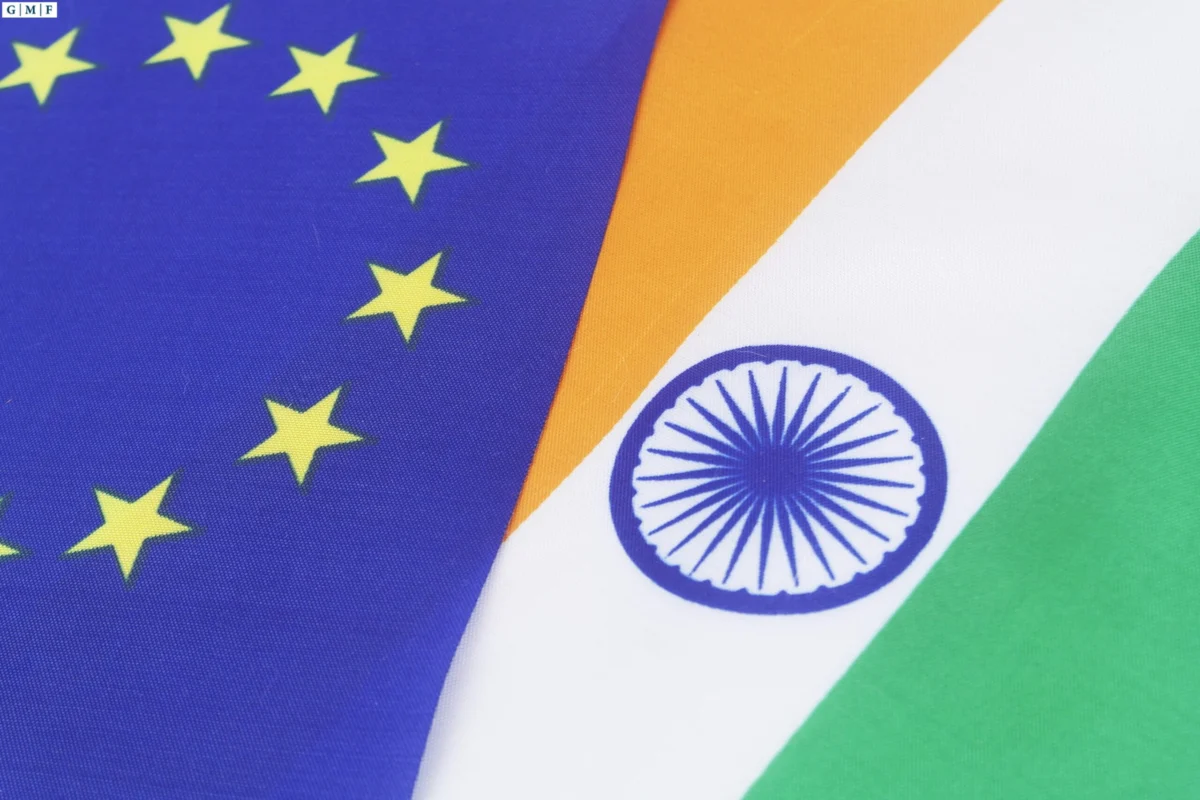
The India-Middle East-Europe Economic Corridor (IMEC) has transitioned from an ambitious vision unveiled at the 2023 G20 summit in New Delhi into a central pillar of European strategic policy. Following the systemic economic disruptions triggered by the 2026 Hormuz crisis, the European Union has accelerated its pivot from a model of efficiency-driven global trade to one defined by strategic de-risking. This shift represents a fundamental transformation in how Brussels perceives connectivity, viewing infrastructure not merely as a commercial logistics endeavor, but as a critical instrument of statecraft designed to neutralize the coercive power of regional gatekeepers.
The Chronology of Disruption
The necessity for IMEC has been forged in the fires of successive global shocks that have redefined the international order over the last six years. The sequence of events leading to the current policy landscape includes:
- 2020–2022: The COVID-19 pandemic exposed the structural fragility of just-in-time global supply chains, prompting the first wave of "near-shoring" discussions within the European Commission.
- February 2022: The Russian invasion of Ukraine rendered the Northern Corridor—the primary rail artery connecting China to Europe via Russia—commercially and politically untenable. This forced a sudden, costly decoupling from Eurasian rail transit.
- 2023–2024: The Gaza conflict and the subsequent destabilization of Red Sea shipping lanes demonstrated that maritime chokepoints are increasingly susceptible to asymmetric warfare.
- Early 2026: The Hormuz crisis, characterized by the de facto closure of the Strait of Hormuz to critical energy shipments, served as the definitive "wake-up call" for the European energy market.
This string of crises effectively dismantled the post-Cold War assumption that global trade routes would remain open, safe, and governed by neutral market forces. For European policymakers, the lesson was stark: relying on a singular route—whether the Suez Canal or the Trans-Siberian rail—is no longer a strategic risk, but a systemic liability.
The Hormuz Shock and the Pivot to Diversification
The 2026 Hormuz crisis proved to be a watershed moment for the European economy. While Europe’s direct reliance on crude oil passing through the Strait of Hormuz has decreased significantly compared to Asian markets, the shock to Liquefied Natural Gas (LNG) and refined petroleum products was immediate. The resulting surge in energy prices, compounded by the rising insurance premiums for maritime freight, forced an urgent re-evaluation of Europe’s connectivity portfolio.
Current data from the International Energy Agency (IEA) indicates that the disruption in seaborne fuel transport caused a 14% inflationary spike in European transport costs during the second quarter of 2026. This has prompted the European Council to elevate "freedom of navigation" and "corridor redundancy" to first-tier strategic priorities. IMEC, which was once viewed by skeptics as a geopolitical vanity project, is now being treated as an essential hedge against the vulnerability of the maritime status quo.
Strategic Objectives: Power Through Options
The operative logic behind Europe’s current connectivity agenda is "power from options." By establishing a network of multimodal routes, the European Union aims to lower the credibility of threats from any single regional actor. If a maritime bottleneck emerges, having a functional, albeit higher-cost, land-sea corridor through the Middle East provides a "pressure relief valve" that prevents total supply chain paralysis.
This strategy is not about replacing the Suez Canal, which remains the backbone of global maritime trade, but about building a portfolio of alternatives. This portfolio includes:
- The Middle Corridor (Trans-Caspian): Focuses on central Asian connectivity, intentionally bypassing Russian territory.
- IMEC: Focuses on deepening integration between the Indian subcontinent, the Arabian Peninsula, and the Mediterranean.
- The Iraq Development Road: Evaluated as a potential secondary interface to the Levant, providing an alternative to existing Israeli-Jordanian transit nodes.
By investing in these routes, Europe aims to lock in interoperable standards and regulatory frameworks. This "regulatory influence" is designed to create a "Brussels effect" in infrastructure, where technical and legal standards for data, energy, and rail are dictated by EU-aligned protocols, thereby reducing the influence of Chinese-led infrastructure standards inherent in the Belt and Road Initiative (BRI).
Challenges to Implementation
Despite the strategic urgency, the IMEC project faces significant hurdles. Infrastructure is, by definition, a long-term investment, whereas the current geopolitical environment is marked by rapid, unpredictable volatility.
Financing and Bankability
A primary concern is the financing gap. Unlike the BRI, which often relies on state-led, bilateral lending, IMEC requires a complex, multi-stakeholder approach involving the Gulf Cooperation Council (GCC) states, India, the United States, and the European Union. Critics note that the EU’s Global Gateway initiative has struggled to match the speed of competitive offers. The stringent due diligence, environmental, social, and governance (ESG) requirements, and fragmented internal governance of the EU can lead to prolonged project lead times.
The Stability Paradox
IMEC’s physical route traverses some of the most volatile regions in the world. The western land-bridge component of the corridor remains tethered to the stability of the Levant. While proponents suggest that linking the corridor to reconstruction efforts in the region could incentivize peace, skeptics argue that it creates new "veto points." Any renewed regional conflict could effectively hold the corridor hostage, transforming it from a strategic asset into a stranded asset.
Official Responses and Political Alignment
Political buy-in for IMEC remains strong, albeit for different reasons across the European bloc. France, Italy, and Greece view the project through the lens of port-centric development, positioning their Mediterranean facilities as the primary gateways for Asian goods entering the European Single Market. Germany, conversely, is prioritizing the corridor as a pathway for "green molecule" imports—specifically green hydrogen and ammonia—essential for the decarbonization of its industrial sector.
While the United States has served as a primary political architect of the corridor, European leaders are increasingly emphasizing that IMEC must serve European interests independent of transatlantic political volatility. By expanding trade ties with India and the Gulf, Europe is effectively insulating itself against potential future US trade policies that could restrict access to traditional transatlantic markets.
Implications for Global Trade
The success of IMEC hinges on three variables that will determine its efficacy over the next decade:
- Regional Durability: The ability of Gulf and Levantine states to maintain working arrangements despite broader regional tensions.
- Operational Optionality: Whether the corridor functions as a flexible network of nodes rather than a single, fragile "flagship line."
- Institutional Consistency: The capacity of European institutions to maintain political attention and consistent funding across successive legislative cycles.
If these conditions are met, IMEC represents a fundamental shift in the global economic architecture. It marks the transition from an era where globalization was assumed to be frictionless and cost-optimized, to an era where the architecture of trade is intentionally designed for resilience and security. For Europe, the goal is not total independence—an impossibility in a globalized world—but the creation of a system where coercion is structurally discouraged and where the continent has the bargaining power to choose its partners, its routes, and its future.
Ultimately, the development of IMEC serves as a recognition that in the 21st century, connectivity is no longer a neutral byproduct of trade; it is the arena where geopolitical influence is won or lost. By treating infrastructure as a strategic portfolio, Europe is hedging against a future of increasing state-led economic warfare, ensuring that while the routes of trade may be disrupted, the flow of essential goods and the strength of its strategic alliances remain intact.