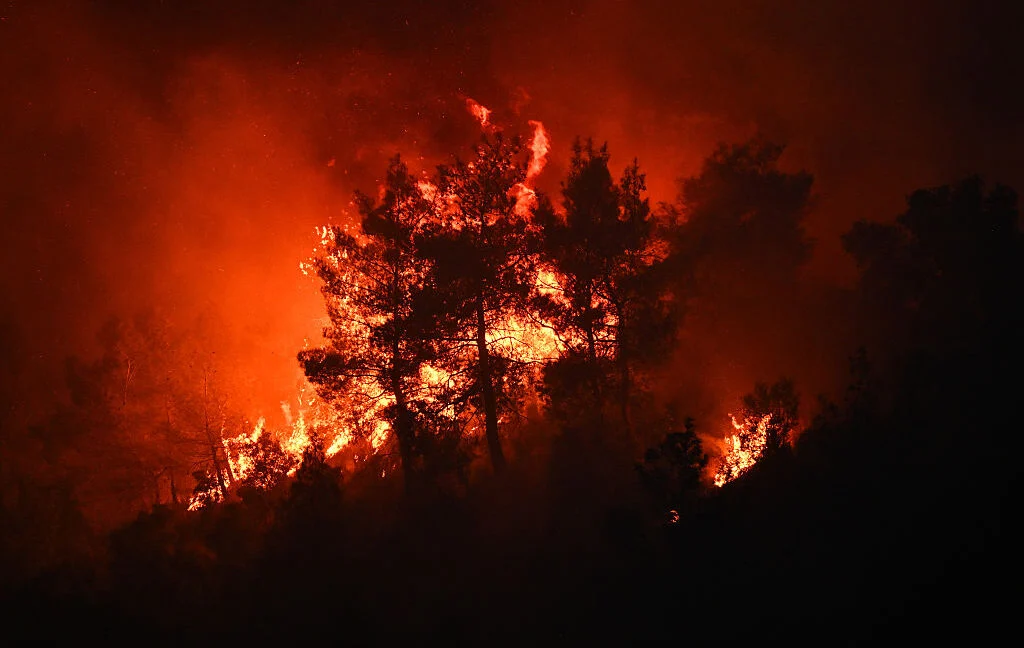
The findings, recently published in the journal Cell Reports Sustainability, offer a nuanced look at how human presence acts as both a spark and a suppressant for the world’s forests, grasslands, and shrublands. As the global community continues to grapple with increasing wildfire threats—evidenced by the catastrophic 2019-2020 Australian "Black Summer" and the recurring, devastating wildfire seasons in the Western United States and beyond—this study provides critical data for policymakers attempting to calibrate fire prevention strategies.
A Natural Experiment in Human Mobility
For decades, ecologists and climate scientists have struggled to differentiate between "natural" fire regimes and those exacerbated by human intervention. Fires are a complex product of environmental conditions—such as vegetation density, fuel moisture, temperature, and wind speed—intertwined with human activity. People contribute to fire risk through accidental ignitions, such as campfires, debris burning, or electrical infrastructure failure, but they also serve as the primary agents of fire suppression, clearing flammable brush and actively fighting blazes that would otherwise expand uncontrollably.
The pandemic lockdowns of early 2020 created a "natural experiment" because they were essentially an uncontrolled, large-scale global shutdown of human movement. Unlike a laboratory setting, the conditions emerged without researcher interference. As mobility plummeted due to government-mandated lockdowns, the researchers were able to compare satellite-tracked fire data from 2020 with the same periods from 2013 to 2019. By utilizing NASA’s Suomi NPP satellite and its VIIRS (Visible Infrared Imaging Radiometer Suite) sensor, which can detect heat signatures at a 375-meter resolution, the team could monitor fire activity with unprecedented spatial precision.
Dissecting the Data: Where the Fire Went Out
The study revealed a net decrease of 12.3 percent in global active-fire detections during the first half of 2020. However, this global average hides significant regional and ecological variations. Forest ecosystems saw the most dramatic decline, with fire activity dropping by approximately 27.7 percent. Grasslands followed with an 8.4 percent reduction. Interestingly, shrublands, savannas, and croplands showed negligible shifts in fire frequency, suggesting that human activity is a primary driver of fire ignitions specifically in forest and grass-dominated environments.
The methodology was robust, particularly regarding the control of weather variables. The researchers noted that, without accounting for local weather, the observed reduction appeared to be a modest 5.8 percent—a figure that lacked statistical significance. Once researchers adjusted for meteorological conditions, such as drought, humidity, and wind patterns, the "true" impact of restricted human mobility became clear. If the 2020 climate had been inherently more fire-prone than previous years, it likely masked the full extent of the human influence, making the 12.3 percent figure a conservative estimate of the net change in ignition and suppression dynamics.
The Paradox of Suppression: Why Some Fires Increased
While the headline figure suggests a decrease in fire activity, the data tells a more complicated story in specific regions. In parts of South America, southern Africa, and northeast Asia, fire activity actually increased during the height of the lockdowns. For instance, Colombia reported a 31.4 percent increase, India saw a 25.4 percent rise, and Honduras experienced a staggering 70.7 percent surge in fire detections.
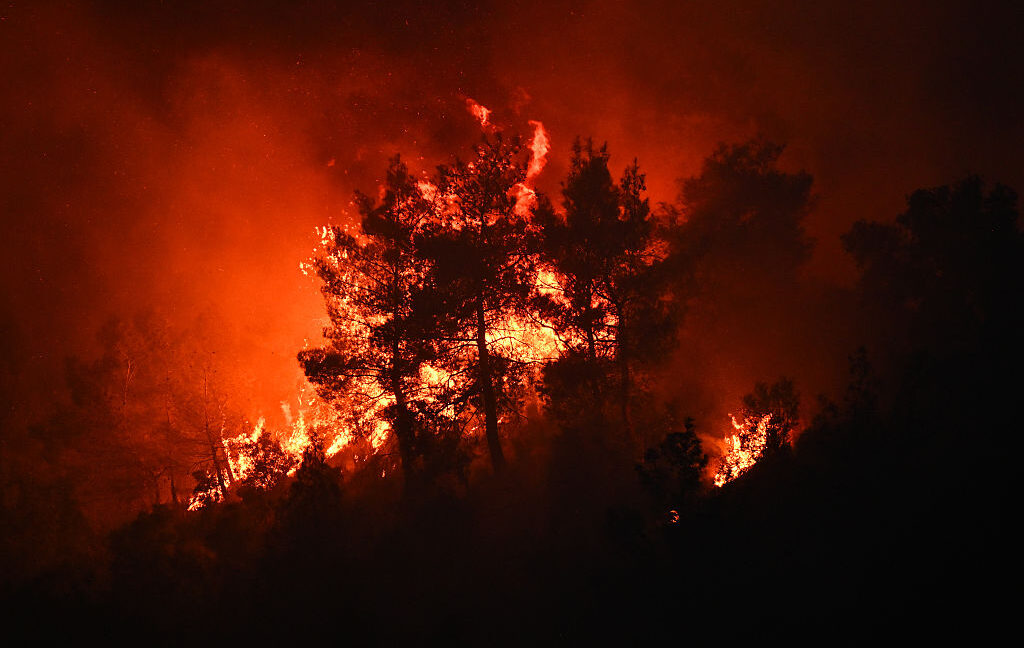
This counterintuitive trend highlights the double-edged sword of human presence. While humans are the leading cause of accidental fire ignitions, they are also the primary force for fire suppression. In many of these regions, the lockdown likely hampered the capacity for forest management and emergency response. With limited mobility, authorities were unable to monitor lands as effectively, and the usual routine of preventative clearing—often conducted via controlled burns—was disrupted. The study notes that in 12 countries where data on prescribed burning was available, the total area subjected to controlled fire management dropped by approximately 50 percent compared to the 2013-2019 average. When researchers excluded these areas from their calculations, the decline in fire activity was significantly more pronounced, underscoring that the lack of prescribed, managed fire played a major role in the overall statistics.
Implications for Global Fire Policy
The study by Wang and his colleagues challenges the notion that there is a "one-size-fits-all" policy for wildfire management. The findings imply that in regions where human ignition is the dominant factor—typically high-traffic forest areas—public awareness campaigns, stricter fire-safety regulations for outdoor activities, and enhanced enforcement of fire bans are likely to yield the most significant results.
Conversely, in regions where fires increased during the pandemic, the data suggests that the breakdown of professional fire management and suppression infrastructure is the primary concern. In these areas, maintaining core firefighting capacity, even during times of social or economic disruption, is critical to preventing large-scale ecological damage.
Chronology and Scientific Context
- 2013–2019: The baseline period used to establish "normal" fire regimes, accounting for seasonal variability and recurring climate patterns.
- Early 2020: The introduction of global, widespread mobility restrictions due to the COVID-19 pandemic. This period provided the experimental window for the study.
- 2020–2025: The period of data analysis and peer review, which saw the validation of satellite imagery against local fire management records.
- 2026: The formal publication of the findings in Cell Reports Sustainability, providing a permanent record of the atmospheric and behavioral shifts observed during the pandemic.
The researchers acknowledged several limitations to their study. Mobile phone location data, while useful for tracking mobility, may not adequately capture the habits of rural populations where network coverage is sparse. Furthermore, by focusing on the first half of the year, the study may have missed the peak fire seasons in regions like the Western United States or parts of the Mediterranean, which experience their most volatile conditions in the late summer and autumn.
Future Projections and Climate Resilience
As the climate warms, the window for fire risk is expanding, and the relationship between humans and the environment is becoming increasingly volatile. The findings presented in this study suggest that future fire-risk projections must integrate human behavior as a dynamic, rather than static, variable. Current models often focus heavily on fuel loads and climate indices; however, this study proves that human mobility is a significant, measurable force in the equation.
The conclusion drawn by Professor Wang—that "a uniform policy is unlikely to work"—is perhaps the most vital takeaway for policymakers. Effective fire management requires a granular understanding of the local "human-fire relationship." In some locations, the priority must be the education of the public to prevent sparks; in others, the priority must be the preservation of institutional capacity to fight fires that have already started.
By analyzing the "pause" in human activity caused by the pandemic, scientists have gained a rare, clear view of the anthropogenic footprint on our planet’s wildfire regimes. This information is no longer just of academic interest; it is a necessary tool for survival in an era where the intersection of human activity and a changing climate is increasingly combustible. The 12.3 percent reduction in 2020 was a temporary anomaly, but the lessons learned from it regarding how, when, and why the world burns will be essential for developing resilient strategies for decades to come.