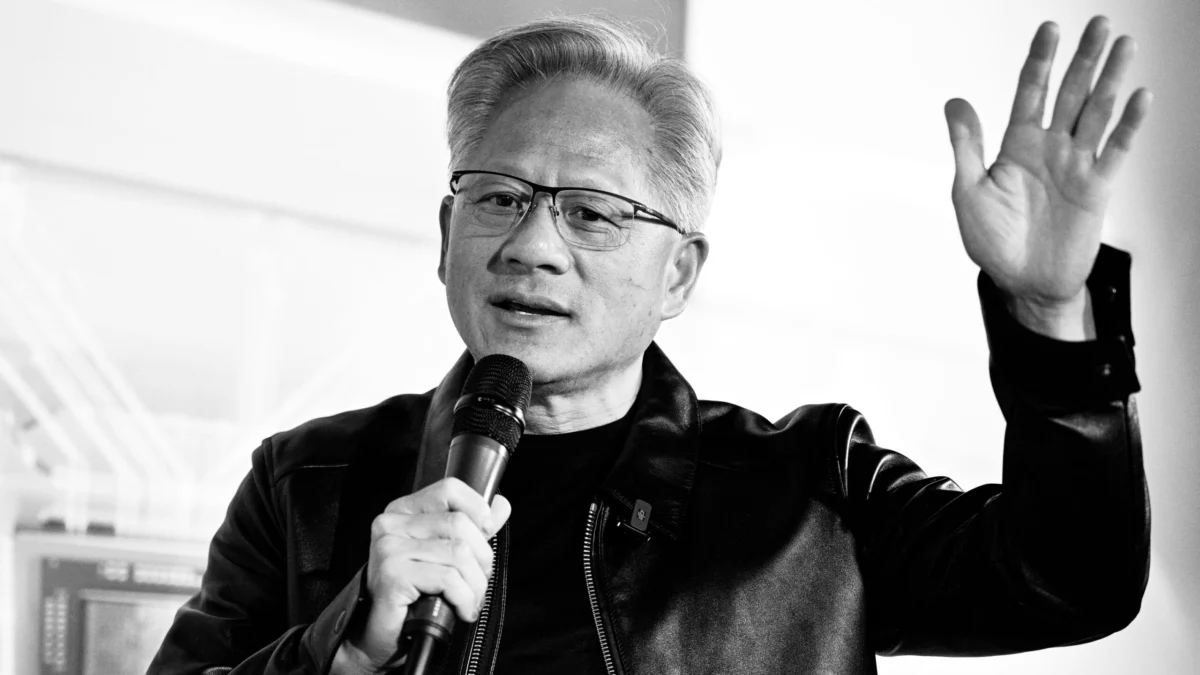
The artificial intelligence industry is facing an unprecedented leadership crisis following the abrupt resignation of Nvidia CEO Jensen Huang. What began as a corporate departure last Thursday has rapidly escalated into a geopolitical and technological showdown, drawing in high-profile tech figures, venture capital heavyweights, and policymakers in Washington. By Monday, a grassroots petition calling for Huang’s immediate reinstatement had amassed over 115,000 signatures, reflecting deep-seated anxieties across the tech ecosystem regarding the future of hardware, geopolitical competition, and the open-source AI movement.
The petition’s signatories represent a powerful coalition within the technology sector. Alongside billionaire entrepreneur Elon Musk and influential Nvidia research teams, the roster features top executives from Hugging Face—the prominent open-source AI model repository—as well as major venture capital firms including Andreessen Horowitz and Sequoia Capital. This unusual alliance highlights the deep financial and strategic ties binding silicon manufacturing, startup incubation, and open-source software development.
The Open-Source Movement and Its Financial Stakes
To understand why venture capitalists and startup founders are fiercely defending Huang, one must examine the economic architecture of modern artificial intelligence. Unlike proprietary frontier models such as OpenAI’s ChatGPT or Anthropic’s Claude, open-source AI models can be downloaded, modified, and executed independently of major cloud providers and closed ecosystem gatekeepers.
Proponents of open-source AI argue that concentrating foundational model development within a handful of monopolistic corporations stifles innovation and leaves researchers, universities, and smaller enterprises at a severe disadvantage. However, this ideological stance is mirrored by clear commercial incentives. Venture capitalists who invest heavily in early-stage startups stand to profit immensely when founders can build applications on cheaper, accessible open-source models rather than paying exorbitant licensing fees to Big Tech.
Jensen Huang had effectively positioned himself as the primary political champion for this faction. As lawmakers in Washington increasingly scrutinized open-source AI over safety concerns—and over anxieties that open weights cede technological leadership to China—Huang argued vigorously that accessible models are vital for maintaining American competitiveness.
A Timeline of Crisis: Resignation, Smuggling Allegations, and New Regulations
The controversy surrounding Huang’s exit extends far beyond personal conduct. His credibility as an industry advocate has been severely tested by a convergence of explosive research findings and new regulatory interventions from the federal government.
The crisis unfolded according to the following timeline:
- Thursday: Jensen Huang resigns from his position as CEO of Nvidia amid intensifying scrutiny. On the same day, former OpenAI researcher Will DePue publishes independent forensic findings suggesting that Chinese AI enterprises have gained access to Nvidia’s advanced Blackwell architecture chips at a scale far exceeding previous estimates.
- Friday: A petition demanding Huang’s reinstatement begins circulating across social media platforms, rapidly gaining traction among startup founders and open-source advocates.
- The Weekend: Signatures swell past 115,000, including high-profile endorsements from Elon Musk, Hugging Face leadership, and venture capitalists from Andreessen Horowitz and Sequoia Capital.
- Monday: The US Department of Commerce announces a sweeping new regulatory framework designed to curb remote access loopholes for advanced AI chips. Simultaneously, US Treasury Secretary Scott Bessent publicly asserts that Nvidia should look outside its current internal ranks for Huang’s successor, significantly dampening hopes of a quick reinstatement.
The Hardware Dilemma: Blackwell Chips and the China Factor
The publication of Will DePue’s findings via Checkpoint Forensics has added a volatile geopolitical dimension to Nvidia’s leadership void. For years, Washington has imposed stringent export controls designed to deny Chinese firms access to America’s most sophisticated semiconductor technology, specifically targeting cutting-edge GPUs necessary for training frontier-scale artificial intelligence models.
DePue’s analysis suggests that despite these trade restrictions, Chinese entities have leveraged indirect channels to acquire substantial quantities of Nvidia’s Blackwell chips. While DePue claimed his findings were corroborated by senior researchers at leading labs like OpenAI and Anthropic, independent technical validation remains pending. Neither Nvidia nor DePue’s research laboratory immediately responded to requests for formal comment.
Crucially, the published data does not establish that Nvidia actively colluded with or knowingly assisted Chinese firms in bypassing export controls. The illicit smuggling of semiconductors is an acknowledged systemic challenge that extends well beyond the operational control of any single manufacturer. Nevertheless, the implication that Nvidia’s hardware ecosystem may have inadvertently fueled the rapid maturation of Chinese AI startups—models that are now increasingly utilized by domestic American firms seeking lower-cost alternatives to OpenAI and Anthropic—places Huang’s legacy in a precarious position.
Throughout his tenure, Huang consistently framed open-source architecture as a national security asset. In a prominent address at the Center for Strategic and International Studies (CSIS) last December, he emphasized that restrictionism could backfire. "Without open source, startups can’t thrive, university researchers can’t do research, you can’t teach AI, scientists can’t use AI," Huang warned, framing open access as the key to winning the global technology race.
Regulatory Tightening: The Department of Commerce Intervenes
Compounding the leadership vacuum, the regulatory landscape for artificial intelligence hardware is undergoing a radical shift. On Monday, the US Department of Commerce unveiled a stringent regulatory update aimed at closing critical loopholes in existing semiconductor export controls.
For months, US intelligence and trade officials have tracked a practice whereby Chinese artificial intelligence laboratories circumvented direct hardware bans by utilizing remote access infrastructure. By renting computing power housed in third-party data centers located in jurisdictions such as Malaysia, Chinese engineers could train advanced models on high-end Nvidia chips without physically possessing the hardware. This workaround was widely recognized as a primary catalyst behind the sudden, high-performance breakthroughs of Chinese open-source models.
The new Department of Commerce rule explicitly targets this remote-access arbitrage. By restricting foreign entities from leveraging restricted US chips via overseas cloud facilities, the regulation threatens to throttle the computational resources powering some of the world’s most widely adopted open-source architectures.
Broader Implications for the AI Ecosystem
Nvidia’s corporate strategy was already deeply intertwined with the open-source community before Huang’s resignation. In September, Nvidia announced a landmark agreement to acquire Hugging Face for nearly $13 billion, cementing its ambition to control both the hardware layer and the primary distribution hub for collaborative AI development. From a strictly financial perspective, Nvidia’s commercial interests align directly with the proliferation of open-source models: every enterprise that builds a proprietary application using an in-house model instead of purchasing API credits from closed-ecosystem providers represents a massive potential customer for Nvidia’s data center GPUs.
However, the intersection of regulatory crackdowns, geopolitical friction, and executive turnover leaves Nvidia at a historical crossroads. The open-source coalition rallied around Jensen Huang not merely because of corporate loyalty, but because his stature gave the movement a powerful megaphone in Washington policy circles.
With Huang sidelined, and with Trump administration figures deeply divided over how to respond to the meteoric rise of Chinese open-source AI, the movement has lost its most effective political strategist. As the Department of Commerce enforces stricter controls and Treasury officials signal a desire for fresh leadership at the world’s most valuable chipmaker, the future of open-source AI—and Nvidia’s dominant role within it—remains profoundly uncertain.