
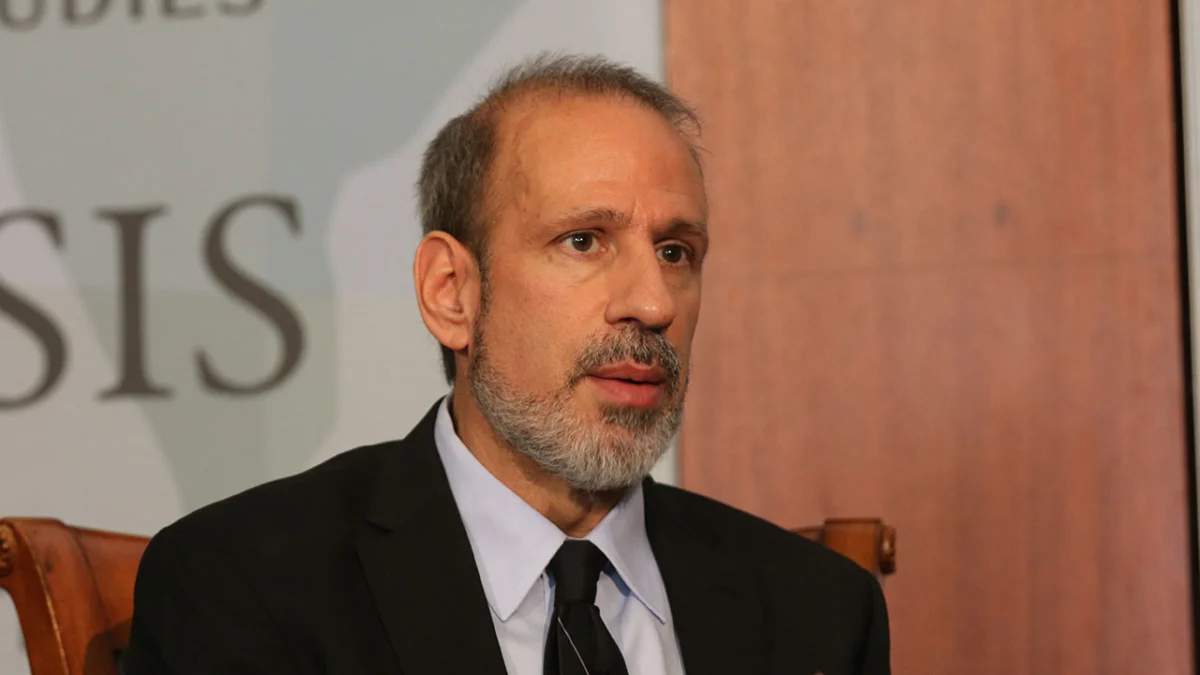
The Center for Strategic and International Studies (CSIS) hosted a high-profile, half-day Defense360 conference bringing together top Pentagon officials, defense analysts, and policy experts to scrutinize the newly released Fiscal Year 2017 (FY2017) defense budget request. Held in Washington, D.C., the event served as a critical platform for dissecting the strategic calculus underpinning the Obama administration’s final defense spending plan. As geopolitical tensions mounted globally and budgetary constraints remained a persistent challenge under the Budget Control Act of 2011, the conference offered stakeholders an opportunity to evaluate how financial allocations align with long-term national security objectives.
The morning proceedings commenced with opening remarks delivered by Dr. John Hamre, President and Chief Executive Officer of CSIS, who framed the overarching budgetary and strategic dilemmas facing the United States military. Following Dr. Hamre’s introduction, the conference transitioned into two primary segments: a keynote panel featuring senior Department of Defense (DoD) leaders explaining the administration’s rationale, and a subsequent expert panel providing rigorous external assessments of the strategy-to-budget linkage. Todd Harrison, Director of Defense Budget Analysis and Senior Fellow with the CSIS International Security Program, moderated both sessions, guiding discussions through complex fiscal landscapes and strategic trade-offs.
Main Facts and Event Structure
The conference was organized around two distinct panel discussions designed to bridge internal government planning with external critique. The first session ran from 9:00 AM to 10:30 AM and featured three principal architects of the FY2017 budget: Mike McCord, Under Secretary of Defense (Comptroller) and Chief Financial Officer; Dr. Jamie Morin,
Director of Cost Assessment and Program Evaluation (CAPE); and Robert Scher, Assistant Secretary of Defense for Strategy, Plans, and Capabilities.
These officials detailed the administration’s strategic priorities, emphasizing the balance between readiness, modernization, and force structure. They addressed the persistent tensions between the demands of current operations—ranging from counter-terrorism campaigns in the Middle East to reassuring allies in Europe and the Indo-Pacific—and the imperative to invest in future technologies to counter near-peer competitors like Russia and China.
The second session, which ran from 10:30 AM to 11:30 AM, brought together a diverse group of non-governmental defense analysts and former government officials. This expert panel featured Tina Jonas, former Under Secretary of Defense (Comptroller) and Senior Adviser at CSIS; Andrew Hunter, Director of the Defense-Industrial Initiatives Group at CSIS; Mark Cancian, Senior Adviser in the CSIS International Security Program; Shawn Brimley, Executive Vice President and Director of Studies at the Center for a New American Security (CNAS); and Roger Zakheim, Visiting Fellow at the American Enterprise Institute (AEI).
In addition to the panel discussions, CSIS utilized the event to gather data from the broader defense community, launching a specialized survey on defense reform to gauge professional opinions on procurement efficiency, organizational structure, and legislative hurdles.
Background Context of the FY2017 Defense Budget Request
The release of the FY2017 defense budget occurred against a backdrop of acute fiscal and strategic friction. The Budget Control Act (BCA) of 2011 continued to cast a long shadow over military planning, imposing statutory caps on discretionary spending that forced the Pentagon to continually reconcile its strategic ambitions with enforced funding limits. Although the Bipartisan Budget Act of 2015 provided temporary relief by raising spending caps for FY2016 and FY2017, the long-term outlook remained constrained.
Strategically, the defense establishment was navigating a transitional period. The focus of the U.S. military was visibly shifting away from two decades of counter-insurgency and counter-terrorism operations in Iraq and Afghanistan toward "great power competition." The emergence of a revanchist Russia following its actions in Ukraine, combined with the rapid military modernization and assertiveness of China in the South China Sea, compelled the DoD to prioritize high-end warfighting capabilities. These included advanced aviation, cyber defense, electronic warfare, long-range precision strike systems, and naval power projection.
Consequently, the FY2017 budget request was not merely a financial document; it was a policy statement reflecting how the Pentagon intended to manage this strategic pivot while maintaining a globally deployed force.
Chronology of the Budget Formulation and Conference Proceedings
Understanding the significance of the CSIS Defense360 conference requires examining the timeline of defense budget formulation and the flow of events during the half-day program:
- Summer and Fall 2015: Military services and defense agencies draft their respective budget estimates based on strategic guidance, culminating in the final defense budget submission reviewed by the Office of the Secretary of Defense and the Office of Management and Budget (OMB).
- Late 2015: The Bipartisan Budget Act of 2015 is enacted, setting defense top-line figures for FY2017 at approximately $582.7 billion (including Overseas Contingency Operations funding), providing budgetary stability just ahead of the formal request.
- Early February 2016: The White House formally submits the FY2017 federal budget request to Congress, initiating the legislative authorization and appropriation cycle.
- Morning of the Conference (9:00 AM): Dr. John Hamre opens the CSIS event, highlighting the structural challenges facing the defense budget.
- 9:00 AM – 10:30 AM: Pentagon officials Mike McCord, Dr. Jamie Morin, and Robert Scher outline the administration’s strategy, explaining how the $582.7 billion request addresses global threats and internal reform.
- 10:30 AM – 11:30 AM: Independent analysts Tina Jonas, Andrew Hunter, Mark Cancian, Shawn Brimley, and Roger Zakheim critique the budget, questioning whether the proposed funding levels are sufficient to execute the National Defense Strategy.
- Post-Conference: Analysts and lawmakers review data from the CSIS defense reform survey to inform ongoing legislative debates on acquisition reform and organizational restructuring within the Pentagon.
Supporting Data and Fiscal Breakdown
The FY2017 defense budget request totaled roughly $582.7 billion in overall discretionary funding, split between the base budget and the Overseas Contingency Operations (OCO) fund. The base budget was pegged at approximately $523.9 billion, complying with the caps established by the Bipartisan Budget Act, while the OCO account was allocated around $58.8 billion.
A critical point of discussion during the conference was the reliance on OCO funding to cover baseline operational costs—a practice that had drawn sustained criticism from fiscal hawks in Congress. While OCO was originally designed as an emergency, temporary fund for wartime expenses in Iraq and Afghanistan, successive administrations utilized it to bridge the gap between military requirements and BCA spending limits.
Within the budget, key investment priorities included:
- Research, Development, Test, and Evaluation (RDT&E): Funding prioritized next-generation technologies to maintain the U.S. technological edge, including artificial intelligence, autonomous systems, hypersonic weapons, and advanced electronic warfare.
- Procurement: Major acquisition programs received significant allocations, notably the F-35 Lightning II joint strike fighter, the Ford-class aircraft carrier program, the Columbia-class ballistic missile submarine, and the B-21 Raider long-range strike bomber.
- Readiness and Personnel: The budget sought to arrest the erosion of military readiness, increasing investments in flight hours, maintenance depots, and live-training exercises, while funding a 1.6 percent military pay raise and balancing end-strength reductions across the Army, Navy, Air Force, and Marine Corps.
Official Responses and Perspectives
The transition from the administration’s defense officials to the independent expert panel highlighted stark contrasts in how the budget was perceived.
Senior DoD officials presented a narrative of disciplined prioritization. Mike McCord emphasized that the budget made difficult choices to protect modernization without hollowing out current readiness. He noted that the department had to balance the competing demands of fiscal responsibility under the law with an increasingly dangerous security environment. Dr. Jamie Morin explained the rigorous analytical framework applied by CAPE to evaluate program costs and alternatives, asserting that every dollar was directed toward maximizing defense utility. Robert Scher reinforced these points by outlining how the strategic guidance directed force posture adjustments in Europe and the Asia-Pacific to deter potential adversaries.
Conversely, the independent panel offered a more critical evaluation. Mark Cancian and Andrew Hunter raised concerns about whether the funding levels were adequate to meet the sprawling commitments outlined in national strategy, often referring to a lingering "strategy-resource mismatch." Shawn Brimley and Roger Zakheim emphasized the urgency of accelerating innovation, warning that bureaucratic inertia within the Pentagon hindered the rapid adoption of commercial technologies. Tina Jonas brought a fiscal management perspective, drawing on her extensive background as Comptroller to question the long-term sustainability of relying on OCO funding to finance enduring base-budget requirements.
Broader Impact and Implications
The CSIS Defense360 conference on the FY2017 defense budget underscored the fundamental challenges facing U.S. national security policy during a period of fiscal restraint and shifting geopolitical dynamics.
The discussions illuminated several long-term implications for the defense enterprise:
- The Strategy-Resource Gap: The debate highlighted that despite a top-line budget approaching $583 billion, the military faced immense strain trying to prepare for high-end conventional conflict while simultaneously managing ongoing regional contingencies. This tension forced military leaders to accept elevated risks in certain areas, such as force structure size or the speed of depot-level maintenance recoveries.
- Technological Competition: The emphasis on RDT&E and advanced procurement signaled an institutional recognition that traditional military dominance was no longer guaranteed. The pivot toward great power competition required sustained investments in disruptive technologies, creating pressure to reform archaic defense acquisition systems that often took decades to field new capabilities.
- Legislative Friction: The reliance on budget gimmicks like OCO funding ensured continued friction between the executive branch and Capitol Hill. Lawmakers continually scrutinized the Pentagon’s accounting practices, setting the stage for protracted budget battles and ongoing debates over whether to repeal or modify the Budget Control Act.
Ultimately, the event served as an essential benchmark for policymakers, defense contractors, and analysts, capturing a pivotal moment in the evolution of American defense strategy as the nation prepared for the budgetary and geopolitical realities of the late 2010s and beyond.