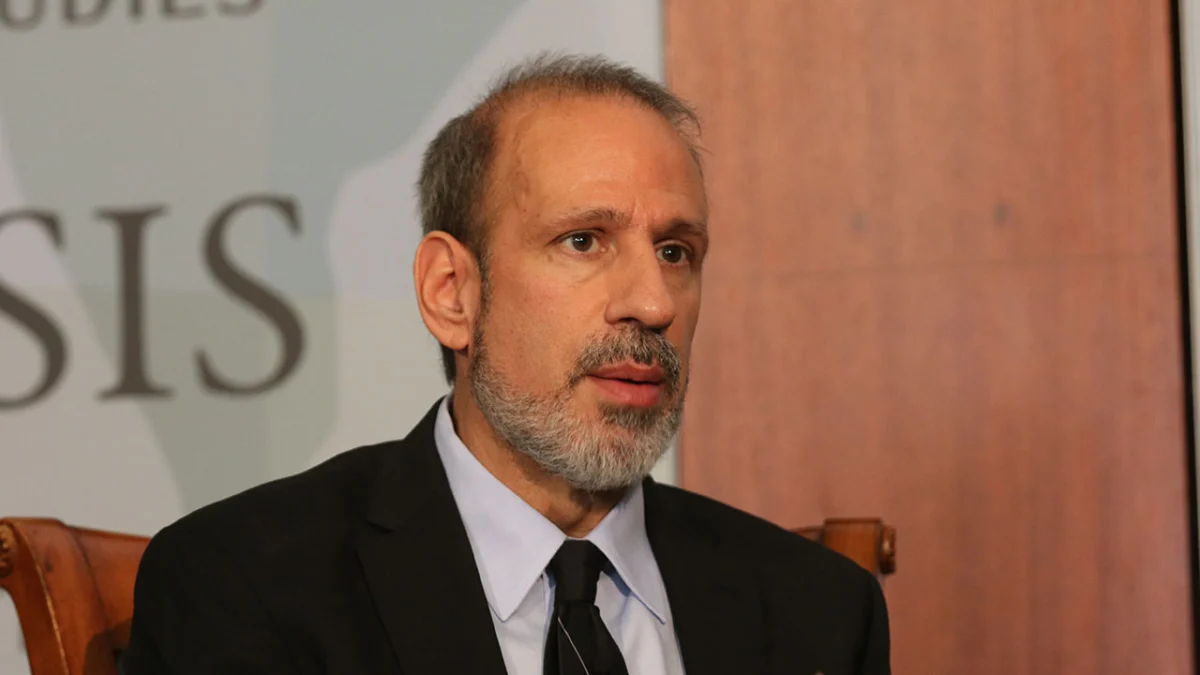
The Center for Strategic and International Studies (CSIS) International Security Program hosted a high-profile, half-day Defense360 conference in Washington, D.C., convening senior Pentagon officials, prominent defense analysts, and policy experts to scrutinize the newly released Fiscal Year 2017 (FY2017) defense budget request. The event served as a critical forum for dissecting the strategic rationale underpinning the administration’s funding proposals, examining the ongoing tension between national security requirements and statutory budget caps, and evaluating the long-term sustainability of the United States military’s force posture.
Against a backdrop of complex global security challenges—ranging from great power competition with Russia and China to persistent counterterrorism operations in the Middle East—the conference provided a comprehensive assessment of how financial resources align with overarching defense strategies. Through keynote presentations, high-level administrative discussions, and expert panel analyses, participants explored the intricate calculus required to balance modernization, readiness, and force structure in an era of constrained fiscal growth.
Main Facts of the FY2017 Defense Budget Request
The release of the FY2017 defense budget request marked a pivotal moment in the ongoing debate over the trajectory of U.S. national defense spending. The proposal was crafted under the legislative framework established by the Bipartisan Budget Act of 2015, which provided temporary relief from the harsh sequester-level spending cuts mandated by the Budget Control Act of 2011. While the 2015 agreement offered a modicum of predictability, the FY2017 request still reflected difficult choices regarding resource allocation, prioritizing high-end technological capabilities and long-term modernization over immediate troop end-strength growth and expansive force capacity.
The administration’s total national defense request for FY2017 hovered around $583 billion, encompassing the base budget and the core requirements for Overseas Contingency Operations (OCO). This funding level was designed to address what defense leadership identified as a rapidly evolving threat environment characterized by the resurgence of near-peer competitors possessing advanced anti-access/area-denial (A2/AD) capabilities. Consequently, the budget heavily emphasized research, development, test, and evaluation (RDT&E) initiatives aimed at maintaining the technological edge of the U.S. military in domains such as cyber warfare, space systems, electronic warfare, and precision-guided munitions.
Chronology and Event Agenda
The half-day conference was structured to provide a sequential, deep-dive analysis of the budget, moving from official administration presentations to independent expert evaluations.
The event commenced at 9:00 a.m. with opening remarks delivered by Dr. John Hamre, President and Chief Executive Officer of CSIS. Dr. Hamre framed the broader geopolitical and economic context of the defense budget, highlighting the persistent structural challenges facing the Department of Defense (DoD), including the compounding effects of decades of fluctuating funding cycles, continuous deployments, and the rising costs of personnel and healthcare.
Following the opening remarks, the first substantive session ran from 9:00 a.m. to 10:30 a.m. This high-level panel featured three key administration officials directly responsible for shaping and justifying the budget request: Mike McCord, Under Secretary of Defense (Comptroller) and Chief Financial Officer; Dr. Jamie Morin, Director of Cost Assessment and Program Evaluation (CAPE); and Robert Scher, Assistant Secretary of Defense for Strategy, Plans, and Capabilities. Moderated by Todd Harrison, Director of Defense Budget Analysis and Senior Fellow in the International Security Program at CSIS, this discussion focused on the strategic framework driving the budget decisions, the methodology behind cost assessments, and the rationale for specific programmatic trade-offs.
After a brief transition, the second session took place from 10:30 a.m. to 11:30 a.m., shifting the perspective to an independent, external panel of defense experts and former government officials. This session was also moderated by Todd Harrison and featured Tina Jonas, former Under Secretary of Defense (Comptroller) and Senior Adviser at CSIS; Andrew Hunter, Director of the Defense-Industrial Initiatives Group and Senior Fellow at CSIS; Mark Cancian, Senior Adviser at CSIS; Shawn Brimley, Executive Vice President and Director of Studies at the Center for a New American Security (CNAS); and Roger Zakheim, Visiting Fellow at the American Enterprise Institute (AEI). This panel delivered rigorous commentary on the connectivity—or perceived disconnects—between stated national defense strategy and the fiscal resources allocated to achieve those objectives.
Supporting Data and Macroeconomic Defense Context
To fully understand the deliberations at the Defense360 conference, it is necessary to examine the underlying macroeconomic and budgetary data that defined the FY2017 defense debate. The base defense budget request for FY2017 was approximately $524 billion, with an additional $58.8 billion requested for OCO funding. This represented a continuation of the administration’s strategy to fund enduring warfighting requirements within the OCO account, a practice that drew scrutiny from fiscal hawks and defense reformers alike.
A critical metric highlighted during the conference discussions was the distribution of the budget across the traditional "Big Four" spending categories: personnel, operations and maintenance (O&M), procurement, and RDT&E. For decades, O&M and personnel costs had steadily consumed a larger percentage of the defense top-line, squeezing the resources available for procurement and research. In the FY2017 request, the DoD attempted to reverse this trend by prioritizing RDT&E funding—allocating roughly $71.8 billion—to ensure superiority in future conflict scenarios against sophisticated adversaries.
Furthermore, data presented by budget analysts illustrated the strain of persistent readiness recovery. Despite marginal increases in top-line funding, the military services reported significant backlogs in depot maintenance, flying hours, and tactical training. The debate centered on whether the FY2017 funding levels were sufficient to restore full-spectrum readiness while simultaneously procuring the next generation of weapons systems, such as the F-35 Lightning II Joint Strike Fighter, the Columbia-class ballistic missile submarine, and the B-21 Raider strategic bomber.
Official Responses and Perspectives from the Pentagon
During the primary administration panel, Under Secretary Mike McCord articulated the financial constraints and strategic compromises inherent in the budget request. McCord emphasized that while the Bipartisan Budget Act of 2015 provided temporary relief, the Department of Defense remained vulnerable to future fiscal cliffs if Congress failed to pass predictable, timely appropriations bills. He noted that continuing resolutions (CRs) severely disrupted defense planning, forcing the department to delay new starts and waste valuable financial resources.
Dr. Jamie Morin, speaking from the perspective of CAPE, elaborated on the analytical rigor applied to program evaluations. Morin discussed the challenges of cost estimation for complex, software-intensive defense acquisitions and explained how the department sought to mitigate cost overruns through more realistic baseline assumptions and incremental development strategies. He stressed that CAPE’s role was to provide objective, unvarnished assessments of program affordability to ensure that the services did not mortgage their future readiness for near-term gains.
Robert Scher provided the strategic lens for the panel, detailing how the FY2017 budget operationalized the 2014 Quadrennial Defense Review and the administration’s broader defense strategy. Scher underscored that the department could no longer plan solely for counterinsurgency and irregular warfare. Instead, the strategy required a balanced force capable of deterring aggression by major state actors in Europe and the Asia-Pacific region, while maintaining the flexibility to respond to transnational terrorist threats. This strategic pivot necessitated tough decisions to divest legacy platforms in order to reinvest in high-end capabilities, such as electronic warfare suites, advanced anti-submarine warfare assets, and resilient space architectures.
Expert Assessment and Critical Analysis
The subsequent panel of external experts offered a candid critique of the administration’s proposals, evaluating the alignment between strategy and resourcing.
Tina Jonas brought her extensive background as a former Comptroller to bear on the budgetary mechanics, warning that relying on OCO funding to cover base budget requirements created long-term fiscal vulnerabilities. She noted that while OCO was a pragmatic workaround to navigate statutory budget caps, it lacked long-term budget stability and obscured the true cost of ongoing military operations.
Andrew Hunter and Mark Cancian focused heavily on the health of the defense-industrial base and force structure implications. Hunter pointed out that procurement accounts remained under pressure, which could lead to valleys in production lines and increased unit costs for critical weapons systems. Cancian provided an assessment of force sizing, arguing that while the strategy demanded a globally engaged military, the end-strengths proposed for the Army and Marine Corps were inadequate to meet all regional combatant commander requirements without inducing severe personnel tempo strains.
Shawn Brimley of the Center for a New American Security and Roger Zakheim of the American Enterprise Institute expanded the discussion into the realm of congressional politics and institutional reform. Brimley emphasized that the defense establishment needed to accelerate internal reforms and embrace technological innovation more rapidly to outpace nimble adversaries. Zakheim, drawing on his extensive legislative policy experience, highlighted the persistent gridlock in Congress regarding defense authorization and appropriations, noting that systemic legislative dysfunction remained one of the greatest internal threats to U.S. national security.
Broader Impact and Implications for U.S. National Security
The discussions at the CSIS Defense360 conference resonated far beyond the confines of the auditorium, reflecting the broader structural dilemmas facing U.S. defense policy in the 21st century. The central takeaway from the event was that the United States is engaged in a critical transition period, attempting to shift its military posture from two decades of counterinsurgency dominance toward high-end conventional deterrence.
However, this strategic pivot is continually hampered by fiscal instability and legislative uncertainty. The reliance on short-term budget compromises prevents the Department of Defense from executing long-term strategic planning, forcing senior leadership to manage perpetual crises rather than proactively shaping the force. Furthermore, as personnel and overhead costs continue to consume a dominant share of the defense budget, the margin for error in modernization and research shrinks dangerously.
The conference also underscored the growing urgency of defense reform. Throughout the event, participants and attendees were encouraged to contribute to ongoing dialogues regarding acquisition reform, organizational restructuring, and the reduction of excess infrastructure within the Pentagon. Without comprehensive structural reforms, analysts warned that future defense budgets would be increasingly incapable of supporting the ambitious strategic objectives laid out in national security guidance.
Conclusion
The CSIS Defense360 conference on the FY2017 defense budget request provided an invaluable public platform for transparent, rigorous discourse on the fiscal and strategic realities shaping American military power. By bringing together the architects of the defense budget and independent subject matter experts, the event illuminated the complex trade-offs inherent in national security decision-making. As the United States continues to confront a volatile and competitive global security environment, the insights generated at the conference remain essential reading for policymakers, military leaders, and defense analysts striving to ensure that the nation’s armed forces are properly resourced, strategically aligned, and prepared for the challenges of the future.