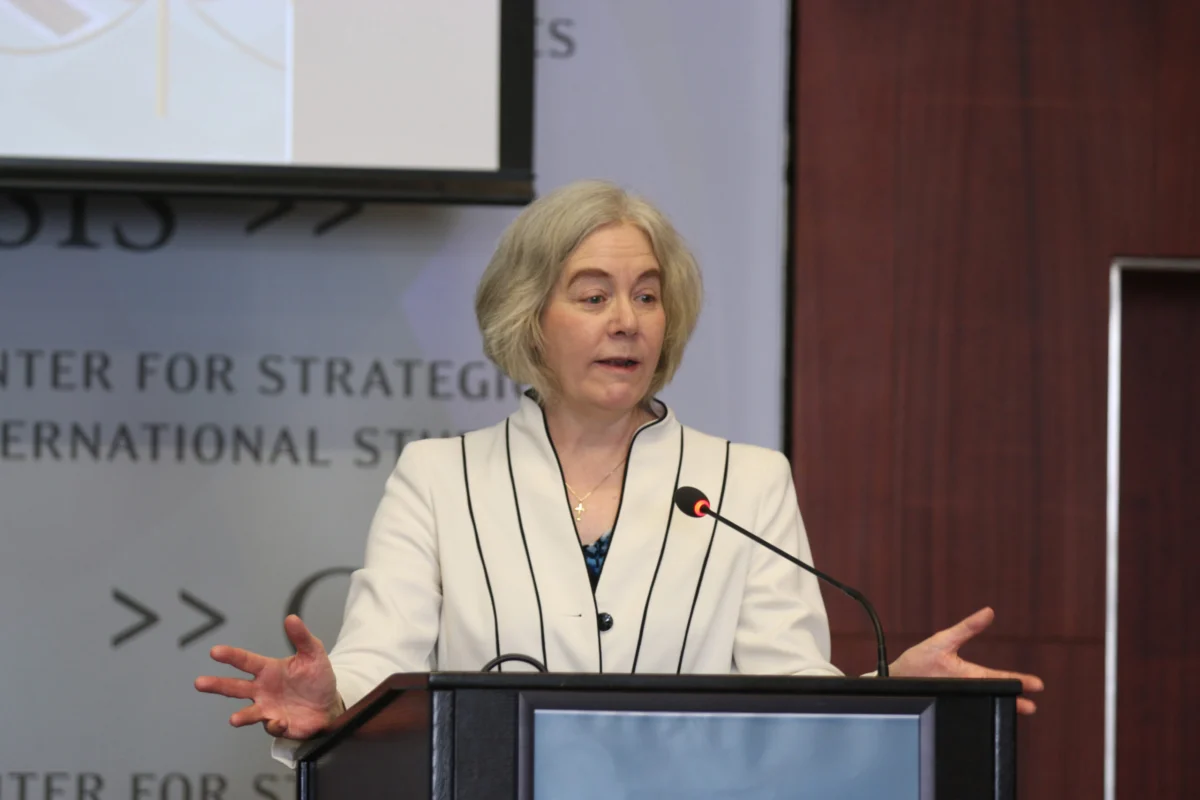
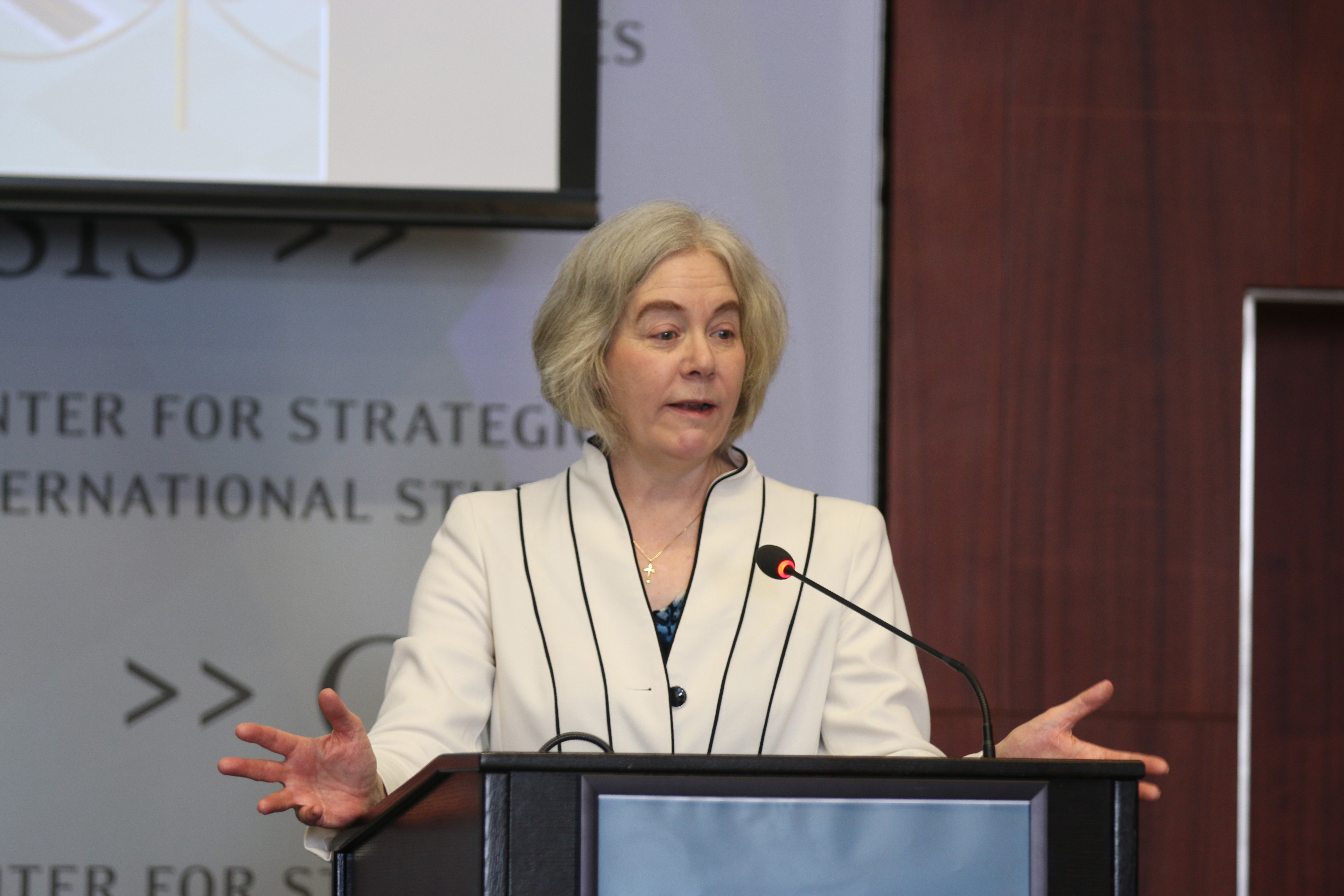
On March 10, 2016, the Center for Strategic and International Studies (CSIS) hosted a pivotal discussion focused on the modernization of the American electric grid, featuring Dr. Ellen Williams, then-Director of the Advanced Research Projects Agency-Energy (ARPA-E). The event, moderated by Frank O’Sullivan of the MIT Energy Initiative, served as a high-level briefing on how federal innovation funding was being deployed to address the systemic challenges of grid management, energy storage, and the broader integration of renewable resources.
The session arrived at a critical juncture in U.S. energy policy. As the nation grappled with an aging infrastructure designed for a centralized, fossil-fuel-dependent model, the rapid growth of distributed energy resources necessitated a fundamental rethinking of how electricity is generated, stored, and distributed. Dr. Williams, leading an agency known for its "high-risk, high-reward" mandate, outlined how ARPA-E was prioritizing technological leaps to ensure grid resilience in an era of climate change and shifting consumption patterns.
The Mandate of ARPA-E in the Energy Landscape
Established under the America COMPETES Act of 2007, ARPA-E was modeled after the Defense Advanced Research Projects Agency (DARPA). Its primary goal is to bridge the "valley of death" in energy research—the gap between initial scientific discovery and commercial viability. By 2016, the agency had solidified its reputation for backing unconventional, transformative technologies that traditional venture capital firms often deemed too risky.
During the CSIS forum, Dr. Williams emphasized that the grid was no longer just a delivery system; it was becoming a complex, bidirectional network. The challenge, as she noted, was moving beyond incremental improvements to existing copper-and-wire infrastructure. Instead, ARPA-E was investing in "grid-edge" technologies, such as advanced power electronics, software-defined grid management, and solid-state transformers, which allow for real-time adjustments to power flows.
Chronology of Grid Modernization Efforts
The context of the 2016 discussion was deeply rooted in a decade of accelerating energy innovation. A brief timeline highlights the trajectory leading up to the CSIS event:
- 2007: The passage of the America COMPETES Act formally establishes ARPA-E to accelerate energy research.
- 2009: Under the American Recovery and Reinvestment Act, ARPA-E receives its first significant infusion of funding, launching its first wave of high-impact research projects.
- 2014: The Department of Energy (DOE) intensifies focus on the "Grid Modernization Initiative," a multi-year effort to integrate smart-grid technologies.
- 2015: The COP21 climate summit in Paris concludes with the launch of "Mission Innovation," a global initiative to double public investment in clean energy R&D.
- March 10, 2016: Dr. Ellen Williams presents the strategic vision for ARPA-E’s 2016 portfolio at CSIS, highlighting the synergy between new funding mandates and long-term grid security.
Supporting Data and Technical Hurdles
The urgency of the discussion was underscored by the technical data regarding the American grid. In 2016, the U.S. power system was facing unprecedented stress. According to Department of Energy reports from that period, the average age of power plants and transmission lines was approaching 40 to 50 years, significantly exceeding their original design lifespans.
Dr. Williams highlighted three key data points that drove ARPA-E’s investment strategy:
- Storage Costs: While lithium-ion battery prices were falling, they remained insufficient for long-duration, grid-scale storage. ARPA-E research was actively exploring flow batteries and thermal storage to provide multi-day backup, a necessity for balancing intermittent wind and solar.
- Transmission Efficiency: Roughly 5% to 7% of electricity is lost during transmission and distribution. New power electronics funded by the agency aimed to reduce these losses by optimizing voltage conversion and minimizing heat dissipation.
- Grid Penetration: The integration of distributed energy resources (DERs) meant that utilities had to manage millions of "nodes" rather than a few hundred large power plants. This required a paradigm shift in software, moving toward automated, decentralized control systems.
Official Perspectives and Strategic Alignment
The discussion at CSIS brought together key stakeholders from the policy and research sectors. Sarah Ladislaw, then-Director of the CSIS Energy and National Security Program, provided the introductory framework, framing grid modernization as a national security imperative. She noted that a vulnerable grid—susceptible to both extreme weather and cyber-threats—was a primary risk to the nation’s economic and defense stability.
Dr. Williams specifically addressed the role of "Mission Innovation," the global pledge made by 20 countries at the Paris Climate Conference. She argued that the initiative was not merely about spending more money, but about fostering an international ecosystem where breakthroughs in one nation could be scaled globally. By focusing on "grid-agnostic" technologies—innovations that could work regardless of the local regulatory environment—ARPA-E sought to maximize the reach of taxpayer-funded research.
Frank O’Sullivan, representing the MIT Energy Initiative, moderated the conversation with a focus on the practical implementation of these technologies. He pushed the dialogue toward the regulatory hurdles that often stifle innovation, questioning how the U.S. utility business model—which is historically rooted in capital expenditure on physical assets—could evolve to reward utilities for adopting software-based efficiency gains.
Implications for the Energy Sector
The implications of the research areas discussed during the event have proven to be foundational for the current state of the U.S. power sector. Several themes from the 2016 conversation remain relevant today:

The Shift Toward Software-Defined Power
The move toward digitizing the grid has become a reality. ARPA-E’s early investments in predictive grid analytics and sensors have matured, allowing modern grid operators to forecast demand spikes and solar variability with much higher precision. The "smart grid" concept, once a futuristic buzzword, is now standard practice in major utility markets like California, Texas, and the Northeast.
The Role of Long-Duration Storage
The emphasis on storage has shifted from short-burst power to long-duration energy storage (LDES). The early-stage research advocated by Dr. Williams in 2016 laid the groundwork for current DOE initiatives that aim to achieve 90% cost reductions in long-duration storage by 2030. This is widely considered the "holy grail" for achieving a carbon-free grid.
Regulatory Evolution
The discussion highlighted the tension between technological potential and regulatory inertia. While ARPA-E could invent the technology, the deployment remained in the hands of state-level Public Utility Commissions. The 2016 session helped crystallize the argument that technology alone cannot save the grid; it requires a parallel evolution in rate structures—moving away from volumetric sales (where utilities make money by selling more electricity) toward performance-based regulation (where utilities are rewarded for reliability and efficiency).
Conclusion: A Legacy of Innovation
The 2016 CSIS event served as a definitive record of the strategic priorities that shaped the second half of the decade for the U.S. energy sector. By bringing together the intellectual resources of MIT and the operational mandate of ARPA-E, the forum helped articulate the complexity of the grid transition.
The insights provided by Dr. Ellen Williams and her colleagues underscored that grid modernization is an ongoing, iterative process. The challenges identified—specifically the need for advanced power electronics, cost-effective storage, and a digitized management framework—continue to dominate the discourse in energy policy today. As the nation continues to move toward a decarbonized economy, the foundational work discussed at this CSIS session serves as a reminder that the transition depends not just on policy ambition, but on the relentless pursuit of technological excellence and the courage to fund the ideas that others consider impossible.