On March 4, 2016, the Center for Strategic and International Studies (CSIS) hosted a landmark security seminar aimed at dissecting the evolving dynamics of the U.S.-Japan alliance in the face of mounting maritime challenges in the Asia-Pacific region. The event, supported by the Ministry of Foreign Affairs of Japan, served as a high-level forum for policymakers, military strategists, and academics to evaluate the operational and geopolitical requirements necessary to maintain a rules-based order in the maritime commons. Featuring key insights from figures such as Michael J. Green, President Yoshiji Nogami, Vice Admiral Umio Otsuka, and Admiral Gary Roughead (USN, Ret.), the seminar provided a comprehensive look at the intersection of Japanese defense policy and American strategic pivot efforts.
Context and Geopolitical Backdrop
By the spring of 2016, the Asia-Pacific security environment was undergoing a period of profound transition. The rise of assertive maritime claims in the South China Sea and the ongoing modernization of the People’s Liberation Army (PLA) Navy had fundamentally altered the regional balance of power. For Tokyo, the imperative was to modernize its own defense posture—a process encapsulated by the Abe administration’s push for "proactive contribution to peace"—while simultaneously reinforcing the interoperability of the U.S.-Japan Security Treaty.
The 2016 seminar was positioned as a critical dialogue to synchronize these efforts. The event focused on the premise that the bilateral alliance was no longer a static relic of the Cold War but a dynamic, flexible partnership required to address non-traditional threats, such as illegal fishing, environmental degradation, and the militarization of disputed maritime features.
A Chronology of the Seminar
The proceedings commenced at 3:00 p.m. EST with welcoming remarks from Michael J. Green, the Senior Vice President for Asia and Japan Chair at CSIS, and Yoshiji Nogami, President of The Japan Institute of International Affairs (JIIA). Their opening dialogue set the tone, emphasizing the necessity of intellectual and strategic alignment between Washington and Tokyo.
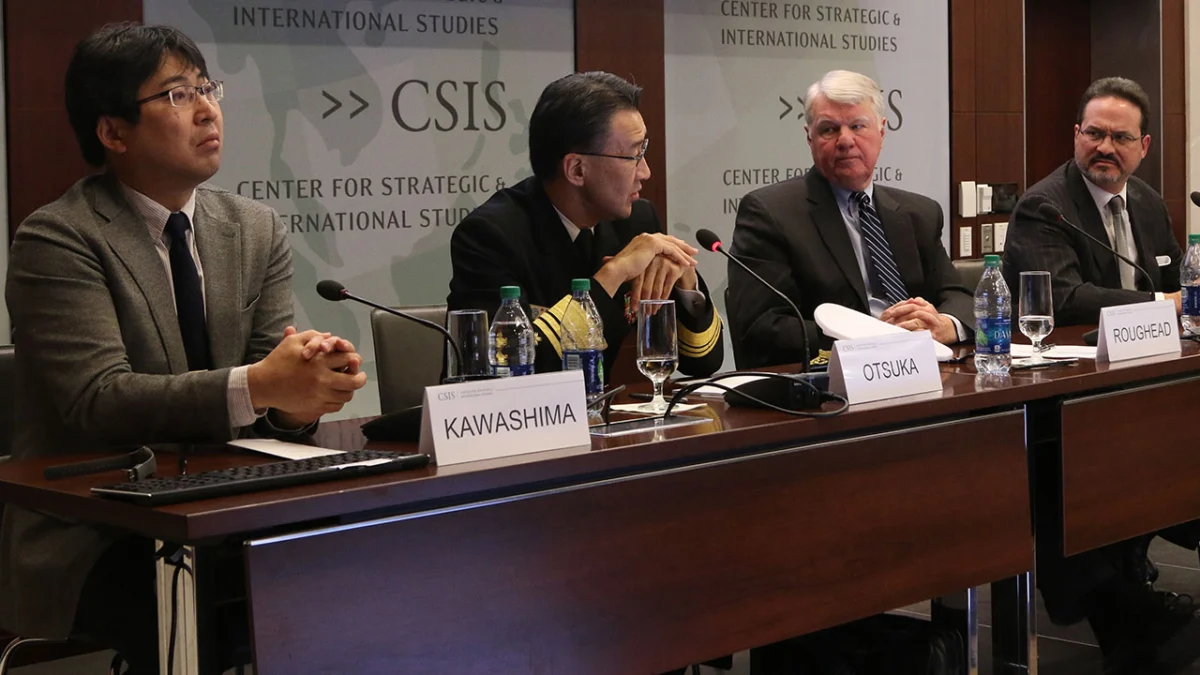
At 3:15 p.m., the seminar transitioned into its core thematic session: The U.S.-Japan Alliance and Maritime Security in the Asia-Pacific Region. This panel featured a multidisciplinary approach to security, blending the practical maritime experience of Vice Admiral Umio Otsuka, then-President of the Japan Maritime Self Defense Force (JMSDF) Command and Staff College, with the academic rigor of Professor Shin Kawashima from the University of Tokyo and the retired command experience of Admiral Gary Roughead.
The discussion navigated through the complexities of "gray zone" tactics—actions that fall below the threshold of traditional armed conflict but are designed to achieve strategic gains, such as the deployment of maritime militia vessels. By 4:30 p.m., the event transitioned to an open Q&A session, allowing for a robust exchange between the panelists and the policy community in Washington, before concluding with an evening reception.
Supporting Data and Strategic Analysis
To understand the gravity of the discussions held during the 2016 seminar, one must consider the strategic data points prevalent at the time. In 2016, the U.S. Navy’s presence in the Pacific was characterized by a focus on the "Rebalance to Asia" strategy, which sought to shift 60% of American naval assets to the Pacific theater by 2020. Simultaneously, Japan was in the midst of implementing the 2015 Guidelines for U.S.-Japan Defense Cooperation, which expanded the scope of cooperation from the defense of Japan to broader regional contingencies.
Data from the time indicated a sharp increase in naval activity by regional powers, specifically in the East China Sea near the Senkaku Islands. The Japan Coast Guard reported a record number of incursions into their contiguous zone, highlighting the persistent pressure Tokyo faced. Admiral Gary Roughead’s contribution to the seminar was particularly significant, as he articulated the need for "maritime domain awareness"—a fusion of intelligence, surveillance, and reconnaissance (ISR) capabilities shared between the U.S. and Japan to track and deter provocations in real-time.

Official Responses and Institutional Perspectives
The Ministry of Foreign Affairs of Japan, which sponsored the event, maintained that such forums were essential for "public diplomacy," ensuring that the American policy community remained briefed on the nuances of Japanese internal security debates. The involvement of JIIA, a premier Japanese think tank, signaled a concerted effort by Tokyo to integrate Japanese strategic thinking into the broader U.S. foreign policy establishment.
During the panel, Professor Shin Kawashima offered a unique perspective on the regional reception of the U.S.-Japan alliance. He argued that while the alliance is often viewed through a bilateral lens, it serves as a "public good" for the entire Asia-Pacific, providing a stabilizing influence that enables economic prosperity for smaller nations in Southeast Asia. This sentiment was echoed by Michael J. Green, who underscored that the U.S.-Japan partnership remained the "cornerstone" of regional stability, serving as a deterrent against unilateral attempts to change the status quo by force.
Implications for the Alliance
The long-term implications of the 2016 U.S.-Japan Security Seminar were manifold. Firstly, it reinforced the move toward deeper integration of the JMSDF and the U.S. Navy. The dialogue facilitated a shared understanding of how to manage crises that involve coast guards and maritime law enforcement agencies, which are often the first responders in territorial disputes.
Secondly, the seminar highlighted the importance of political will. The ability of the Abe administration to pass controversial security legislation in 2015 created the legal space for the types of collaborative operations discussed at the CSIS seminar. By 2016, the focus had shifted from legal reform to operational execution—specifically, how to operationalize the new guidelines to ensure the alliance could respond to a variety of contingencies, ranging from humanitarian assistance and disaster relief (HADR) to high-end naval warfare.
Broader Regional Impact
The themes addressed in the 2016 seminar did not remain confined to the halls of CSIS. They became the blueprint for subsequent policy developments. In the years following the event, the "Free and Open Indo-Pacific" (FOIP) concept gained significant traction, moving from a niche diplomatic term to the central pillar of American and Japanese regional policy. The seminar served as an incubator for these ideas, fostering a network of experts who would go on to shape the strategic environment in the Pacific for the remainder of the decade.
The discussion regarding maritime security also underscored the fragility of the international order. By emphasizing that maritime security is not merely a military concern but a foundational requirement for global trade and economic security, the participants at the seminar succeeded in broadening the definition of "national security." They argued that the health of the U.S.-Japan alliance was intrinsically linked to the health of the global maritime economy, which relies on freedom of navigation and the peaceful resolution of maritime disputes under international law, specifically the United Nations Convention on the Law of the Sea (UNCLOS).
Conclusion: A Legacy of Collaboration
The 2016 U.S.-Japan Security Seminar stands as a testament to the enduring depth of the bilateral relationship. By bringing together military leaders, academics, and policymakers, the event successfully translated high-level political intent into actionable strategic discussion. The insights provided by figures like Vice Admiral Otsuka and Admiral Roughead continue to resonate in contemporary security debates, particularly as the region continues to grapple with the complexities of great power competition.
As the geopolitical landscape of the Indo-Pacific continues to evolve, the framework established during the 2016 CSIS seminar—prioritizing transparency, interoperability, and a rules-based approach—remains more relevant than ever. The seminar did not merely discuss the U.S.-Japan alliance; it reaffirmed the necessity of that alliance in maintaining the peace and security of one of the most vital regions in the world. The legacy of the seminar is found in the continued commitment of both nations to refine their strategic cooperation, ensuring they remain capable of meeting the maritime challenges of the 21st century.