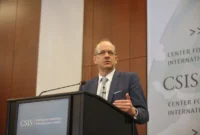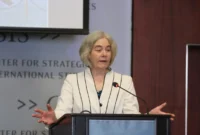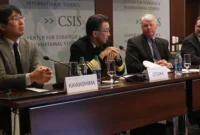
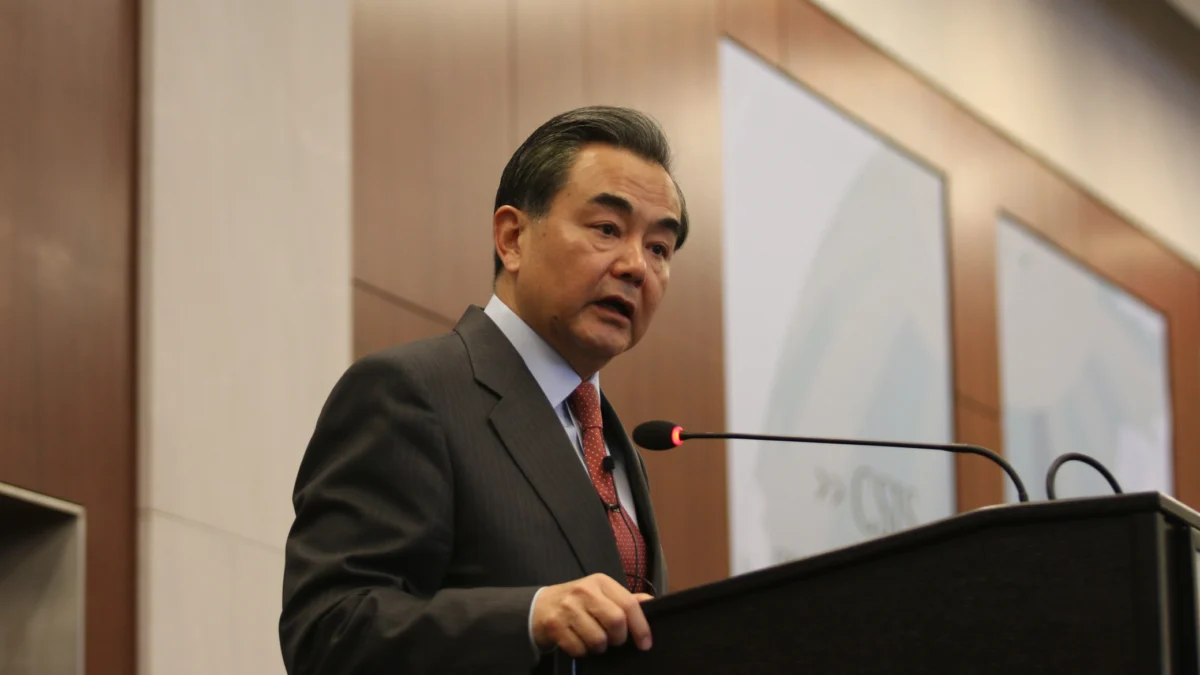
On February 25, 2016, the Center for Strategic and International Studies (CSIS) hosted a high-level Statesmen’s Forum featuring Wang Yi, the Minister of Foreign Affairs of the People’s Republic of China. The event, which took place in Washington, D.C., served as a critical platform for exploring the trajectory of U.S.-China relations, a bilateral partnership often described as the most consequential of the 21st century. The session was introduced by CSIS President and CEO John Hamre and moderated by Christopher K. Johnson, then-senior fellow and Freeman Chair in China Studies at the organization.
The 2016 forum occurred at a pivotal juncture in international affairs. At the time, the Obama administration was nearing its conclusion, and the global geopolitical landscape was undergoing significant shifts, characterized by the rise of China’s influence in the South China Sea, the complexities of the Iran nuclear deal, and an increasingly competitive economic environment. The discussion offered a rare, direct window into the diplomatic posture of Beijing during a time when both nations were attempting to manage deep-seated structural frictions while maintaining necessary cooperation on global challenges.
Historical Context and Bilateral Relations in 2016
To understand the significance of the 2016 forum, one must look at the climate of the era. The U.S.-China relationship in early 2016 was defined by a delicate balance between "engagement" and "containment." Washington sought to integrate China into the international rules-based order, while Beijing was increasingly signaling its intent to play a more assertive role in regional and global governance.
By early 2016, tensions had intensified regarding territorial disputes in the South China Sea. China’s extensive land reclamation activities and the construction of military facilities on contested features had drawn sharp criticism from the U.S. State Department and regional allies. Minister Wang Yi’s presence in Washington was, therefore, not merely a formal diplomatic visit but a strategic effort to frame China’s rise as peaceful and to mitigate concerns regarding its long-term strategic intentions.
The Forum: A Dialogue on Strategic Intent
During the event, Minister Wang Yi addressed the audience with a focus on the necessity of "new model" major-country relations. This diplomatic concept, championed by the Chinese government during that period, emphasized avoiding the "Thucydides Trap"—a term popularized by political scientist Graham Allison to describe the historical tendency for conflict when a rising power threatens to displace an established one.

The discussion, moderated by Christopher K. Johnson, probed the limits of this partnership. Johnson, an expert on Chinese internal politics and security, steered the conversation toward the practical realities of the relationship. The forum allowed for an examination of how Beijing viewed the "pivot to Asia" policy of the Obama administration, which China perceived as a thinly veiled attempt to encircle its economic and military expansion.
Chronology of U.S.-China Diplomatic Exchanges (2015-2016)
To provide context to the February 25 event, it is necessary to examine the diplomatic sequence that preceded it:
- September 2015: President Xi Jinping conducted a state visit to the United States. During this summit, both nations reached a landmark agreement on cybersecurity, specifically pledging that neither government would conduct or knowingly support cyber-enabled theft of intellectual property for commercial gain.
- December 2015: The U.S. announced a $1.83 billion arms sale to Taiwan, sparking sharp protests from the Chinese Ministry of Foreign Affairs, which viewed the move as an interference in its internal sovereignty.
- January 2016: North Korea conducted its fourth nuclear test, placing immense pressure on the U.S.-China relationship, as Washington urged Beijing to exert its significant economic leverage over Pyongyang to halt the regime’s nuclear program.
- February 2016 (The CSIS Forum): Minister Wang Yi’s visit to Washington coincided with high-level talks concerning the implementation of sanctions against North Korea following the January test.
Economic and Strategic Data Points
At the time of the forum, the economic data underscored the depth of the interconnection between the two nations. In 2016, the United States and China were each other’s largest trading partners. According to data from the U.S. Bureau of Economic Analysis, the total trade in goods between the two countries exceeded $578 billion in 2016. This economic interdependence was the primary stabilizer of the relationship, even as military and political frictions grew.
However, the disparity in perspectives remained stark. While the U.S. focused on the "rules of the road" regarding maritime navigation and intellectual property, China emphasized "mutual respect" for core interests and the need for the United States to acknowledge China’s legitimate growth and security requirements.
Official Responses and Perspectives
The CSIS platform, known for its non-partisan and policy-oriented analysis, provided a unique stage for these differing narratives. John Hamre’s welcoming remarks reflected the organization’s commitment to understanding these challenges through deep research and civil discourse.
In his remarks, Wang Yi consistently emphasized that China was a "builder of the international order" rather than a disruptor. He argued that the challenges facing the bilateral relationship were manageable through high-level communication. Conversely, U.S. observers, including analysts within the CSIS network, often pointed to the lack of transparency in China’s military budget and the coercive nature of its economic statecraft as evidence that the "new model of major-country relations" was more aspirational than functional.

Broader Implications and Long-term Impact
The 2016 forum served as a microcosm for the broader U.S.-China dynamic. Looking back from the present day, the issues discussed—territorial sovereignty, trade imbalances, and the challenge of managing a superpower rivalry—have only intensified.
The implications of the 2016 discourse were significant:
- Normalization of Competitive Dialogue: The forum helped normalize the idea that U.S.-China relations would remain "competitively cooperative." This framework guided policy for the remainder of the Obama administration and influenced the early discussions of the subsequent Trump administration.
- Increased Focus on Institutional Security: The event highlighted the growing need for specialized research, such as that conducted by the Freeman Chair in China Studies, to decipher the complex messaging coming from Beijing.
- The Shift in Strategic Focus: The 2016 dialogue marked a turning point where the focus shifted from integrating China into the global system to managing the fallout of its inevitable emergence as a peer competitor.
Analysis: Why the Forum Matters
The significance of Wang Yi’s appearance at CSIS lies in the transparency of the disagreement. By engaging in a public forum, both sides acknowledged that the relationship had reached a point of maturity where direct, albeit difficult, conversation was the only path forward.
The fact that these discussions took place in a public, recorded format allowed policymakers, academics, and the public to witness the fundamental disconnect in how Washington and Beijing viewed their respective roles in the world. While Washington prioritized the preservation of the post-WWII international order, Beijing argued for a more multi-polar system that better reflected its current economic and military weight.
In conclusion, the February 2016 Statesmen’s Forum at CSIS remains a vital case study for students of international relations. It captured a moment of relative diplomatic stability before the onset of the more volatile trade wars and geopolitical decoupling that would characterize the latter half of the decade. By providing a platform for the Chinese Foreign Minister to address the American foreign policy establishment, CSIS demonstrated its role as a bridge between competing worldviews, facilitating a dialogue that is arguably more necessary today than ever before. The event serves as a reminder that even in an era of deep strategic mistrust, the architecture of international diplomacy relies on the sustained effort to understand the intentions, fears, and strategic goals of one’s primary competitor.