
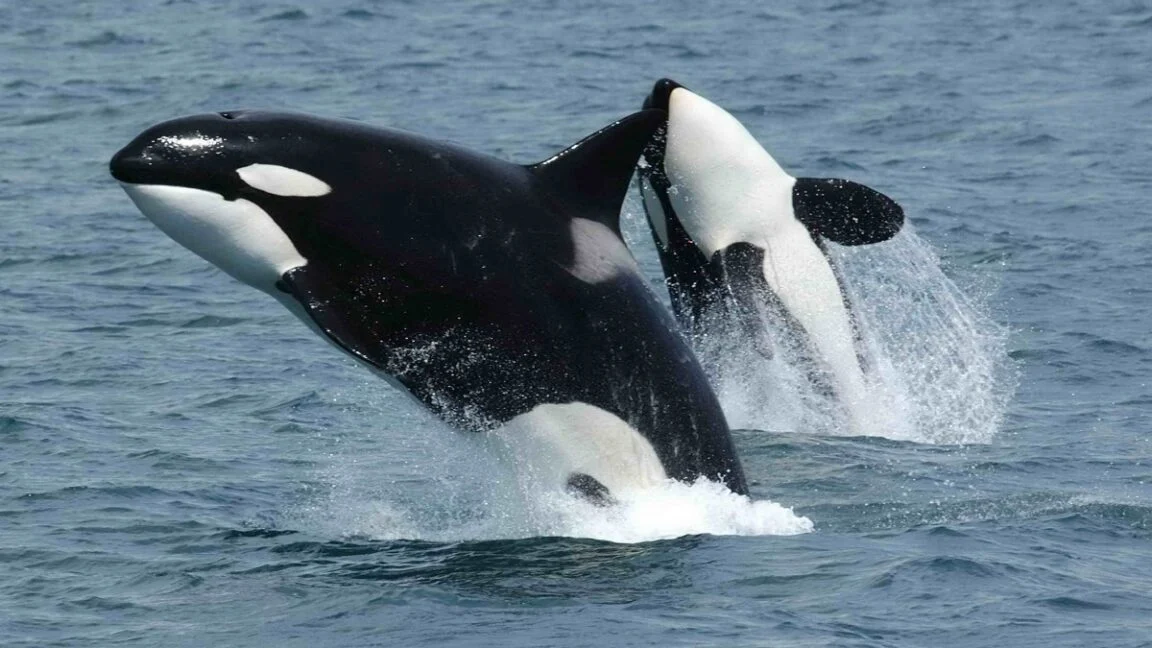
The ocean’s most apex predator is demonstrating a surprising evolution in hunting technique, one that combines raw physical power with the nuanced social dynamics of pod life. Recent observations in the Gulf of California have documented a group of orcas (Orcinus orca) engaging in a novel, high-impact hunting strategy: ramming ocean sunfish (Mola alexandrini) with such force that the carcasses disintegrate upon impact. This behavior, detailed in a peer-reviewed study recently published in the journal Frontiers in Ethology, challenges long-standing assumptions about how these marine mammals process large, heavy prey. While orcas have been documented for decades using various cooperative methods to secure food, the "ram-to-fragment" strategy represents a sophisticated departure from traditional predation, suggesting that these cetaceans are not only teaching younger pod members how to feed but are perhaps engaging in complex forms of social play.
The Anatomy of a New Hunting Behavior
For marine biologists, the behavior observed off the coast of San Jose del Cabo is significant because it diverges from the standard three-pronged approach typically used by orcas to dispatch sunfish. Historically, orcas have been observed targeting the pectoral fins of a sunfish to neutralize its mobility, followed by a precise incision to remove the viscera, and finally, a surgical extraction of the remaining flesh.
The newly documented strategy, however, replaces precision with kinetic energy. By using a "ram-to-fragment" maneuver, the orcas effectively tenderize or dismantle the prey, making the flesh more accessible for juvenile members of the pod. The impact is so substantial that it creates an audible shockwave in the water, dispersing tissue over a wide radius. This allows younger orcas—whose teeth and jaw strength are not yet fully developed for the traditional surgical method—to consume nutrient-dense scraps that would otherwise be difficult to extract from a thick-skinned, heavy carcass.
Chronology of the Observation
The initial documentation of this phenomenon took place in July 2024, when a local tourism operator encountered a pod of five orcas near San Jose del Cabo, Mexico. The pod consisted of three adult females, one adult male, and one juvenile.
The event began conventionally; the pod was observed capturing and consuming a spine-tail devil ray. However, the behavior shifted shortly thereafter. The tourism operator captured footage of an adult female holding a sunfish carcass in her mouth. The prey already exhibited signs of prior processing, specifically a large lateral wound where the viscera had been removed. As the female held the carcass steady, the adult male initiated a high-speed charge, colliding with the sunfish just as the female released it. The result was an immediate, violent fragmentation of the carcass. Following the impact, the juvenile member of the pod was seen feeding on the smaller, dispersed fragments, while the adults consumed the larger sections of the remaining body.
Contextualizing Orca Social Learning
The scientific community has long recognized that orcas possess a "culture"—a set of behaviors passed down through generations that are specific to certain populations. The current trend of orcas ramming vessels in the Strait of Gibraltar has sparked a global conversation about the potential for culturally transmitted aggression. Some researchers believe the boat-ramming behavior is a "fad" that started with a single individual and spread through social imitation, a phenomenon well-documented in other intelligent species like chimpanzees and dolphins.
The sunfish-ramming behavior in the Gulf of California offers a less destructive, but equally complex, window into this social learning. Kathryn Ayres, a co-author of the study and representative of the nonprofit ocean health organization Beneath The Waves, suggests that this behavior serves a dual purpose: it acts as a teaching mechanism for the youth and a form of social enrichment. "We think this may help younger orcas feed more easily, or it could also just be for fun," Ayres noted. "Orcas are known for playing with their food."
Comparative Analysis: Cooperative Hunting Strategies
The "ram-to-fragment" technique is the latest addition to a diverse repertoire of cooperative hunting strategies used by orcas globally. These strategies are often tailored to the environment and the specific anatomy of the prey:
- Wave-Washing: In the Antarctic, orcas are famous for working in unison to create artificial waves that wash seals off ice floes.
- Herding: Off the coast of various continents, orcas have been observed herding schools of fish or mobile rays into "bait balls" or confined areas to ensure a more efficient catch.
- Strategic Blocking: During the hunt for white sharks, orcas have demonstrated the ability to block escape routes, ensuring that the prey cannot flee into deeper, more difficult-to-navigate waters.
- Physical Restraint: Observations have shown orcas holding whale sharks steady while another individual performs the specialized task of removing the liver, a high-calorie organ that orcas prize.
Each of these methods requires a high degree of communication, coordination, and spatial awareness, confirming that orcas function as a highly synchronized social unit rather than a collection of individual predators.
Implications for Marine Ecosystems
The ability of orcas to adapt their hunting strategies has broad implications for marine ecology. As ocean temperatures shift and prey distribution changes, apex predators like orcas must demonstrate behavioral plasticity to maintain their caloric requirements. The use of ramming as a tool for fragmentation suggests that orcas are capable of identifying "bottlenecks" in their feeding—such as the difficulty a juvenile has in processing a large, armored fish—and engineering a solution to overcome them.
Furthermore, this behavior raises questions regarding the cognitive capacity of these cetaceans. If the behavior is indeed "for fun," as researchers suspect, it implies a level of sentient play that goes beyond the immediate biological necessity of survival. Such behavior is a hallmark of high intelligence, similar to the play seen in terrestrial mammals like wolves or lions, but performed in an environment that is significantly more complex to navigate.
The Role of Citizen Science
The documentation of this event underscores the growing importance of citizen science in marine biology. The footage captured by the tourism operator provided the raw data necessary for researchers to analyze the mechanics of the ramming event in slow motion. Without such high-quality, opportunistic documentation, this novel behavior might have remained anecdotal or entirely unknown to the scientific community.
"The observation provides a rare glimpse into the adaptability of these animals," said a representative from the research team. "When we see behaviors like this, it reinforces the need for continued monitoring of these populations. Every observation of a new hunting tactic helps us understand the complex social structures that define orca life."
Future Research Directions
As the scientific community continues to analyze the findings from the Gulf of California, the focus will shift toward determining how widespread this behavior is within the specific pod and whether it spreads to other pods in the region. Researchers are also interested in identifying whether the "ram-to-fragment" technique is specific to the ocean sunfish, or if it could be applied to other prey items with similar physical characteristics.
The study in Frontiers in Ethology serves as a foundational document for future behavioral studies. It highlights that the "culture" of orcas is not static; it is a living, breathing entity that changes as the animals encounter new challenges and opportunities in their environment. As humans continue to encroach upon marine habitats, understanding these behavioral shifts is more critical than ever. Whether these interactions are motivated by survival, the necessity of teaching, or simply the desire for social engagement, they provide compelling evidence that the ocean’s apex predator is far more ingenious than we previously understood.
In conclusion, the ramming of sunfish represents a sophisticated evolution in the predatory toolkit of the orca. By utilizing brute force to solve the problem of carcass accessibility, these animals are demonstrating the same ingenuity that has allowed them to dominate the world’s oceans. As research continues, the scientific community will remain vigilant, documenting these instances to further decode the complex, evolving social tapestry of the ocean’s most enigmatic hunters.