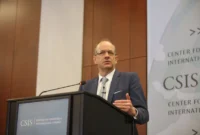

The Center for Strategic and International Studies (CSIS) has convened a high-level, half-day symposium under its Defense360 initiative to dissect the intricacies of the Fiscal Year 2017 (FY17) defense budget request. As the Department of Defense (DoD) navigates an increasingly complex global threat landscape—ranging from resurgent great power competition to persistent regional instability—this conference serves as a critical forum for stakeholders to examine how fiscal resources are being aligned with long-term strategic objectives. The event, held in Washington, D.C., brings together senior Pentagon officials and leading defense analysts to address the fundamental connectivity between national security strategy and the federal budget process.
The Strategic Context of the FY2017 Request
The FY2017 budget request represents a pivotal moment in the tenure of the Obama administration, reflecting a transition in how the U.S. military postures itself against diverse challenges. At the time of this request, the Pentagon faced the dual pressure of budgetary constraints imposed by the Budget Control Act (BCA) and a shifting geopolitical environment that necessitated renewed investment in modernization, readiness, and technological superiority.
The strategy underpinning the FY17 request prioritizes "full-spectrum" readiness, ensuring that the force remains capable of operating across all domains, including cyber and space. Furthermore, the request addresses the need to rebuild segments of the force that were degraded by years of continuous combat operations in the Middle East and subsequent fiscal austerity. By focusing on procurement of next-generation platforms and research into advanced capabilities, the administration sought to maintain a qualitative edge over potential adversaries while simultaneously managing the fiscal reality of the "sequestration" era.
Chronology of the Budgetary Review
The development of the FY17 budget was the culmination of an intensive interagency process that began early in the preceding calendar year. The progression of the budgetary cycle, as discussed during the CSIS symposium, follows a structured timeline:
- Initial Guidance (Spring 2015): The Office of the Secretary of Defense issued internal guidance to the military services, outlining the strategic priorities that would inform the FY17-21 Future Years Defense Program (FYDP).
- Service Program Objective Memoranda (Summer 2015): The military branches submitted their specific program requests to the Office of Cost Assessment and Program Evaluation (CAPE), which reviewed these proposals for fiscal viability and strategic alignment.
- Final Review (Winter 2015-2016): The Comptroller’s office finalized the budget request, reconciling service requirements with the constraints established by the Bipartisan Budget Act of 2015, which provided some relief from original BCA caps.
- Formal Submission (February 2016): The President formally submitted the FY17 budget to Congress, sparking the current phase of legislative review and expert assessment.
- CSIS Conference (Spring 2016): This event serves as the primary public-facing analysis phase, where the architects of the budget explain their rationale to the broader policy community.
Supporting Data and Fiscal Realities
The FY2017 budget request totaled approximately $582.7 billion in discretionary funding. This figure includes $523.9 billion for the base budget and $58.8 billion for Overseas Contingency Operations (OCO). A significant portion of this funding is directed toward personnel, operations and maintenance (O&M), and procurement.
Data provided by the Pentagon indicates that roughly 30% of the budget is allocated to procurement and R&D, reflecting a sustained commitment to modernizing the military’s hardware. However, analysts note that the balance between readiness and modernization remains precarious. The O&M accounts, which fund the day-to-day training and maintenance of the force, have seen significant upward pressure as the military attempts to reverse a decline in readiness levels across the services, particularly in aviation and naval maintenance.
Perspectives from the Department of Defense
The opening session of the CSIS conference features key architects of the request: Mike McCord, Under Secretary of Defense (Comptroller); Dr. Jamie Morin, Director of CAPE; and Robert Scher, Assistant Secretary of Defense for Strategy, Plans, and Capabilities.
Their participation highlights the administration’s focus on "strategic calculus." McCord has emphasized the necessity of balancing the current fiscal constraints with the need to sustain a force capable of global power projection. Dr. Morin, representing the office responsible for scrutinizing the cost-effectiveness of every military program, has argued that the FY17 request is data-driven, specifically designed to eliminate redundant programs while prioritizing investments in cyber warfare and missile defense. Robert Scher has underscored the strategic shift, noting that the budget reflects a departure from the counterinsurgency-heavy focus of the previous decade toward a strategy that anticipates peer-level conflict.
Panel Commentary and Expert Assessments
Following the administrative review, a panel of distinguished experts, moderated by Todd Harrison, Director of Defense Budget Analysis at CSIS, provides an external assessment. Panelists include Tina Jonas, former Under Secretary of Defense (Comptroller); Andrew Hunter and Mark Cancian of CSIS; Shawn Brimley of the Center for a New American Security (CNAS); and Roger Zakheim of the American Enterprise Institute (AEI).
The panel provides a nuanced critique of the budget, with discussions centering on the feasibility of the proposed readiness recovery. Former Comptroller Tina Jonas has pointed to the structural challenges of the budget process, noting that uncertainty in legislative appropriations creates inefficiencies that the DoD cannot fully resolve on its own. Andrew Hunter and Mark Cancian have raised questions regarding the industrial base’s capacity to absorb the requested funding for modernization, while Shawn Brimley and Roger Zakheim have debated whether the strategic priorities reflect the true urgency of the threats in Eastern Europe and the Indo-Pacific.
Implications for Defense Reform
The conference also highlights the broader debate on defense reform, underscored by the CSIS survey on the topic. The current budget request is widely viewed as a test case for whether the existing bureaucratic structure can adapt to modern warfare. Analysts argue that the rigid nature of the Pentagon’s acquisition process often prevents the rapid fielding of emerging technologies, such as artificial intelligence and unmanned systems.
The implication for the future is clear: if the U.S. is to maintain its competitive advantage, the budget must move beyond incremental adjustments and toward fundamental reform. This includes streamlining the acquisition cycle, reducing overhead, and perhaps re-evaluating the current force structure to prioritize lethality over legacy systems.
Broader Impact and Conclusion
The FY2017 budget request serves as more than just a financial document; it is a statement of national priorities. By aligning funding with the strategic imperatives of deterring aggression and maintaining global stability, the DoD is attempting to manage a transition period in American military history.
As Congress begins its markup of the defense appropriations bills, the insights shared at the CSIS Defense360 conference will likely inform the legislative debate. The consensus among the experts assembled is that while the FY17 budget represents a necessary correction to previous fiscal years, it is merely one step in a much longer process of adapting the defense enterprise to a volatile and unpredictable international order.
The success of these budgetary strategies will ultimately be measured not by the amount of funding allocated, but by the tangible improvements in force readiness, the pace of technological integration, and the ability of the United States to deter and, if necessary, defeat threats in a complex global environment. As the proceedings conclude, the takeaway remains that the nexus of strategy and finance is the most critical arena in which the future of American national security will be determined.