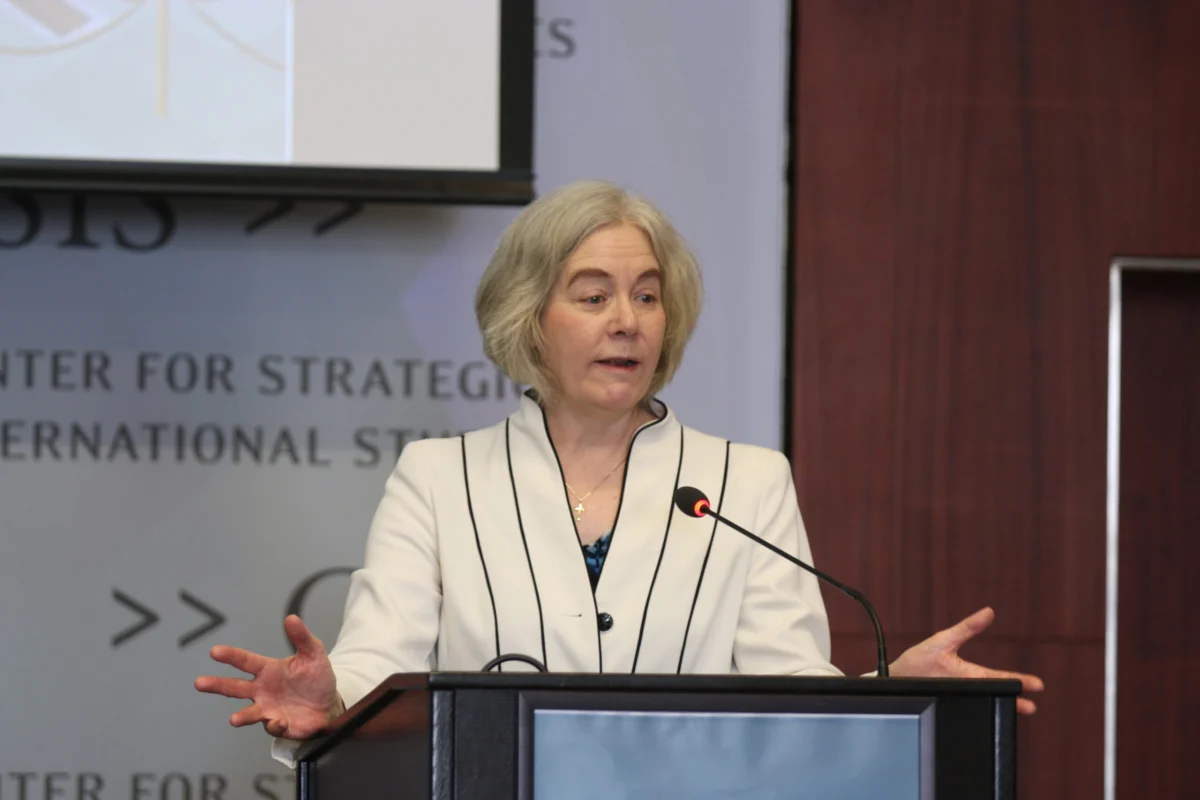
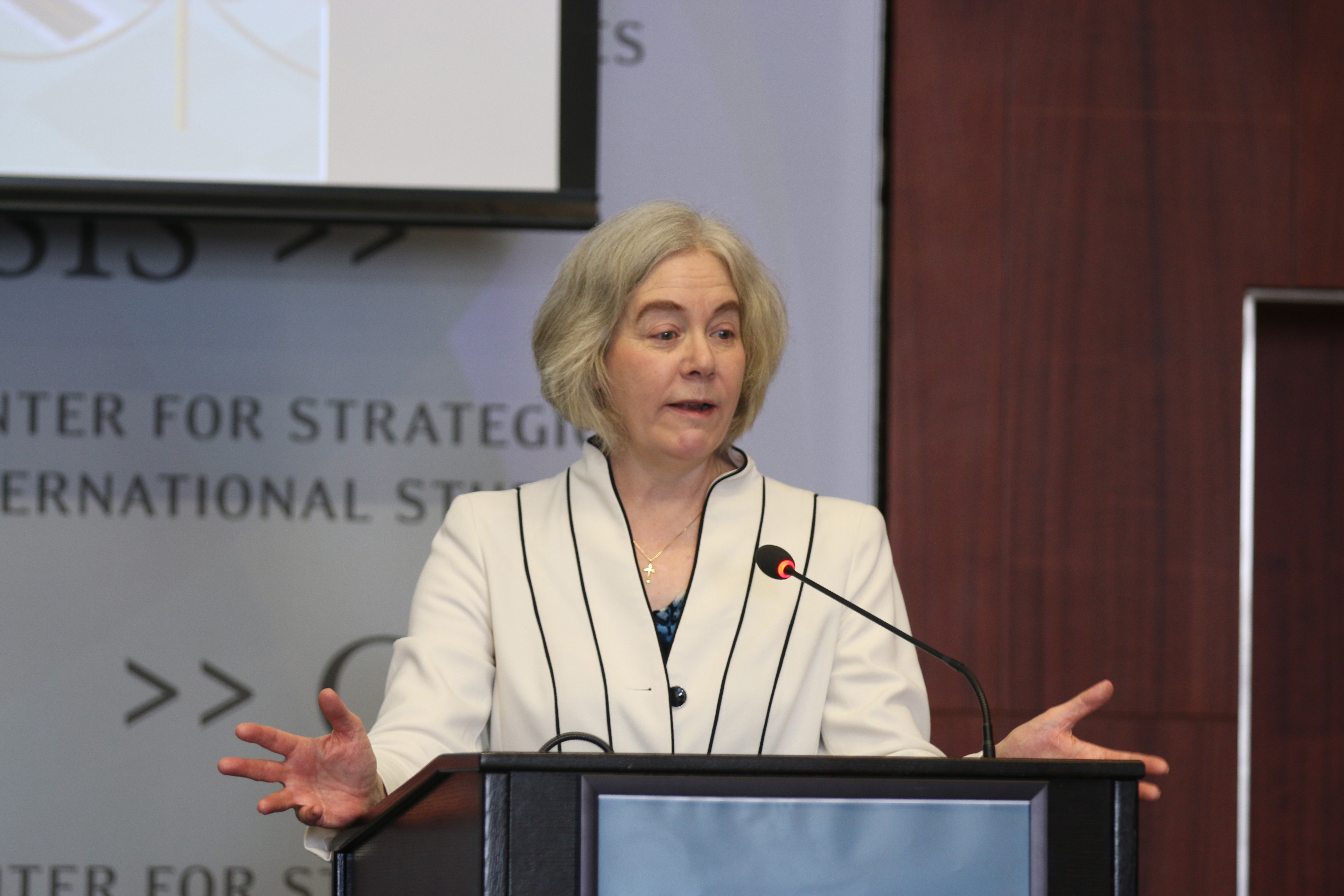
On March 10, 2016, the Center for Strategic and International Studies (CSIS) hosted a pivotal discussion featuring Dr. Ellen Williams, then-Director of the Advanced Research Projects Agency-Energy (ARPA-E). The event, moderated by Frank O’Sullivan of the MIT Energy Initiative, served as a high-level examination of the technological bottlenecks facing the modern electric grid and the strategic role of federal investment in fostering energy innovation. As the United States approached a decade defined by rapid decarbonization goals and the integration of intermittent renewable resources, the discourse highlighted how the Department of Energy’s “incubator” arm was positioning itself to solve systemic challenges in grid management and energy storage.
The Strategic Context of 2016
The 2016 symposium occurred at a critical juncture for U.S. energy policy. Following the momentum of the 2015 Paris Agreement, the federal government was increasingly focused on the "Mission Innovation" initiative—a global pledge to double public investment in clean energy research and development. ARPA-E, modeled after the Department of Defense’s DARPA, was tasked with identifying and funding "high-risk, high-reward" technologies that were too early-stage for private equity but held the potential to transform the energy landscape.
By 2016, the electric grid—a sprawling, aging infrastructure designed for a one-way flow of power from centralized plants to consumers—was struggling to adapt to the decentralization caused by solar and wind energy. The fundamental challenge presented at the CSIS event was the "duck curve" phenomenon: the reality that solar generation peaks during midday while demand spikes in the evening, creating a massive imbalance that requires sophisticated storage and management solutions.
ARPA-E’s Strategic Roadmap: Grid Management and Storage
Dr. Ellen Williams articulated that the agency’s primary mission for 2016 was to catalyze a shift from passive infrastructure to a "smart" grid. During the presentation, Dr. Williams outlined three specific pillars of ARPA-E’s strategy:
- Grid Management via Advanced Power Electronics: The agency sought to fund projects that could replace bulky, inefficient mechanical transformers with solid-state, high-frequency power electronics. These technologies were designed to provide grid operators with granular, real-time control over the flow of electricity, effectively allowing the grid to "self-heal" during fluctuations.
- Long-Duration Energy Storage: Recognizing that lithium-ion batteries were primarily suited for short-duration frequency regulation, ARPA-E shifted focus toward flow batteries and thermal storage systems. These technologies aimed to store power for days, or even weeks, to accommodate the variability of seasonal wind and solar patterns.
- Data-Driven Dispatch: With the proliferation of sensors and IoT devices, the grid was producing unprecedented volumes of data. ARPA-E emphasized the need for software solutions capable of processing this data to automate load balancing, reducing the human error associated with manual grid management.
The Role of Mission Innovation
A significant portion of the discussion was dedicated to the then-new "Mission Innovation" framework. This initiative represented a collaborative effort among 20 countries to accelerate clean energy innovation. Dr. Williams noted that the initiative was not merely about writing checks for research; it was about creating a sustainable pipeline for commercialization. By aligning federal funding with private sector interests, ARPA-E aimed to lower the "valley of death"—the period between laboratory proof-of-concept and large-scale industrial deployment.
Analysts present at the time observed that Mission Innovation provided a degree of diplomatic and political cover for energy research, framing climate mitigation as an economic imperative rather than purely an environmental one. This allowed for bipartisan interest in energy technology that might otherwise have stalled in a polarized legislative environment.
Chronology of Federal Energy Innovation
To understand the significance of the 2016 CSIS event, it is necessary to view it within the broader timeline of American energy policy:
- 2007: The America COMPETES Act is signed into law, authorizing the creation of ARPA-E.
- 2009: ARPA-E receives its first significant appropriation of $400 million under the American Recovery and Reinvestment Act.
- 2015: The U.S. commits to Mission Innovation during COP21 in Paris, pledging to double clean energy R&D over five years.
- 2016: The CSIS event marks the formal articulation of how ARPA-E would execute these commitments, specifically targeting the "Grid of the Future."
- 2017-2020: Despite shifting political landscapes, the technologies incubated by ARPA-E during this period begin to see pilot testing and limited commercial application in regional markets.
Expert Analysis: The Challenges of Scaling
Frank O’Sullivan, who moderated the session, provided essential context regarding the "Market Deployment" problem. While ARPA-E was highly successful at the research level, O’Sullivan noted that the American electricity market—a complex web of state-level regulations and regional transmission organizations (RTOs)—often hindered the adoption of new technologies.
The "Grid of the Future" required not just new hardware, but new regulatory frameworks. For example, if a software-based management system could save a utility millions in operational costs, the current regulatory structure often failed to provide the utility with the necessary incentives to adopt that software. The discussion underscored that technology was only half the battle; the other half was policy reform.

Economic and National Security Implications
The implications of the research discussed by Dr. Williams extended beyond simple efficiency. The integration of advanced energy technologies was presented as a matter of national security. As the power grid became more digitized, it became increasingly vulnerable to cyber threats. ARPA-E’s push for solid-state power electronics and decentralized grid control systems served a dual purpose: they made the grid more efficient, but also more resilient to localized failures or targeted cyber-attacks.
Furthermore, the global market for clean energy technology was expanding rapidly. The U.S. Department of Energy viewed these investments as essential for maintaining a competitive edge in the global export market. If the U.S. could lead in the development of grid-scale storage, it would secure a dominant position in the global supply chain for the energy transition.
Impact and Legacy
The 2016 event served as a high-water mark for the optimism surrounding government-led energy innovation. By bringing together the intellectual resources of MIT, the strategic foresight of CSIS, and the funding power of ARPA-E, the event provided a roadmap for how the nation could modernize its most critical infrastructure.
In the years following the 2016 symposium, many of the technologies discussed—particularly solid-state transformers and grid-scale lithium-sulfur or flow batteries—moved from laboratory benches to venture-backed startups. While the full modernization of the electric grid remains an ongoing, generational project, the framework established by Dr. Williams and her colleagues in 2016 provided the technical and strategic foundation that continues to inform modern climate and infrastructure policy.
The event concluded with a consensus that the "future of the grid" would be defined by its ability to integrate complexity. The transition from a static, centralized machine to a dynamic, distributed network is not merely an engineering challenge; it is an economic and geopolitical necessity. Through the lens of the CSIS discussion, it became clear that the success of the U.S. energy transition would depend on the sustained, rigorous, and collaborative pursuit of innovation in every link of the energy supply chain. The insights shared by the panel provided a window into the rigorous methodology required to navigate the transition toward a more resilient and sustainable electrical future.