
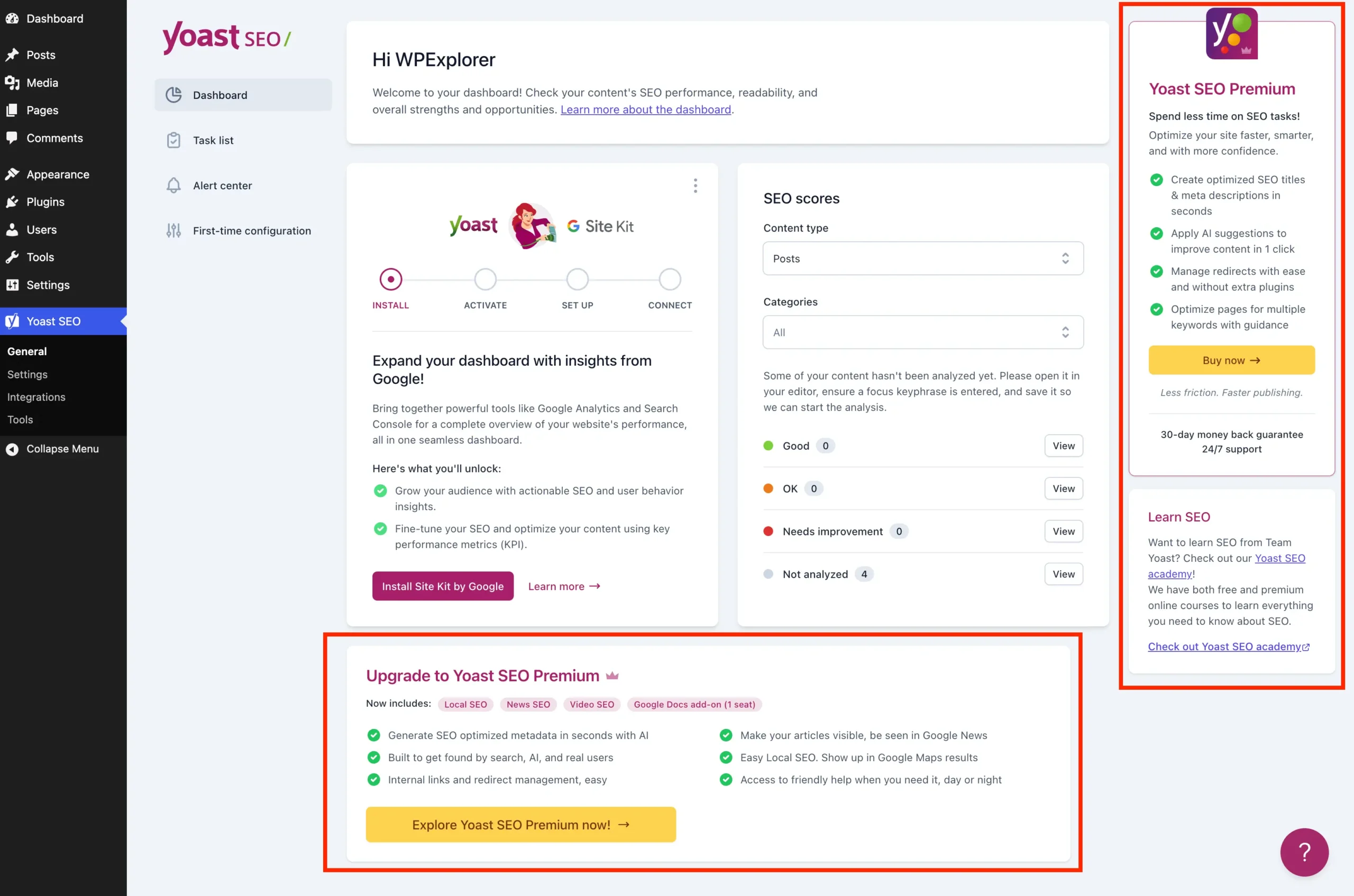
Published on May 24, 2026, a growing segment of WordPress site administrators and developers are seeking effective methods to streamline their backend environments, particularly concerning the prevalence of premium upgrade solicitations within popular plugins. One such prominent example is Yoast SEO, a cornerstone tool for optimizing website content and search engine visibility. While the free version of Yoast SEO offers an impressive suite of features—including content optimization, sitemap management, and improved search result appearance—its interface is often populated with persistent upsells for its premium counterpart. This article delves into the technical strategies available to remove these distracting elements, fostering a cleaner and more efficient administrative experience.
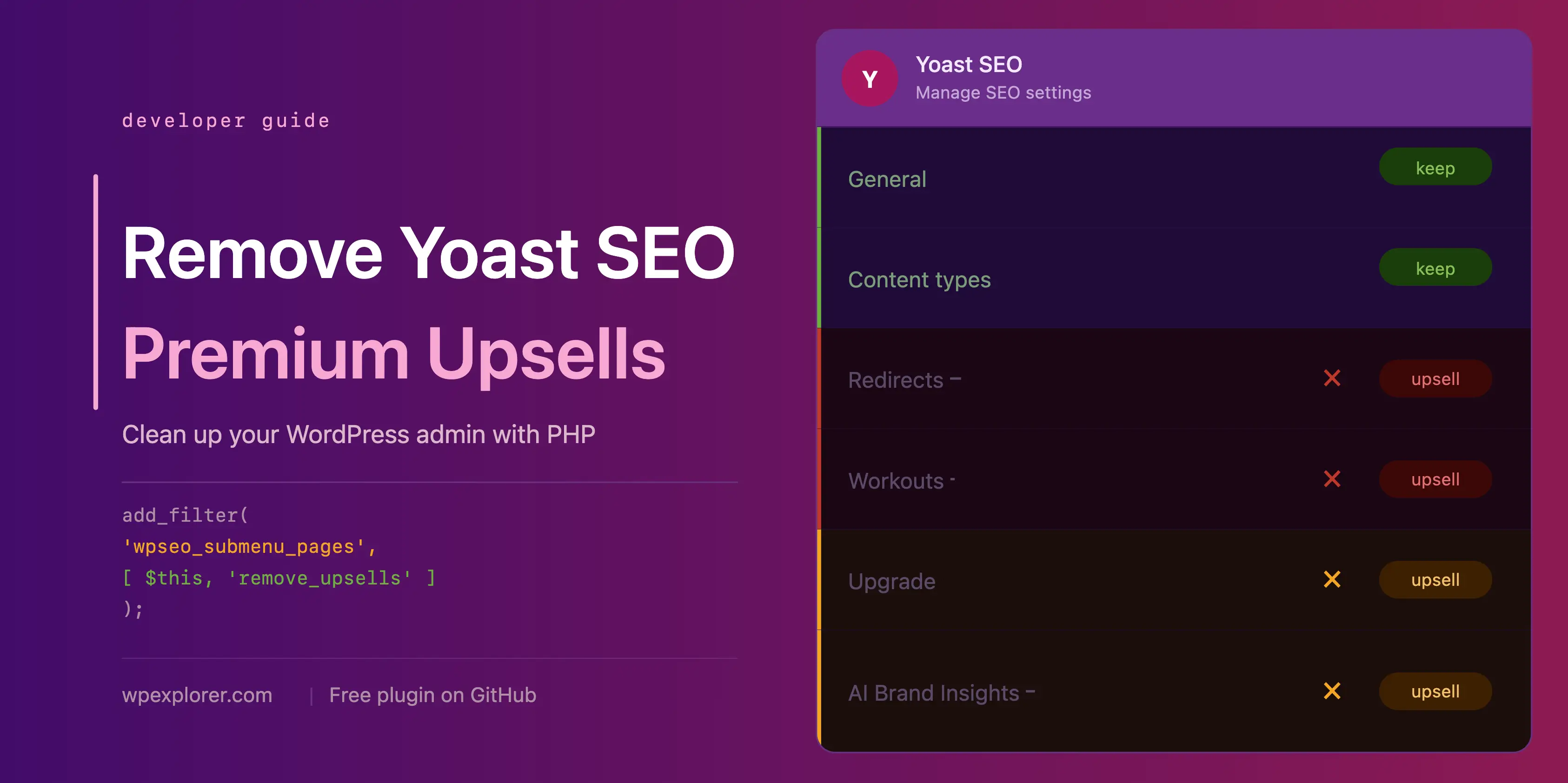
The Dynamics of the Freemium Model in WordPress
The "freemium" business model, where a basic version of a product is offered for free while advanced features are reserved for a paid premium version, has become ubiquitous in the WordPress plugin ecosystem. This model allows developers like Yoast to reach a vast user base, providing essential functionality without an upfront cost, while simultaneously generating revenue through premium upgrades to fund ongoing development, support, and innovation. Yoast SEO, with millions of active installations, exemplifies the success of this approach, offering critical SEO tools to individuals and businesses worldwide.

However, the freemium model also presents inherent challenges, particularly regarding user experience in the administrative backend. For many users, especially professional developers managing client sites or those prioritizing a minimalist interface, the constant presence of premium banners, dedicated upsell pages, and promotional widgets can be perceived as clutter or a distraction. These elements, while serving Yoast’s legitimate business interests, can detract from productivity and the overall professional aesthetic of the WordPress dashboard. The desire for a pristine, focused admin environment has led to a demand for solutions that can selectively remove these promotional elements without sacrificing the core functionality of the free plugin.
Unpacking the "Upsell Noise": A Chronology of Distractions
Over time, Yoast SEO has integrated various forms of premium promotion into its free plugin. These elements are strategically placed to maximize visibility and encourage upgrades, but cumulatively, they create a cluttered experience for those committed to the free version.
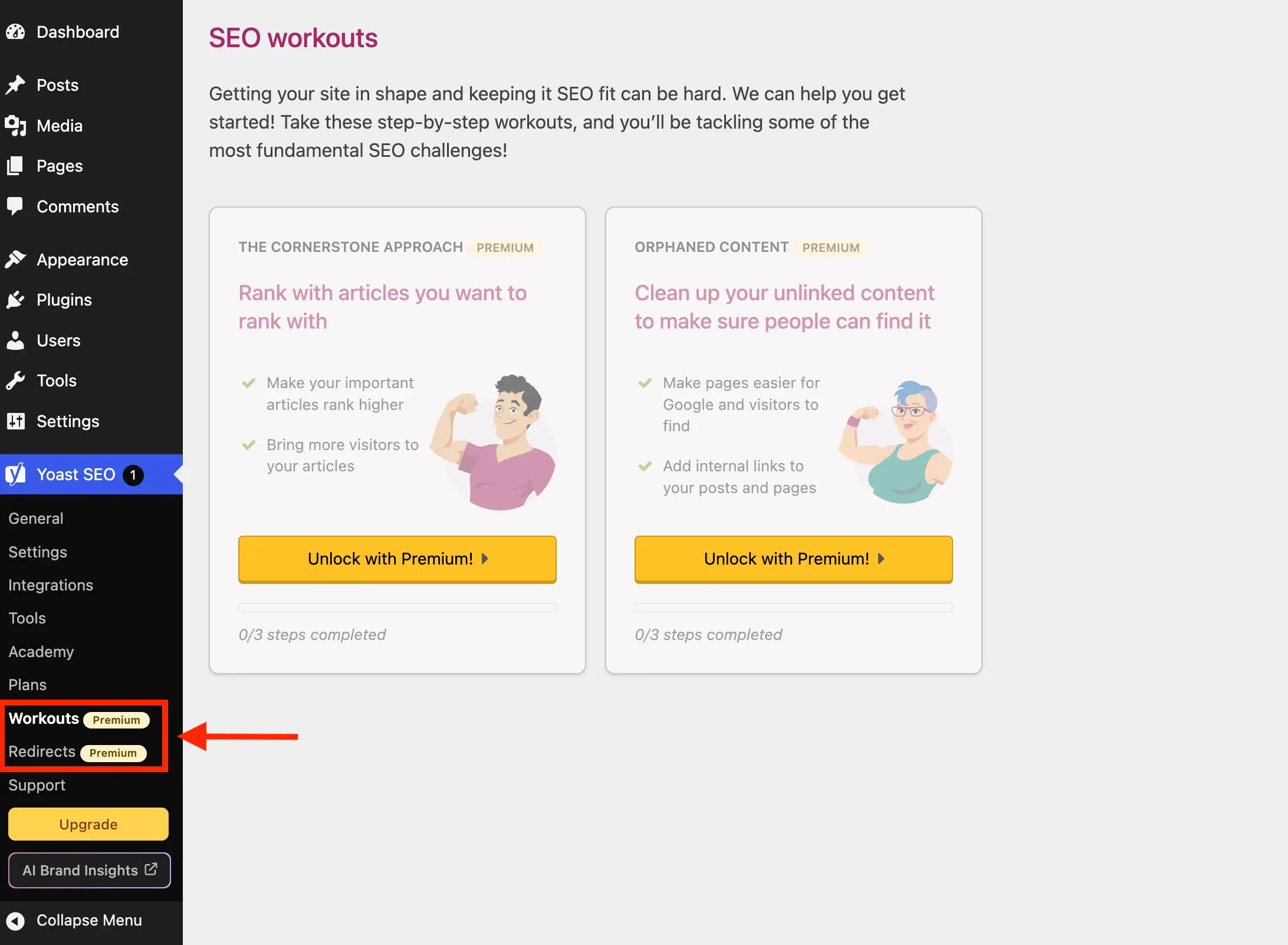
- Premium Admin Pages: Yoast SEO registers several menu items that, when clicked, lead directly to an upgrade screen rather than functional features in the free version. Pages such as "Redirects" and "Workouts" fall into this category, serving no practical purpose for free users and solely acting as promotional gateways.
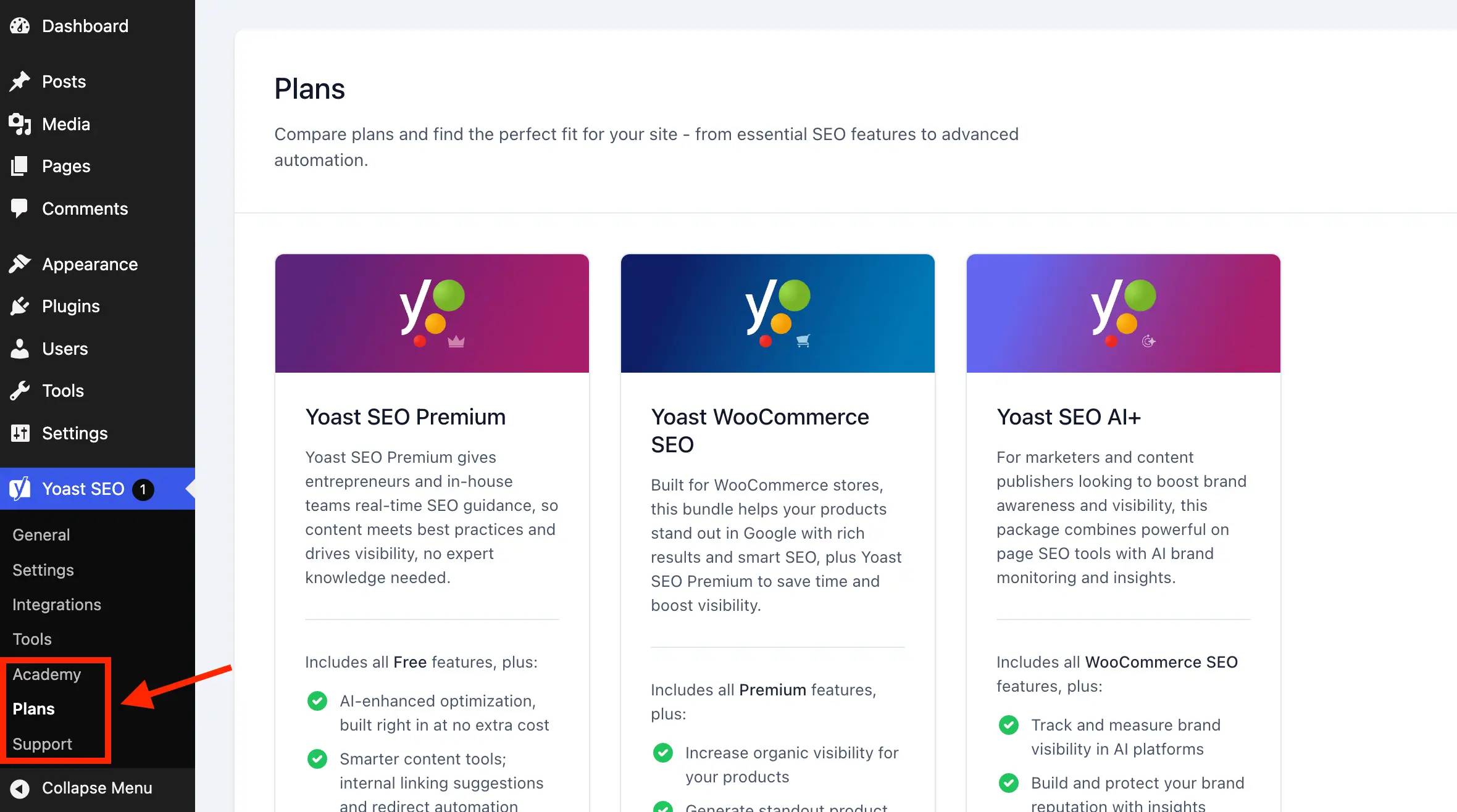
- Unnecessary Admin Pages: Beyond the explicit premium-gated pages, Yoast also includes administrative sections like "Plans," "Academy," and "Support." While "Plans" is overtly a sales page, "Academy" primarily links to external, often premium, learning content, and "Support" merely aggregates links to external help resources. These pages add volume to the administrative menu without offering direct, day-to-day utility within the dashboard itself.
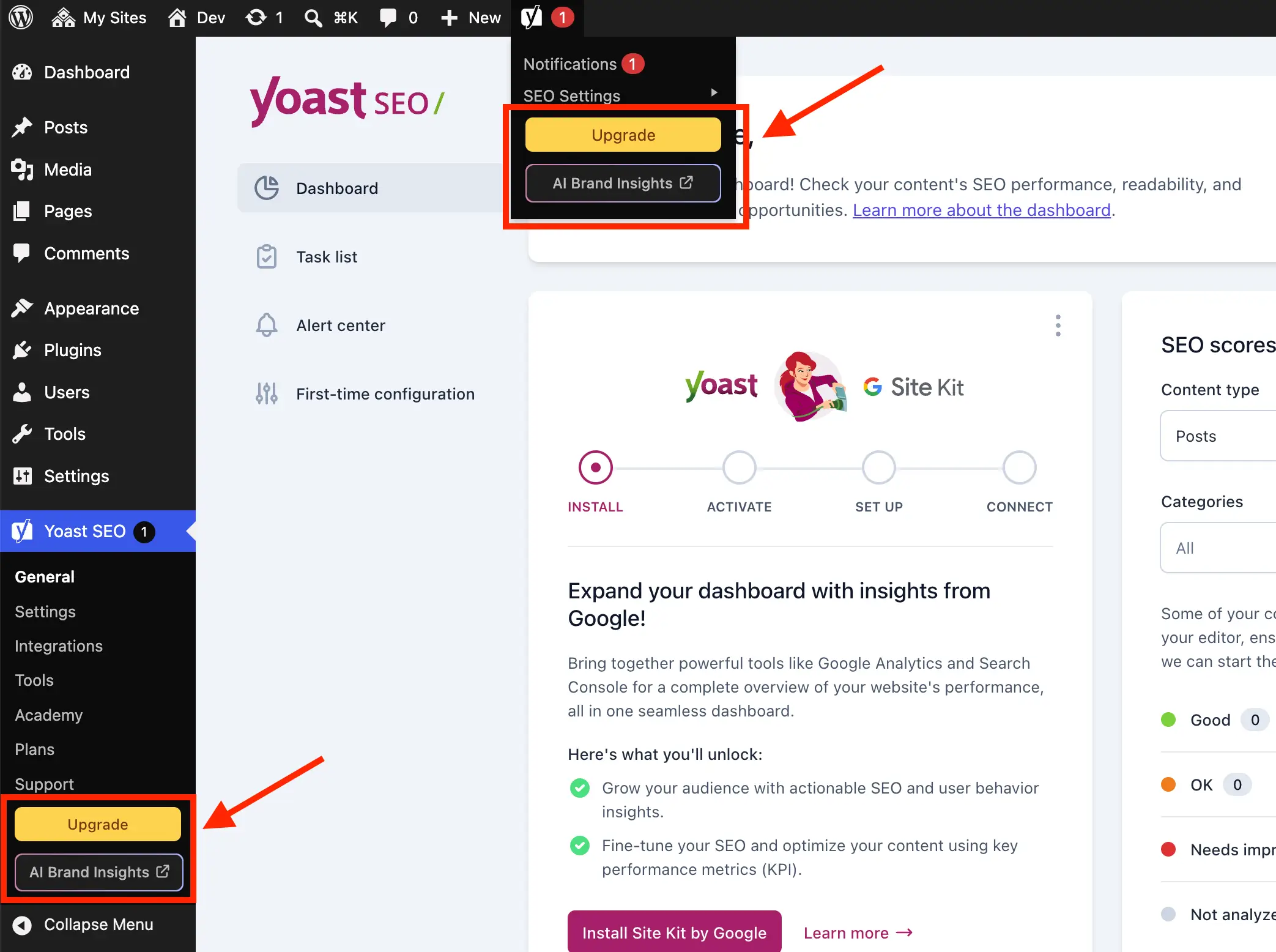
- Sidebar & Admin Toolbar Buttons: Prominent "Upgrade" and "AI Brand Insights" buttons are typically displayed in the WordPress sidebar navigation and the top admin toolbar. These are direct calls to action for purchasing premium features, consistently visible regardless of the user’s current admin screen.
- Dashboard Widget: Upon logging into the WordPress dashboard, users are greeted by a Yoast SEO widget. This widget typically provides an overview of site SEO scores and showcases the latest blog posts from Yoast.com. Critically, this widget performs an uncached HTTP request to
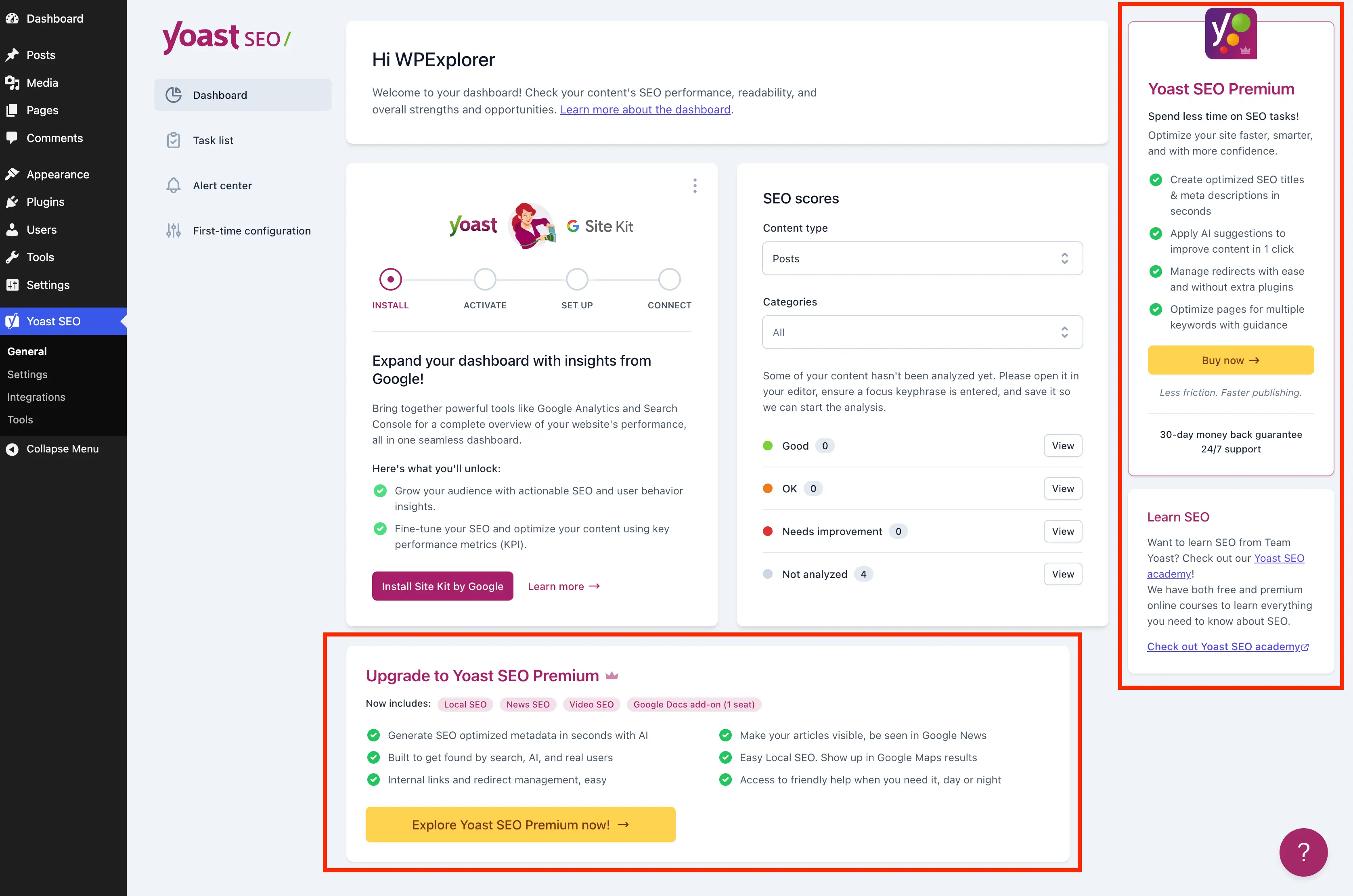
yoast.com/feed/widget/on every dashboard load, potentially impacting backend performance. Furthermore, it transmits the WordPress and PHP versions as query string parameters, subtly exposing server environment details. - Promotional Banners and Sticky Sidebars: Within Yoast SEO’s own settings pages, users encounter promotional banners (often at the bottom of the page) and sticky sidebars. These JavaScript-rendered components typically feature upgrade advertisements and "Learn SEO" widgets linking back to Yoast.com.
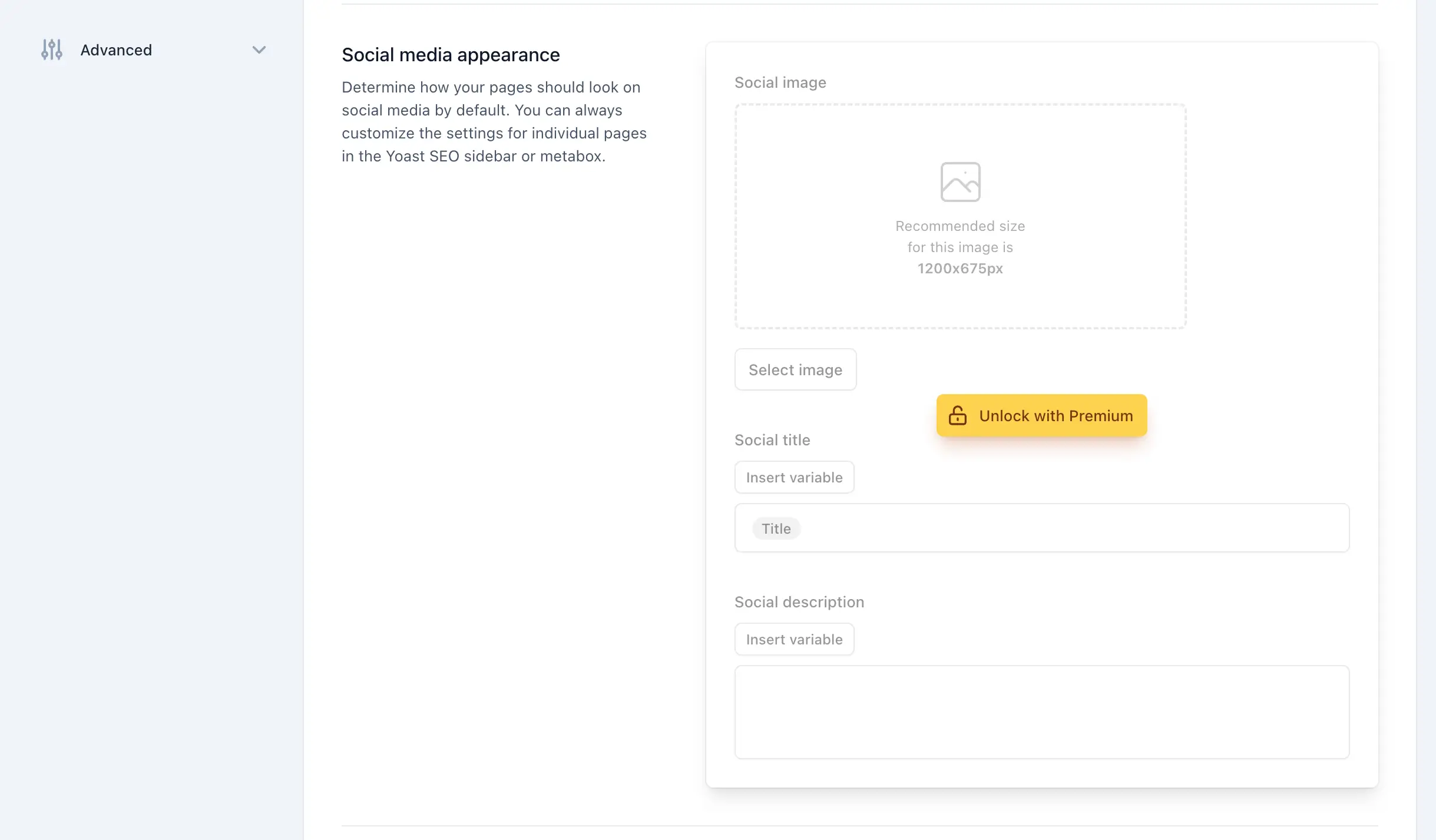
- Locked Premium Fields: Throughout various Yoast SEO settings panels, certain fields and options are visually "locked" or grayed out, accompanied by an upgrade prompt. These serve no functional purpose in the free version and contribute to visual noise on otherwise usable settings pages.
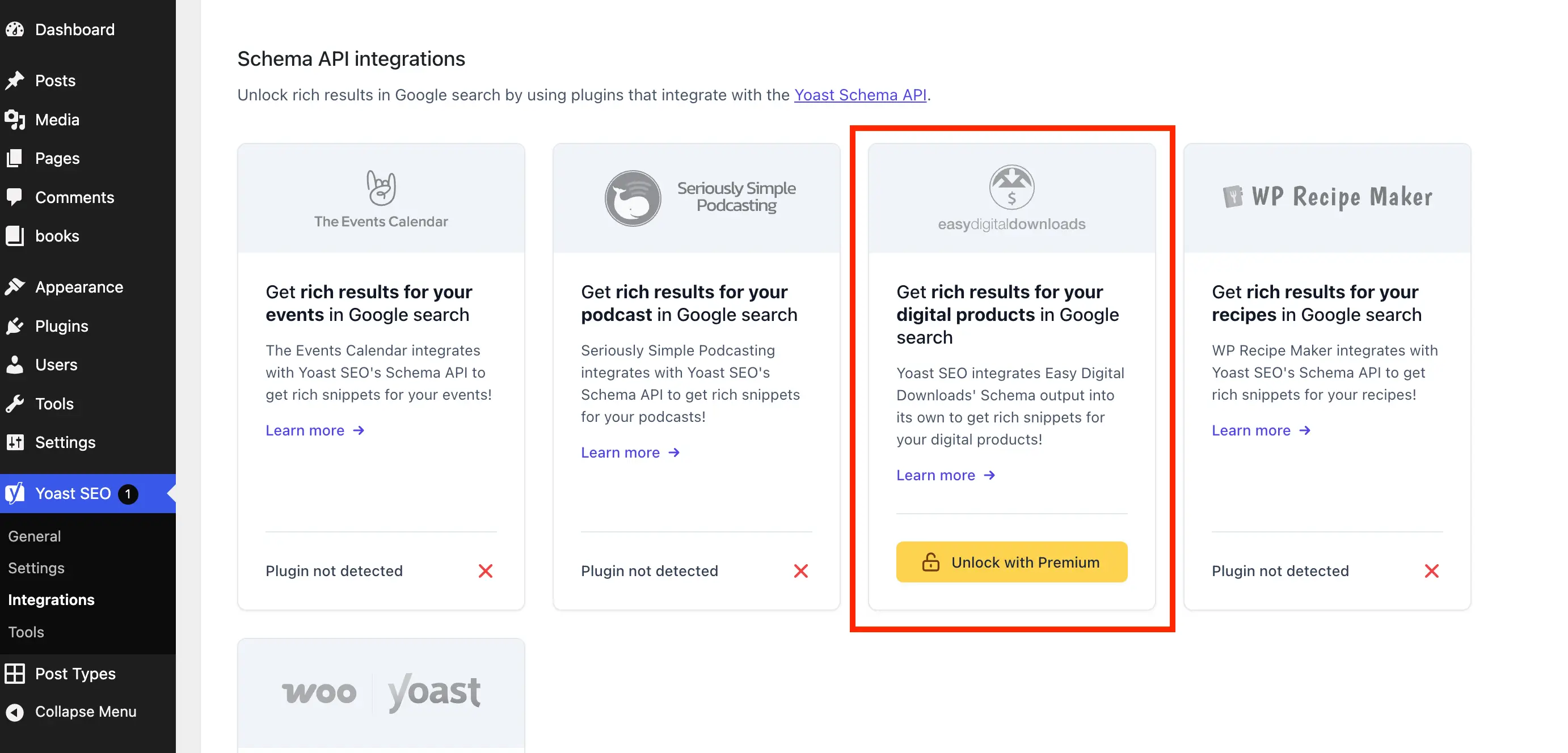
- Integrations Page Upsell Cards: The Yoast SEO integrations page, which lists third-party tools compatible with the plugin, often features cards displaying an "Unlock with Premium" button for specific integrations, even if other integrations on the same page are free.
- Metabox Upsells in the Editor: Perhaps the most intrusive elements are the premium upsells embedded within the Yoast SEO metabox at the bottom of the classic WordPress editor and within the custom Gutenberg sidebar. These appear every time a post or page is edited, directly impacting content creation workflows.
Technical Solutions: Architecting a Cleaner Interface
The proposed solutions leverage WordPress’s flexible hook system (filters and actions) and targeted CSS injection to systematically remove or hide these promotional elements. The core approach involves wrapping all code within a PHP class (WPEX_Remove_Yoast_SEO_Upsells) to maintain organization and prevent conflicts. Crucially, checks are implemented to ensure the code only runs if Yoast SEO is active and to exit early if the premium version is already installed, rendering the removal unnecessary.
-
Removing Premium Admin Pages:
- By hooking into the
wpseo_submenu_pagesandwpseo_network_submenu_pagesfilters withPHP_INT_MAXpriority, the system can intercept and modify the list of registered submenu pages. - A robust method involves detecting pages flagged with the
yoast-premium-badgeHTML within their menu title, dynamically identifying and removing premium-only pages like "Redirects" and "Workouts." - Alternatively, specific page slugs (e.g.,
wpseo_redirects,wpseo_workouts) can be explicitly targeted for removal, though this requires manual updates if Yoast introduces new premium pages. - Unnecessary pages such as "Plans" (
wpseo_licenses), "Academy" (wpseo_page_academy), and "Support" (wpseo_page_support) are similarly removed using this filter.
- By hooking into the
-
Eliminating Upsell Buttons from Sidebar & Admin Toolbar:
- The "Upgrade" button, also registered via
wpseo_submenu_pages, is removed using the same filter as the premium admin pages. - The "AI Brand Insights" button, due to its high registration priority, necessitates a direct removal using WordPress’s
remove_submenu_pagefunction, hooked intoadmin_menu. - For the admin toolbar, the
admin_bar_menuaction is used toremove_nodeelements with specific IDs, such aswpseo-get-premiumandwpseo_brand_insights.
- The "Upgrade" button, also registered via
-
Deactivating the Yoast SEO Dashboard Widget:
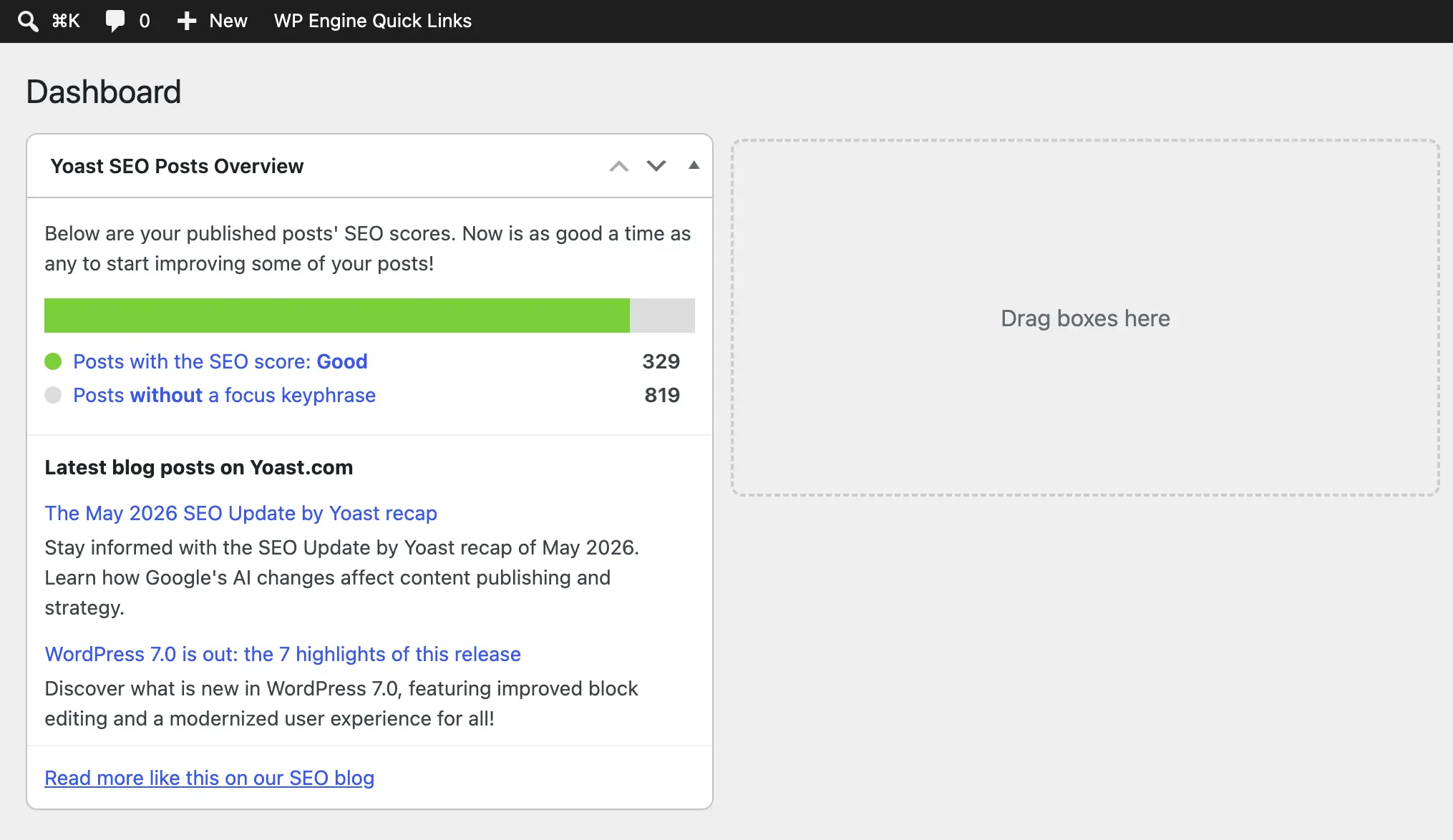
- The
wp_dashboard_setupaction, withPHP_INT_MAXpriority, allows for the removal of the widget usingremove_meta_box( 'wpseo-dashboard-overview', 'dashboard', 'normal' ). - To prevent unnecessary asset loading and mitigate performance/privacy concerns, the
admin_enqueue_scriptsaction is used towp_dequeue_scriptandwp_dequeue_stylefor the widget’s associated assets (e.g.,yoast-seo-dashboard-widget,yoast-seo-wp-dashboard). This is conditionally applied only on the dashboard screen.
- The
-
Concealing Promotional Banners, Sticky Sidebars, and Locked Fields (CSS Injection):
- Since many promotional elements are JavaScript-rendered components lacking unique identifiers or direct PHP hooks, CSS injection becomes the primary method.
- A custom stylesheet is registered and enqueued using
wp_register_styleandwp_enqueue_style, with the actual CSS rules added viawp_add_inline_style. - Precise CSS selectors target the structural layout of banners and sticky sidebars on Yoast admin pages. These selectors are carefully crafted to avoid unintentionally hiding functional elements, but their reliance on structure means they may require updates if Yoast significantly redesigns its admin interface.
- For locked premium fields, more reliable CSS classes like
yst-button--upsell(on upgrade buttons) andyst-feature-upsell(on locked sections) allow for accurate targeting. - The same CSS injection method is used to hide "Unlock with Premium" cards on the integrations page, leveraging its unique page ID for precise targeting.
-
Minimizing Upsells in the Post Editor (Metaboxes):
- Similar to admin page banners, upsells within the Yoast SEO metabox and Gutenberg sidebar are addressed through CSS injection.
- The CSS is conditionally enqueued only on post and term editing screens (
post,termbase screen IDs) to optimize performance. - Selectors target elements containing
yst-badge--upsell,yoast-prominent-words,yst-feature-upsell--card, and specific ad IDs (premium-seo-analysis-upsell-ad-sidebar,premium-seo-analysis-upsell-ad-metabox).
Broader Implications and Community Response
The collective implementation of these technical solutions signifies a broader trend within the WordPress community: the pursuit of administrative efficiency and a clean user experience amidst the increasing commercialization of plugins. For individual users, a de-cluttered dashboard translates directly into improved focus and reduced cognitive load, enhancing productivity. For web development agencies, it means delivering a more polished, professional product to clients, free from third-party advertising that might confuse or detract from the client’s own brand.
From Yoast’s perspective, while these removals might slightly impact premium conversion rates, the continued ability for users to refine their free experience could also foster goodwill and maintain a larger, engaged free user base, many of whom may eventually upgrade as their needs evolve. The balance between aggressive monetization and user satisfaction remains a critical consideration for all freemium plugin developers.
The open-source nature of WordPress allows for such user-driven modifications. The complete PHP class, also available as a free plugin named wpex-remove-upsells-for-yoast-seo on GitHub, facilitates easy implementation. However, users are advised that due to the dynamic nature of plugin development, particularly for a highly evolving tool like Yoast SEO, these CSS selectors and PHP hooks may require periodic updates if Yoast implements significant changes to its admin design or underlying code. Community contributions via GitHub are encouraged to ensure the longevity and effectiveness of these solutions.
Ultimately, while Yoast SEO Premium offers a wealth of advanced features that might be invaluable for some, the ability to selectively remove promotional elements from the free version empowers users to tailor their WordPress experience. This ongoing dialogue between plugin developers and their user base shapes the future of the WordPress ecosystem, underscoring the importance of balancing business objectives with the fundamental principles of user control and a streamlined digital workspace.

