
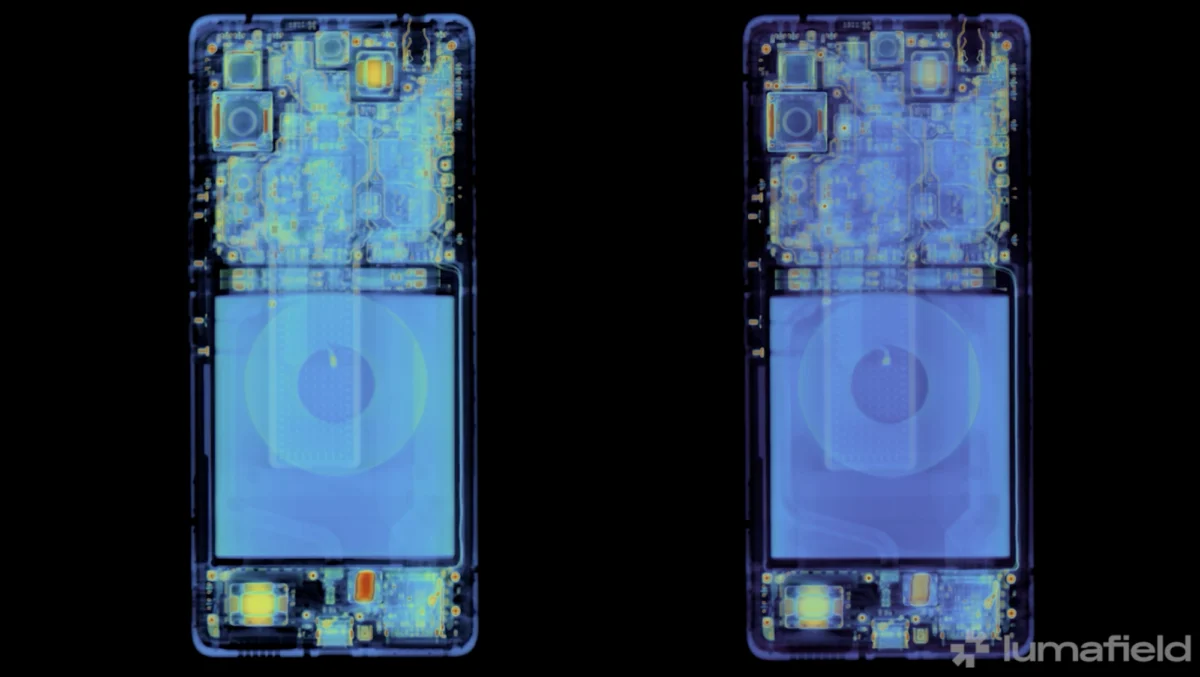
The official release of the Trump Mobile T1 has provided the first comprehensive opportunity for hardware experts and industry analysts to examine the device’s internal architecture. For months, speculation had mounted regarding the true origins of the smartphone, which was marketed with heavy emphasis on its alignment with American interests and its distinction from standard Chinese-manufactured devices. However, a detailed teardown conducted by the hardware repair authority iFixit, in collaboration with industrial X-ray firm Lumafield, has confirmed that the Trump Mobile T1 is not a bespoke American invention but is almost identical to the HTC U24 Pro, a mid-range smartphone produced by the Taiwanese electronics firm HTC.
The findings indicate that the Trump Mobile T1 is a "white-label" or rebranded version of the HTC U24 Pro, featuring a customized exterior and specific localized assembly choices designed to navigate geopolitical trade complexities. While the device is marketed as being guided by "American values," the underlying technology is rooted in the existing product line of a company that was once a dominant force in the global smartphone market.
The iFixit Teardown and Technical Findings
The investigation into the Trump Mobile T1’s hardware began with non-destructive testing. Using an industrial X-ray CT scanner provided by Lumafield, researchers compared the internal layout of the T1 with that of the HTC U24 Pro. The resulting scans revealed an internal architecture that is virtually indistinguishable between the two models. The placement of the logic board, the configuration of the triple-camera array, and the routing of internal ribbon cables were identical in both devices.
Upon physically opening the device, iFixit technicians confirmed that the core components matched the specifications of the HTC U24 Pro, which was released earlier in 2024. The Trump Mobile T1 utilizes the Qualcomm Snapdragon 7 Gen 3 chipset, a mid-tier processor designed for efficiency and capable performance in the upper-middle segment of the market. It is equipped with 12GB of RAM and options for 256GB or 512GB of internal storage.
There are, however, minor discrepancies that differentiate the T1 from its HTC counterpart. The Trump Mobile T1 features a slightly larger battery capacity compared to the standard U24 Pro, though the internal footprint remains the same. Furthermore, the external chassis has been modified; the T1 sports a distinctive gold-painted finish and features a speaker grille with a different hole pattern than the original HTC model. Despite these aesthetic and minor internal tweaks, the fundamental engineering remains a product of HTC’s design team.
A History of the Hardware: The HTC Connection
To understand the context of the Trump Mobile T1, it is necessary to look at the manufacturer behind the hardware. HTC (High Tech Computer Corporation), based in Taoyuan City, Taiwan, was a pioneer in the smartphone industry. It manufactured the first Android smartphone, the T-Mobile G1, and was once the leading smartphone vendor in the United States. In recent years, however, HTC has seen its market share dwindle significantly in the face of competition from Apple, Samsung, and various Chinese brands.
Today, HTC focuses primarily on virtual reality (VR) hardware through its Vive brand, while its smartphone division produces a limited number of niche Android devices. The HTC U24 Pro represents the company’s 2024 effort in the mid-range segment, featuring a 6.8-inch OLED display with a 120Hz refresh rate and a camera system consisting of a 50-megapixel main sensor, a 50-megapixel telephoto lens, and an 8-megapixel ultra-wide sensor. By utilizing this existing platform, the distributors of the Trump Mobile T1 were able to bring a device to market without the massive research and development costs associated with designing a smartphone from the ground up.
Chronology of the Trump Mobile T1 Development
The journey of the Trump Mobile T1 from announcement to teardown reflects a shifting narrative regarding its manufacturing origins:

- Initial Announcement (Early 2024): Marketing materials for the device initially suggested a strong "Made in the USA" component. Early promotional rhetoric led some consumers to believe the phone would be a domestic alternative to foreign-made electronics.
- Marketing Pivot (Mid-2024): As the device neared production, the language on the official Trump Mobile website was subtly updated. References to "Made in the USA" were replaced with phrases such as "designed with American values in mind" and "American teams helping guide design and quality."
- HTC U24 Pro Launch (June 2024): HTC officially released the U24 Pro in international markets, priced at approximately $469.99. Tech enthusiasts quickly noticed the striking similarity in specifications between the U24 Pro and the teased specs of the T1.
- Device Availability (Late 2024): The Trump Mobile T1 became available for purchase at a retail price of $499.
- The Teardown (Present): iFixit and Lumafield published their findings, confirming the shared DNA between the T1 and the HTC U24 Pro.
Manufacturing and "Made in USA" Standards
One of the most significant points of contention surrounding the Trump Mobile T1 involves its country of origin. While the phone is not "Made in the USA" by the Federal Trade Commission (FTC) standards, the teardown revealed an interesting manufacturing choice. Several components within the T1, including the battery, appear to have been sourced from or assembled in the Philippines.
Typically, the vast majority of smartphone components and batteries are manufactured in China. By shifting assembly or component sourcing to the Philippines, the producers of the Trump Mobile T1 may be attempting to distance the product from the Chinese supply chain. This move is likely a strategic decision to avoid high tariffs on Chinese-made electronics and to appeal to a consumer base that is wary of Chinese technology for security or political reasons.
However, according to the FTC, for a product to be labeled as "Made in USA," "all or virtually all" of the product must be made in the United States. This includes all significant parts and processing. The Trump Mobile T1, being a rebranded Taiwanese design with components likely sourced globally and assembled in Southeast Asia, does not meet this threshold. The shift in marketing language to "American values" appears to be a legal safeguard against potential FTC enforcement regarding deceptive origin labeling.
Comparative Data: Trump Mobile T1 vs. HTC U24 Pro
The following data highlights the similarities and minor differences discovered during the hardware analysis:
- Processor: Both devices utilize the Qualcomm Snapdragon 7 Gen 3 (4nm process).
- Memory: Both feature 12GB of LPDDR5 RAM.
- Display: Both use a 6.8-inch FHD+ OLED panel with a 120Hz refresh rate.
- Camera System: Both utilize a triple-lens setup (50MP Main, 50MP Telephoto, 8MP Ultra-wide) and a 50MP front-facing camera.
- Battery: The HTC U24 Pro features a 4,600mAh battery, while the Trump Mobile T1 claims a slightly higher capacity, though the physical size remains consistent with the internal housing.
- Charging: Both support 60W wired fast charging and 15W wireless charging.
- Software: The T1 runs a modified version of Android 14, marketed as being "de-Googled" or privacy-focused, whereas the HTC U24 Pro runs a standard version of Android with HTC’s Sense UI.
- Price: The HTC U24 Pro launched at $469.99; the Trump Mobile T1 is priced at $499.00.
Broader Implications for the Tech Industry
The revelation that the Trump Mobile T1 is a rebranded HTC device underscores a common practice in the electronics industry known as Original Design Manufacturing (ODM). Many companies, including well-known brands, often license hardware designs from ODMs and apply their own branding and software. This allows organizations to enter the hardware market quickly without the infrastructure of a traditional manufacturer.
In the context of politically branded technology, this practice raises questions about transparency and consumer expectations. Consumers purchasing the Trump Mobile T1 are paying a premium—approximately $30 more than the original HTC price—for a device that promises a specific ideological alignment. The "value add" for the T1 appears to be the gold aesthetic, the specific sourcing of components to avoid China, and a software suite tailored to a specific demographic.
From a security perspective, using an established hardware platform like HTC’s may actually be beneficial. HTC has a long history of hardware engineering, and the U24 Pro is a known quantity with standard security protocols. However, for those who expected a ground-up American technological revolution, the teardown serves as a reality check on the complexities of modern globalized manufacturing.
Conclusion
The Trump Mobile T1 is a clear example of how global supply chains and political branding intersect. While the device may be "guided" by American teams and marketed to an American audience, its heart is a Taiwanese-designed mid-range smartphone. The use of an industrial X-ray scan has removed the veil of mystery surrounding the device, confirming that beneath the gold paint and "American values" lies the reliable, if unoriginal, architecture of the HTC U24 Pro. As the smartphone market continues to mature, such rebranding efforts are likely to become more common, challenging consumers to look beyond the exterior finish to understand the true origin of their technology.

