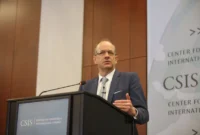

The Center for Strategic and International Studies (CSIS) has convened a high-level, half-day conference under its Defense360 initiative to dissect the intricacies of the fiscal year (FY) 2017 defense budget request. As the Pentagon balances immediate operational requirements with long-term technological modernization, this gathering of senior Department of Defense (DoD) officials and leading defense analysts serves as a critical forum for evaluating the administration’s strategic calculus. The event, held at the CSIS headquarters, focuses on the connectivity between fiscal constraints, shifting geopolitical threats, and the internal mechanisms of defense resource allocation.
The Strategic Landscape of the FY2017 Budget
The FY2017 budget request represents a pivotal moment for the U.S. military. Amid a global security environment defined by the resurgence of great-power competition, the proliferation of advanced anti-access/area-denial (A2/AD) capabilities, and the persistent requirements of counter-terrorism operations, the DoD must allocate limited resources with precision. The budget proposal, which reflects the administration’s final full-year request before the 2016 presidential transition, attempts to reconcile these competing pressures.
Under Secretary of Defense (Comptroller) Mike McCord, Director of Cost Assessment and Program Evaluation (CAPE) Dr. Jamie Morin, and Assistant Secretary of Defense for Strategy, Plans, and Capabilities Robert Scher provide the primary executive perspective. Their participation highlights the administration’s emphasis on "force structure" versus "force readiness." In previous years, the DoD has struggled with the constraints imposed by the Budget Control Act (BCA) of 2011, which introduced automatic spending caps known as sequestration. The FY2017 request aims to navigate these fiscal guardrails while sustaining a force capable of responding to crises in Europe, the Middle East, and the Indo-Pacific.
A Chronology of Fiscal Challenges
The road to the FY2017 budget request was marked by significant legislative and operational volatility. Since the enactment of the BCA, the Department of Defense has operated under a series of budgetary compromises that have often delayed long-term planning.
- 2011: The Budget Control Act is passed, setting the stage for a decade of potential sequestration.
- 2013-2015: The DoD experiences cycles of partial government shutdowns and the recurring need for Bipartisan Budget Acts (BBA) to provide temporary relief from spending caps.
- February 2016: The administration formally submits the FY2017 budget request to Congress, seeking a balance between modernization and readiness.
- Post-Submission: The budget enters the congressional authorization and appropriations cycle, where committees weigh the Pentagon’s requests against broader fiscal priorities.
This conference serves as a focal point for evaluating the successes and failures of this process, providing a platform to assess whether the proposed spending levels are sufficient to maintain the military’s qualitative edge over peer competitors.
Analytical Perspectives: Budgetary Connectivity
The conference structure allows for a two-tiered analysis. The first session features the architects of the budget, while the second session brings together a panel of distinguished experts to provide independent assessments. Tina Jonas, former Under Secretary of Defense (Comptroller), joins experts from CSIS, the Center for a New American Security (CNAS), and the American Enterprise Institute (AEI) to offer a critical review.
The primary point of discussion among these experts is the "connectivity" between strategy and budget. In professional military analysis, the concept of "strategy-driven budgeting" is often contrasted with "budget-driven strategy." The panelists are tasked with determining whether the FY2017 request is a true reflection of the National Defense Strategy or if it is primarily a reactive document designed to comply with congressional spending limits.
Andrew Hunter and Mark Cancian of CSIS bring a focus on the defense-industrial base. A central question in their assessment is how budget volatility affects the private sector’s ability to innovate and scale production. When the DoD relies on Continuing Resolutions (CRs)—short-term funding patches that prevent new program starts—the industrial base suffers from uncertainty, leading to increased costs and delayed delivery of critical platforms.
Data and Trends in Defense Spending
Supporting the discourse at the conference are several key data points that define the current fiscal environment. The DoD has increasingly turned to the Overseas Contingency Operations (OCO) fund as a mechanism to supplement the "base" budget. Critics argue that this practice masks the true cost of military operations and sidesteps the limitations imposed by the BCA.
- Procurement Trends: The FY2017 budget places a premium on research, development, test, and evaluation (RDT&E) to ensure that the U.S. military can maintain its technological advantage in fields such as cyber warfare, artificial intelligence, and hypersonic weaponry.
- Readiness Metrics: Recent years have seen a decline in aviation readiness and training hours across all military services. The budget request includes targeted funding to address these shortfalls, though analysts debate whether these increases are adequate to reverse the trend of deferred maintenance.
- Personnel Costs: Rising healthcare and pension costs continue to consume a larger portion of the total defense budget, forcing the DoD to make difficult trade-offs regarding the size and composition of the force.
The Role of Defense Reform
Complementing the academic and professional discussions, the conference promotes a survey on defense reform. This initiative underscores a growing consensus in Washington that the Pentagon’s organizational structure, acquisition processes, and budgetary systems are in need of fundamental modernization. The complexity of the current budget, often spanning thousands of pages of justifications, is frequently cited as a barrier to agility.
The panel discussion involving Shawn Brimley (CNAS) and Roger Zakheim (AEI) highlights the bipartisan nature of these concerns. Both CNAS and AEI have produced extensive research on how to streamline the acquisition process, reduce bureaucratic overhead, and improve the efficiency of the Pentagon’s back-office functions. Their input is vital to understanding the political feasibility of the reforms currently being debated on Capitol Hill.
Broader Implications for National Security
The implications of the FY2017 budget extend far beyond the Pentagon’s walls. As the U.S. looks to sustain its role as a global stabilizer, the budget serves as a signal to both allies and adversaries. A robust, well-funded military modernization program is seen as a deterrent to revisionist powers. Conversely, a failure to address readiness gaps or technological shortfalls may encourage competitors to act more assertively in their respective regions.
Furthermore, the transition to a new administration following the FY2017 cycle necessitates a forward-looking perspective. The participants at the Defense360 conference are not only analyzing the current request but are also laying the groundwork for the next National Defense Strategy. By documenting the strategic calculus behind the current budget, CSIS provides a roadmap for future decision-makers to identify what is working and what requires a radical change in direction.
Conclusion: Evaluating the Path Forward
The CSIS Defense360 conference functions as a microcosm of the larger debate over American power and fiscal responsibility. Through the lens of the FY2017 budget, stakeholders are forced to confront the reality that defense planning is an exercise in managing scarcity. Whether it is the integration of next-generation aircraft, the sustainment of legacy fleets, or the investment in emerging technologies, every dollar spent reflects a choice about the future of national security.
As Todd Harrison, Director of Defense Budget Analysis, leads the proceedings, the tone remains one of objective inquiry. The goal is not merely to critique the numbers, but to understand the trade-offs inherent in the budget. With the participation of both the architects of the defense policy and the outside observers who track its implementation, the conference provides a comprehensive overview of the challenges facing the Department of Defense. As the legislative session progresses, the findings from this event will likely inform the testimony, reports, and strategic thinking that will shape the defense policy of the United States for the coming decade.