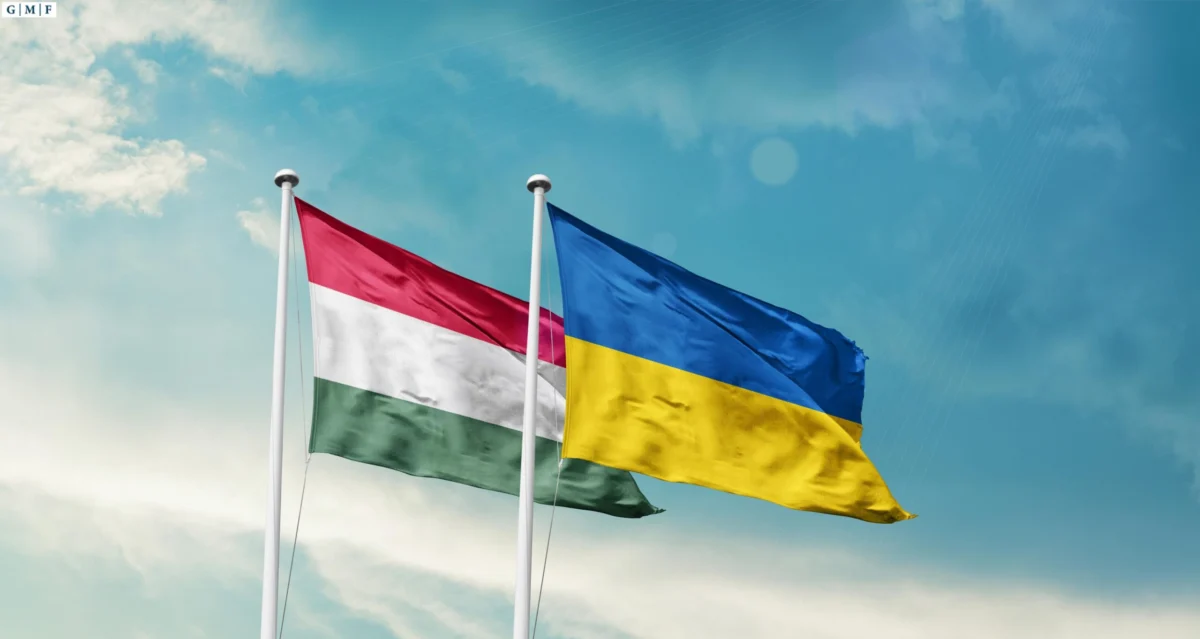
The German Marshall Fund of the United States launched its Hungary–Ukraine Reconciliation Initiative in early 2026 to facilitate a structured dialogue between Hungarian and Ukrainian academics and policy experts to develop a vision for a degree of normalization in the relations between the two countries. The initiative, established at a critical juncture in Central European geopolitics, aimed to bridge the deep-seated mistrust that had paralyzed diplomatic communication between Budapest and Kyiv for nearly a decade. The political landscape of this endeavor was abruptly altered in April 2026, when the Tisza party secured a landslide victory in the Hungarian parliamentary elections. This democratic mandate signaled a pivot in Hungarian domestic and foreign policy, effectively dismantling the obstructionist stance that had previously strained Hungary’s relationships within the European Union and NATO, thereby creating the necessary space for the bilateral breakthrough that followed.
The Origins of a Decade-Long Dispute
The discord between Budapest and Kyiv traces its roots back to 2017, when the Ukrainian Verkhovna Rada passed the "Law on Education." The legislation, intended to strengthen the role of the Ukrainian language in the public sphere, was viewed by the Hungarian government as a direct infringement on the rights of the ethnic Hungarian minority residing in the Zakarpattia Oblast, or Transcarpathia. The controversy intensified in 2019 with the passage of the "Law on Ensuring the Functioning of the Ukrainian Language as the State Language," which further restricted the use of minority languages in public services, media, and education.
For years, Hungary leveraged its position as an EU and NATO member to block high-level cooperation between Ukraine and these organizations, citing the protection of the ethnic Hungarian minority as a prerequisite for any progress. This "veto diplomacy" created a systemic friction point within the Western alliance, complicating Ukraine’s efforts to integrate into European structures at a time when its national security was under existential threat.
A Timeline of the 2026 Diplomatic Breakthrough
The year 2026 marked a profound shift in the trajectory of these relations. The timeline of this reconciliation follows a rapid series of diplomatic milestones:
- January 2026: The German Marshall Fund launches the Hungary–Ukraine Reconciliation Initiative, bringing together academic experts to draft a framework for bilateral normalization.
- April 2026: The Tisza party wins a decisive parliamentary majority in Hungary, signaling a departure from the previous government’s confrontational foreign policy.
- May 2026: High-level bilateral meetings between the new Hungarian administration and Ukrainian government officials begin in a renewed spirit of cooperation.
- June 2026: A landmark political agreement is signed, effectively resolving the minority-rights dispute and paving the way for the opening of the first EU accession negotiation cluster for Ukraine.
- July 2026: The European Commission confirms that the bilateral agreement has been integrated into Ukraine’s official minority-rights action plan, meeting the EU’s conditionality requirements.
The June 2026 Agreement: Substance and Strategic Value
The agreement reached in June 2026 represents a multifaceted compromise. Its practical value is grounded in the restoration and expansion of minority rights across several key sectors. Under the terms of the accord, the ethnic Hungarian minority in Transcarpathia is guaranteed the right to use their mother tongue in primary and secondary education, as well as in local public administration. Furthermore, the agreement ensures that cultural institutions, such as libraries and theaters, can operate in the Hungarian language, and it permits the display of national symbols in a manner consistent with regional cultural traditions.
However, the strategic value of this agreement extends far beyond the borders of Zakarpattia. By incorporating these guarantees into Ukraine’s official minority-rights action plan—a document required by the European Commission for the opening of accession negotiations—the dispute has been effectively multilateralized. What was once a volatile bilateral standoff is now a formal component of the EU’s enlargement conditionality. This shift ensures that any future regression in minority rights would not only be a breach of a bilateral promise to Budapest but a violation of Ukraine’s formal obligations to the European Union, thereby providing a robust institutional safeguard.
Supporting Data and Demographic Context
The resolution of this dispute is of particular importance given the demographic profile of the border regions. According to the most recent census estimates, approximately 150,000 ethnic Hungarians live in the Zakarpattia Oblast. For these individuals, the ability to access public services in their native language is a fundamental matter of civic inclusion.
Data from the European Union Agency for Fundamental Rights suggests that the previous lack of legal clarity regarding language usage had led to a decrease in civic participation among minority populations. The 2026 agreement is designed to reverse this trend. Economic indicators from the region also suggest that cross-border trade, which had stalled due to diplomatic tensions, is poised to recover. Before the 2017 legislation, bilateral trade between Hungary and Ukraine had been steadily increasing; the normalization of relations is expected to restore this growth, with projections suggesting a 15% increase in cross-border logistical cooperation over the next three years.
Official Responses and International Reaction
The reaction from international partners has been largely positive. The European Commission issued a statement in July 2026, welcoming the agreement as a "demonstration of political maturity" and a "crucial step forward in Ukraine’s European integration process." Brussels officials noted that the resolution of this issue removes one of the primary obstacles that had hindered the unanimous consent required for the opening of the first negotiation cluster.
In Kyiv, the government has framed the agreement as a necessary compromise that aligns with the country’s European aspirations. Ukrainian officials have emphasized that the protection of all national minorities, including the Hungarian community, is a cornerstone of the democratic reforms required for EU membership. In Budapest, the Tisza party-led government has presented the deal as a diplomatic victory that secures the rights of ethnic Hungarians while simultaneously strengthening the country’s regional security and standing within the European alliance.
Broader Implications for EU Enlargement
The resolution of the Hungary-Ukraine dispute carries significant implications for the broader EU enlargement process. First, it demonstrates that bilateral grievances, even those as deeply entrenched as language and education rights, can be successfully mediated through institutional frameworks like the one provided by the German Marshall Fund. By linking minority rights to the EU’s accession conditionality, the process has established a template for how the EU can manage future friction points as other nations in the Western Balkans and Eastern Europe advance toward membership.
Second, the reconciliation serves to stabilize the eastern flank of the European Union. By removing the veto threat, the agreement allows for a more unified European response to regional security challenges. This is particularly relevant in the context of the current geopolitical environment, where the cohesion of the EU and NATO is paramount.
Finally, the agreement underscores the evolving nature of sovereignty and minority protection in 21st-century Europe. The move away from unilateral, nationalistic policy stances toward a model of integrated, rights-based governance represents a significant evolution for both Hungary and Ukraine. As the implementation phase of the June 2026 agreement begins, the focus will shift to the long-term sustainability of these measures. Both nations must now demonstrate that they can move beyond the administrative mechanics of the agreement to foster a genuine, long-term partnership that transcends the history of the last decade.
The success of this initiative remains a work in progress, subject to the complexities of local politics in Zakarpattia and the overarching demands of the EU integration process. However, the foundational work completed by the German Marshall Fund and the subsequent political will demonstrated by the parties involved have effectively transformed a source of chronic instability into a case study for constructive diplomacy. As Ukraine continues its path toward European integration, the legacy of this reconciliation will likely be viewed as a pivotal moment in the normalization of Central European relations.