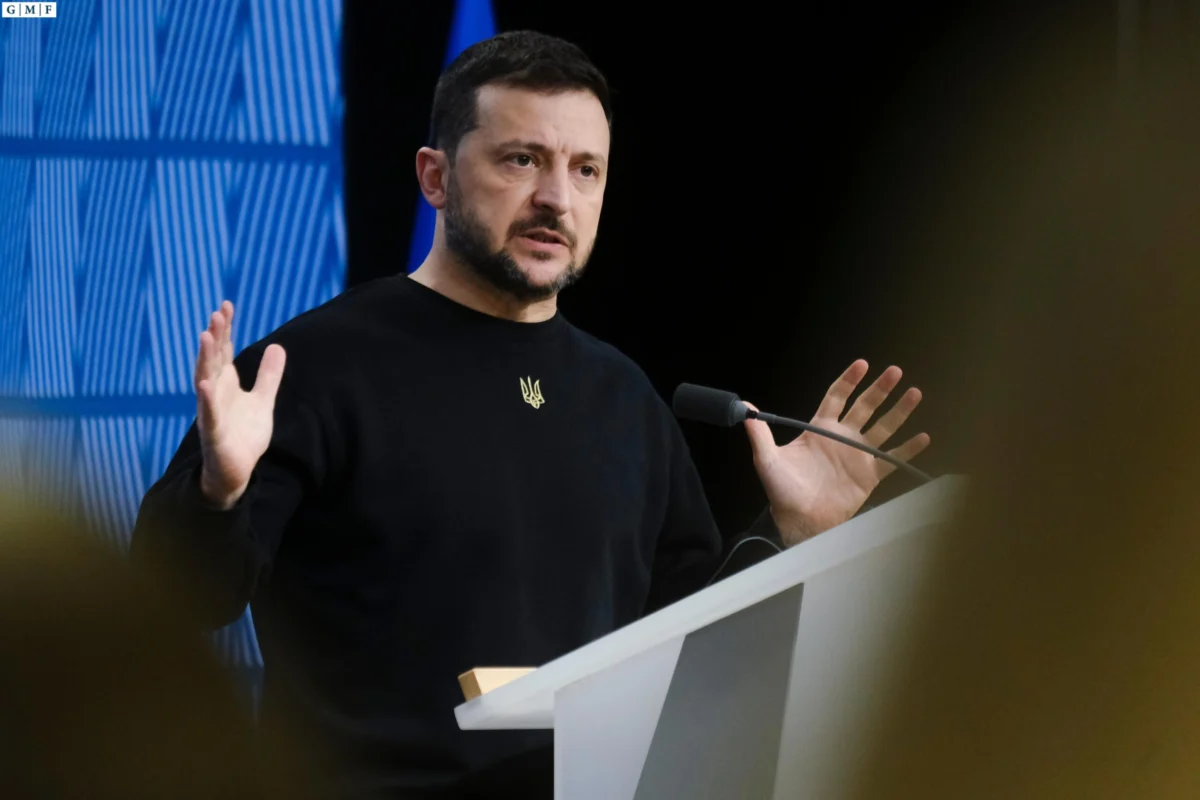
The political landscape in Kyiv underwent a seismic shift on July 14, when President Volodymyr Zelenskyy orchestrated the mass dismissal of the Cabinet of Ministers, triggered by the resignation of Prime Minister Yuliia Svyrydenko. This sweeping executive action, described by the president as a necessary evolution of Ukraine’s political strategy, has instead ignited a firestorm of uncertainty regarding the stability of the country’s wartime governance. While the President’s Office has framed the move as an attempt to streamline operations, the lack of a transparent, detailed justification has left parliament, civil society, and international stakeholders grappling with the implications for Ukraine’s ongoing defense and reform agendas.
A Chronology of the Executive Overhaul
The events of mid-July represent the most significant personnel upheaval since the beginning of the full-scale Russian invasion in 2022. The process began on July 12, when President Zelenskyy signaled a looming change in political direction via social media, though he provided no specifics regarding the scope or intent of the impending move. Two days later, on July 14, the formal resignation of Prime Minister Svyrydenko mandated the dissolution of the entire ministerial cabinet under Ukraine’s constitutional framework.
The timing of these events is notable for its proximity to major international summits and the ongoing implementation of critical military reforms. By July 16, following mounting public pressure and confusion among foreign allies, President Zelenskyy held a joint press conference with British Prime Minister Keir Starmer to provide a semblance of clarity. Zelenskyy explicitly cited a breakdown in communication between the Ministry of Defense—led by the now-dismissed Mykhailo Fedorov—and the Commander-in-Chief of the Armed Forces, Oleksandr Syrskyi. According to the president, the friction had reached a point where the two leaders refused to engage in constructive dialogue without his direct mediation. "I would very much like unity," Zelenskyy stated. "The sides did not find it."
The Fedorov Factor and Defense Continuity
The dismissal of Mykhailo Fedorov has become the focal point of the broader criticism surrounding this reshuffle. Appointed only six months prior, Fedorov was widely viewed as a technocratic reformer tasked with the gargantuan effort of digitizing military logistics and scaling the domestic production of unmanned aerial vehicles (UAVs). At the time of his removal, these initiatives were transitioning from the conceptual design phase into large-scale implementation.
The sudden nature of his departure raises critical questions about institutional continuity. In the context of a war of attrition, defense ministries require stability to manage complex procurement contracts, foreign aid coordination, and the logistical demands of a front line stretching over a thousand kilometers. Critics argue that removing a minister who was in the midst of implementing high-priority technological reforms risks stalling momentum at a moment when Ukraine is fighting to maintain its qualitative edge against a larger adversary.
International Reaction and Economic Stability
The reaction from Ukraine’s European partners has been characterized by surprise and a degree of diplomatic concern. Andrius Kubilius, the European Commissioner for Defense and Space, noted that the move caught many in Brussels off guard. For the European Union, which has pledged significant financial and material support for Ukraine’s defense industrial base, the sudden turnover of key interlocutors creates a vacuum that requires urgent reconciliation.
The European Commission has been instrumental in facilitating joint procurement agreements and integrating Ukraine into the EU’s defense research framework. Officials in Brussels have stressed that while personnel changes are an internal matter for a sovereign state, the sanctity of existing defense agreements and the continuity of funding programs must remain insulated from domestic political volatility. Beyond the EU, international financial institutions—including the International Monetary Fund (IMF), which has a multi-billion dollar Extended Fund Facility (EFF) tied to structural reforms—are closely watching. Market stability and investor confidence are predicated on the predictability of the Ukrainian government; thus, frequent and opaque changes to the cabinet risk increasing the "risk premium" associated with reconstruction and development projects.
Analyzing the Governance Crisis
At the core of the current crisis is the tension between the exigencies of wartime leadership and the requirements of democratic accountability. Since the imposition of martial law, the concentration of power within the Office of the President has grown significantly. While centralization is often defended as a tool for rapid decision-making in an emergency, it also limits the efficacy of parliamentary oversight and public debate.
The pattern of dismissing high-performing ministers without comprehensive public debate suggests a top-down management style that may be reaching its limits. By sidelining technocrats, the government risks creating a culture of caution, where officials prioritize political survival over bold, necessary policy shifts. Furthermore, the reliance on an increasingly insular circle of advisors risks depriving the executive branch of the diverse, cross-sectoral expertise required to manage a modern, complex state at war.
Implications for Long-Term Reform
The primary challenge facing the Ukrainian government is the need to sustain its democratic credentials while fighting for its existence. The reform agenda, which includes anti-corruption measures, judicial restructuring, and the modernization of public services, is not merely a condition for EU membership—it is a cornerstone of the country’s resilience.
When ministers are replaced without clear justification, the institutional memory of the state is eroded. Civil servants, who are the backbone of government, are left in a state of flux, unsure of whether their projects will survive the next cabinet reshuffle. This instability also impacts the recruitment of top-tier talent. Professionals from the private sector and civil society, who were brought into government to spearhead modernization, may become increasingly reluctant to accept roles where their tenures are precarious and their mandates are subject to the whims of presidential advisors.
A Path Toward Institutional Stability
For President Zelenskyy, the fallout from this week’s reshuffle serves as a critical juncture. The demand for an inclusive government of national unity is growing, not just from opposition voices, but from a public that expects transparency in exchange for the immense sacrifices they are making.
To regain public trust and reassure international partners, the administration must prioritize three key areas:
- Transparency in Personnel Decisions: Future changes in the executive branch should be accompanied by clear, objective assessments of performance, ensuring that the public understands the logic behind major leadership shifts.
- Parliamentary Engagement: Re-establishing a robust dialogue with the Verkhovna Rada is essential. The parliament acts as the bridge between the executive and the citizenry; bypassing it for major strategic changes only serves to alienate the public.
- Protecting Technocratic Reforms: The government must ensure that strategic initiatives—particularly in the defense and anti-corruption sectors—are protected by institutional frameworks that outlast the tenure of any individual minister.
Conclusion: The Test of Resilience
Ukraine’s ability to survive and ultimately prevail against Russian aggression depends on the strength of its institutions. While the executive branch under President Zelenskyy has shown remarkable resilience in the face of existential threats, the current governance crisis underscores a vital lesson: wartime necessity is not a substitute for institutional stability.
As the country enters a critical phase of the conflict, the call for an inclusive, accountable, and transparent government is louder than ever. The international community, which has invested heavily in Ukraine’s democratic future, continues to stand by the country, yet it expects that the principles of rule of law and institutional integrity will be upheld, even under the duress of war. Whether this reshuffle marks the beginning of a more effective, streamlined administration or a drift toward further centralization remains to be seen. What is clear is that the current approach of abrupt, opaque personnel changes is reaching a point of diminishing returns, and the time for a broader, more collaborative approach to governance is at hand. The strength of the Ukrainian state lies not just in its military, but in the durability of its democratic institutions and the trust of the people they serve.