On March 4, 2016, the Center for Strategic and International Studies (CSIS) hosted a pivotal symposium titled the 2016 U.S.-Japan Security Seminar, a high-level forum designed to evaluate the evolving nature of the bilateral defense partnership amidst growing regional tensions in the Asia-Pacific. The event, supported by the Ministry of Foreign Affairs of Japan, convened senior policymakers, military strategists, and academic experts to dissect the shifting dynamics of maritime security and the practical implementation of the 2015 Guidelines for U.S.-Japan Defense Cooperation.
Contextualizing the Alliance in 2016
The 2016 seminar arrived at a critical juncture in Indo-Pacific history. Throughout 2015 and early 2016, the geopolitical landscape of East Asia had been characterized by an increasingly assertive maritime strategy from China, particularly regarding land reclamation activities in the South China Sea and heightened activity near the Senkaku Islands in the East China Sea. For Washington and Tokyo, the necessity of reinforcing the U.S.-Japan Security Treaty had never been more urgent.
The seminar served as a platform for expert analysis on how the two nations could operationalize their enhanced defense guidelines. These guidelines were intended to permit a more integrated response to regional crises, moving beyond the traditional framework of defending Japan’s home islands toward a more proactive, interoperable posture across the Asia-Pacific theater.
Chronology of the Seminar Proceedings
The seminar proceedings commenced at 3:00 p.m. EST, led by Michael J. Green, the Senior Vice President for Asia and Japan Chair at CSIS. In his welcoming remarks, Green, a scholar of Japanese politics and foreign policy, emphasized that the alliance was not merely a Cold War relic but a dynamic mechanism essential for maintaining the regional rules-based order.
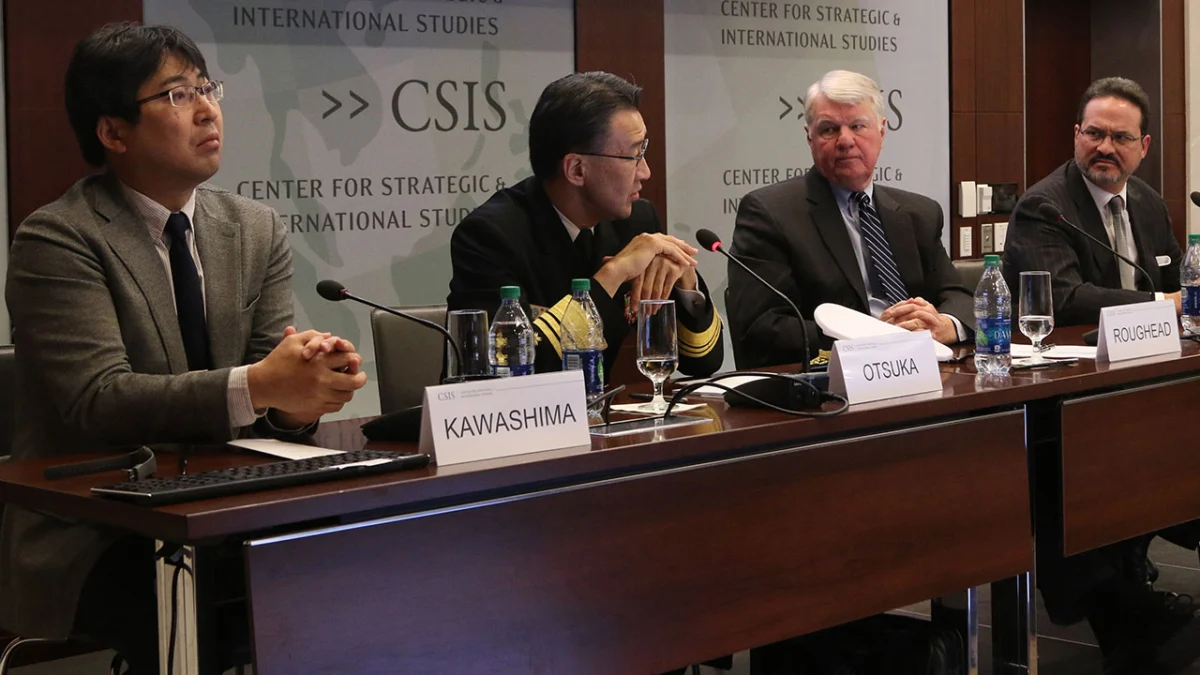
Following the opening, the keynote panel, titled "The U.S.-Japan Alliance and Maritime Security in the Asia-Pacific Region," brought together a distinguished group of subject matter experts. Vice Admiral Umio Otsuka, then-President of the Japan Maritime Self-Defense Force (JMSDF) Command and Staff College, provided a detailed assessment of Japan’s evolving maritime capabilities. His contribution was balanced by the academic rigor of Professor Shin Kawashima of the University of Tokyo, who contextualized the regional security architecture through the lens of history and contemporary international relations.
Admiral Gary Roughead, USN (Ret.), provided the critical U.S. perspective, drawing upon his experience as a former Chief of Naval Operations to explain how the U.S. Navy and the JMSDF could effectively synchronize their maritime domain awareness (MDA) and intelligence-sharing protocols. The session concluded with a robust Q&A period, allowing participants to interrogate the challenges of budget constraints, legislative shifts within Japan, and the logistical hurdles of joint operations.
Strategic Implications and Supporting Data
The discourse during the seminar was underpinned by several key strategic realities facing the Pacific powers in 2016. At the time, the Japan Maritime Self-Defense Force was undergoing a significant modernization effort, shifting focus toward anti-submarine warfare and the defense of remote islands. Data from the 2016 period indicated a sharp rise in "gray zone" incidents—actions that fell below the threshold of traditional armed conflict but challenged the status quo.
The maritime security focus of the seminar addressed the following data-driven trends:

- The Proliferation of Anti-Access/Area Denial (A2/AD) Capabilities: The discussion highlighted the increasing range and sophistication of missile systems in the region, which necessitated a shift in the U.S.-Japan alliance toward more resilient, distributed naval architectures.
- Operational Integration: The 2015 Guidelines mandated a transition toward a "seamless" integration. This involved moving away from separate national planning toward a unified command structure for specific contingencies, a move that the panel identified as the most difficult but necessary hurdle for the alliance.
- Regional Capacity Building: The seminar addressed the necessity of bringing other regional actors, such as the Philippines and Vietnam, into a broader maritime security framework, thereby augmenting the alliance’s primary focus with a multilateral layer.
Expert Perspectives and Official Responses
The presence of leaders like Vice Admiral Otsuka and Admiral Roughead underscored the seriousness with which both nations viewed the maritime domain. For the Japanese government, the seminar represented an opportunity to communicate to a U.S. audience that Japan was prepared to take on more significant responsibilities in the security realm. Under the administration of Prime Minister Shinzo Abe, Japan had been pursuing legislative reforms to expand the scope of its Self-Defense Forces.
During the discussions, participants noted that the U.S.-Japan relationship had transitioned from a "hub-and-spoke" model to a more collaborative partnership. Official responses from the Ministry of Foreign Affairs of Japan emphasized that the stability of the Indo-Pacific was inseparable from the strength of the U.S.-Japan security umbrella. The seminar acted as a bridge, ensuring that the strategic intent of government officials was matched by the tactical and operational planning of military leaders.
Broader Impact and Future Implications
The implications of the 2016 seminar extended far beyond the immediate discussions held at the CSIS headquarters. By framing maritime security as the cornerstone of the alliance, the seminar helped to normalize the concept of a "Free and Open Indo-Pacific"—a vision that would later become the central pillar of regional security strategies for both the United States and Japan.
The seminar successfully highlighted that the security of maritime commons—including sea lines of communication through the South China Sea—was a prerequisite for global economic stability. Analysts at the time noted that the dialogue established a baseline for future cooperation on cyber security, space domain awareness, and humanitarian assistance/disaster relief (HADR), all of which became standard components of the alliance’s annual training exercises.
Furthermore, the seminar served as a public verification of the alliance’s durability. By engaging in open, transparent dialogue regarding military integration, the participants sent a clear signal to regional stakeholders that the U.S.-Japan partnership was prepared to deter aggression and respond to provocations. The emphasis on the "Q&A" portion of the event also demonstrated a commitment to democratic accountability, ensuring that the policy shifts within the defense sector were subject to intellectual scrutiny.
Legacy of the 2016 Dialogue
In retrospect, the 2016 U.S.-Japan Security Seminar proved to be a harbinger of the increased emphasis on integrated deterrence that would define the latter half of the decade. The issues raised—from the legal complexities of collective self-defense to the technical requirements of joint maritime patrolling—remain central to the alliance today.
The collaboration between CSIS and the Ministry of Foreign Affairs of Japan set a standard for "track 1.5" diplomacy, where retired military leaders, active policymakers, and academics could test strategic concepts in a non-governmental environment. As the Indo-Pacific continues to face challenges related to sovereignty, freedom of navigation, and regional power competition, the framework discussed during the 2016 seminar remains a critical reference point for defense planners.
The event concluded with a reception, but the dialogue initiated that afternoon continued to resonate through subsequent defense white papers and bilateral summits. The 2016 seminar was not merely a moment in time, but a structural milestone in the history of the U.S.-Japan alliance, cementing the commitment to a shared security destiny in the Pacific and laying the groundwork for the more complex, multidimensional integration that would characterize the years that followed. As global attention remains fixed on the Indo-Pacific, the insights shared by Green, Otsuka, Kawashima, and Roughead continue to provide a roadmap for navigating the complexities of modern alliance management.