
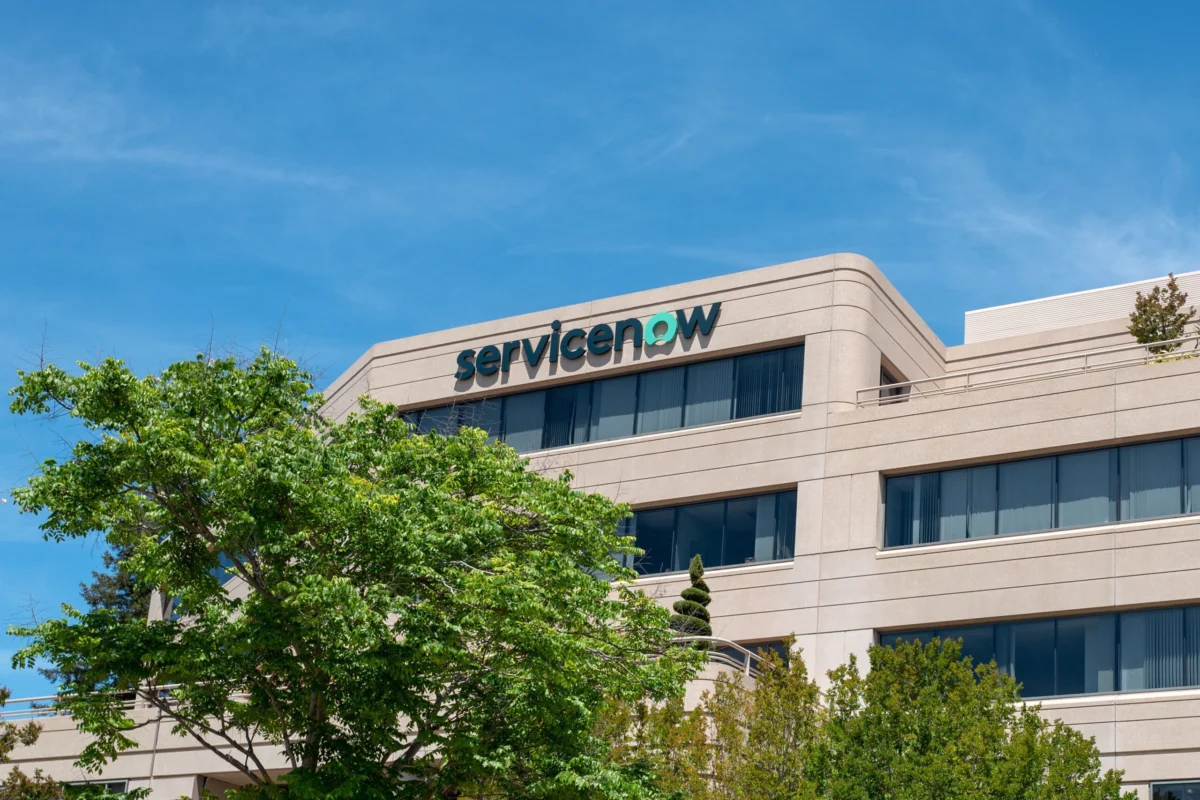
ServiceNow, the California-based enterprise software titan, has announced a significant $40 million strategic investment in BusinessNext, an Indian firm specializing in artificial intelligence-driven banking software. This transaction, which values the 24-year-old Noida-based company at approximately $700 million, grants ServiceNow a roughly 5% stake in the business. Beyond the capital infusion, the partnership is designed to integrate BusinessNext’s specialized banking workflows into ServiceNow’s expansive global sales infrastructure, signaling a concerted effort by both entities to capture a larger share of the rapidly digitizing global financial services sector.
The investment serves as a pivotal moment for BusinessNext, formerly known as CRMNext until its rebranding in 2022. By aligning with a software giant like ServiceNow, the company aims to move beyond its established footprint in India, Southeast Asia, and the Middle East, leveraging the U.S. firm’s massive "go-to-market machinery" to penetrate new international markets.
A Strategic Alliance Built on AI Integration
At the core of this partnership is the mutual goal of accelerating the adoption of AI-led operations within banking institutions. While traditional software-as-a-service (SaaS) providers often struggle to adapt to the demands of "AI-native" workflows, BusinessNext has spent years building a platform specifically designed for autonomous banking.
Nishant Singh, founder and CEO of BusinessNext, emphasized in discussions regarding the deal that the company’s pivot toward AI was not an afterthought but a fundamental redesign of its technological stack. "We actually renamed our company and we kind of rewrote our stack to put that fundamentally at the core," Singh noted. The company’s platform employs AI agents to manage customer-facing banking workflows, ensuring that sensitive data remains within private AI infrastructure to comply with stringent global regulatory and privacy standards.
For ServiceNow, the collaboration addresses a specific gap in its portfolio. While ServiceNow maintains a market-leading position in back-office workflow automation and IT service management, BusinessNext brings deep, domain-specific expertise in customer-facing banking operations. Together, the two companies plan to offer a unified, comprehensive solution that manages the entire lifecycle of a banking interaction—from the front-end customer experience to back-end administrative fulfillment.
Chronology of Growth: From CRMNext to BusinessNext
The trajectory of BusinessNext highlights the maturation of the Indian enterprise software ecosystem. Founded in 2002, the company spent two decades carving out a niche in the banking, financial services, and insurance (BFSI) sector.
- 2002: The company is founded, initially operating under the name CRMNext.
- 2010s: The firm expands aggressively across Asia, securing high-profile clients including the Reserve Bank of India, State Bank of India, and HDFC Bank.
- 2021: BusinessNext reaches a valuation of $181 million according to market data, supported by firms such as Avataar Ventures, Norwest Venture Partners, and Ascent Capital.
- 2022: The company undergoes a rebranding from CRMNext to BusinessNext, coinciding with a strategic shift toward an "autonomous banking" architecture that emphasizes AI-driven workflows.
- 2024: ServiceNow finalizes a $40 million investment, valuing the company at $700 million and initiating a strategic global partnership.
Throughout this period, BusinessNext has maintained a profitable business model, a rarity among many high-growth tech startups. With roughly $32 million in revenue in its most recent fiscal year, and nearly half of that figure generated from markets outside of India, the company has demonstrated a proven ability to scale internationally before ever needing to tap into the U.S. market at scale.
The Financial Landscape and Market Implications
The banking industry is currently undergoing a massive structural shift. Historically, banks relied on fragmented, legacy systems to manage different facets of their operations. However, as digital-first challengers and fintech competitors disrupt traditional banking models, incumbents are under intense pressure to modernize.
Kulmeet Bawa, ServiceNow’s group vice president and managing director for India and SAARC, described the current environment as an "inflection point." Banks are moving away from mere digital experimentation and toward full-scale, AI-led operational transformations. By partnering with BusinessNext, ServiceNow is positioning itself as the primary infrastructure provider for this transition.
From a broader market perspective, this deal is reflective of a larger trend among enterprise software vendors. As customers become more discerning—questioning the value proposition of traditional SaaS tools that lack built-in intelligence—major players like ServiceNow are opting for inorganic growth strategies. Rather than building every specialized vertical tool from scratch, these companies are increasingly relying on strategic investments and partnerships to integrate niche, AI-native platforms into their ecosystems.
Challenges and Future Outlook
While the partnership holds significant promise, it is not without its hurdles. Integrating two distinct corporate cultures and software architectures requires precision. Furthermore, the global banking sector is subject to a complex web of varying international regulations. BusinessNext’s ability to maintain its "private AI" integrity while operating under the umbrella of a global U.S. corporation will be a critical factor in its success in Western markets.
The decision by BusinessNext to choose a strategic partner like ServiceNow over pure-play financial investors is telling. According to Singh, the primary motivation was the ability to "borrow" the sales infrastructure of a company with a proven track record of enterprise adoption. This suggests that the next phase of the company’s growth will likely involve an aggressive push into the U.S. and European markets, where ServiceNow has already established deep relationships with C-suite executives at major financial institutions.
Data-Driven Growth: The Path Ahead
The statistics surrounding the deal underscore the confidence investors have in the marriage of AI and banking. With over 1,300 employees and a client roster that includes the most significant financial institutions in the world’s fastest-growing major economy, BusinessNext has the foundational data and user trust necessary to scale.
Furthermore, the $40 million investment is not just about the capital; it is a seal of approval from a global software leader. For existing investors like Norwest Venture Partners and Ascent Capital, the deal provides a path toward a potential liquidity event, while for ServiceNow, it provides a cost-effective way to deepen its vertical integration.
As the industry watches, the success of this partnership will likely be measured by how quickly BusinessNext can leverage ServiceNow’s channel to capture market share in North America. If successful, the collaboration could serve as a blueprint for other Indian software firms looking to scale globally by partnering with established Western enterprise tech giants.
Conclusion
The infusion of $40 million into BusinessNext marks a new chapter in the professionalization and international expansion of the Indian SaaS sector. By combining BusinessNext’s deep-rooted expertise in autonomous banking with the global scale and workflow dominance of ServiceNow, the partnership is well-positioned to capitalize on the multi-billion dollar opportunity in financial services AI.
For the banking sector, the implication is clear: the era of manual or semi-automated, siloed processes is drawing to a close. The future, as envisioned by this partnership, is one of integrated, AI-native workflows that operate in the background to deliver faster, more secure, and more efficient financial services. Whether this alliance can successfully navigate the complexities of global expansion and regulatory scrutiny remains the primary question, but the initial capital and strategic alignment suggest a formidable challenge to legacy providers currently holding the market.