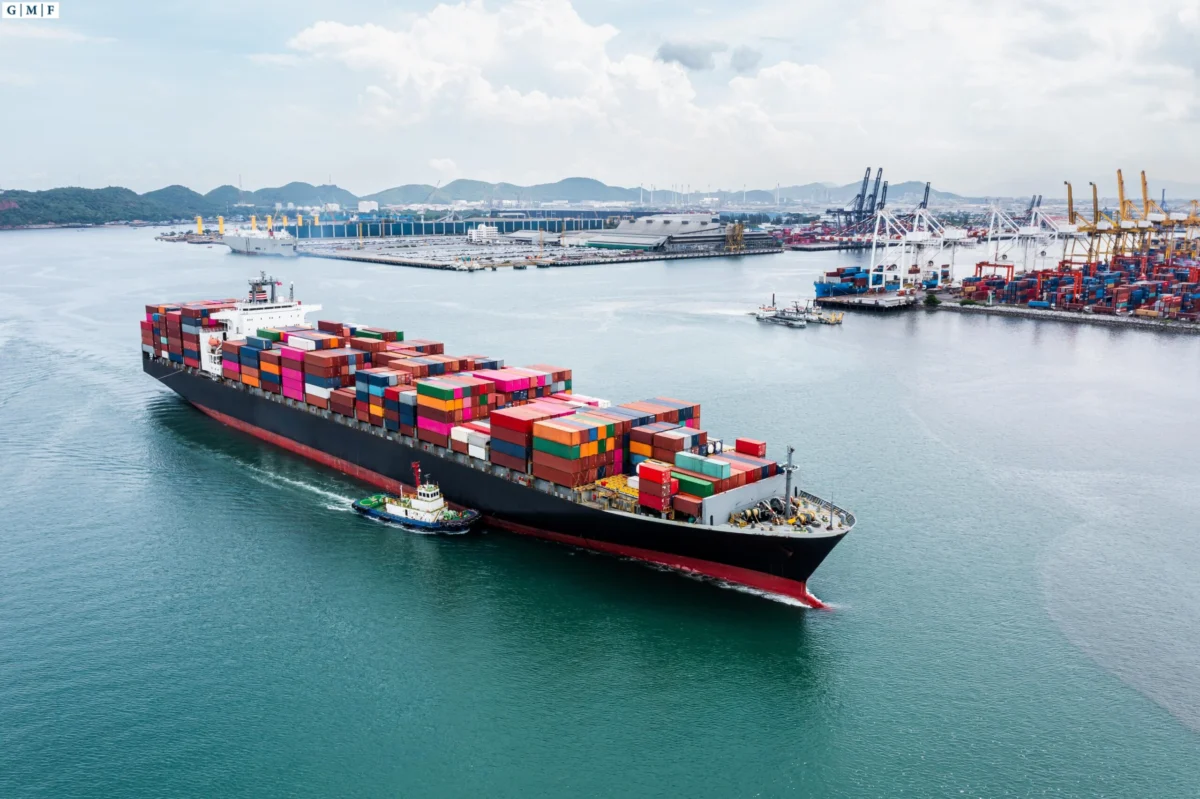
The Trans-Caspian International Transport Route, commonly referred to as the Middle Corridor, has evolved from a niche logistical path into a cornerstone of contemporary Eurasian geo-economics. As global supply chains face unprecedented volatility, the corridor—linking Central Asia, the South Caucasus, Türkiye, and Europe—has emerged as a vital strategic asset. This multi-modal network, which leverages rail, road, and maritime transit across the Caspian Sea, is increasingly viewed by policymakers in Brussels, Ankara, and Astana not merely as a transit lane, but as a mechanism for reducing dependence on traditional northern routes and mitigating the risks associated with maritime chokepoints.
The Geopolitical Impetus for Diversification
The acceleration of interest in the Middle Corridor is the direct result of a fractured global security environment. The catalyst for this shift was the Russian invasion of Ukraine in 2022, which effectively rendered the "Northern Corridor"—the rail route crossing Russia—untenable for many international businesses due to sanctions and heightened political risk. Simultaneously, persistent instability in the Red Sea, characterized by Houthi-led attacks on commercial shipping, has exposed the fragility of maritime lanes that carry the vast majority of global trade.
Governments are now pivoting toward "de-risking" strategies. The European Union, through its Global Gateway initiative and the Critical Raw Materials Act, has identified the Middle Corridor as a key vector for securing the supplies necessary for the green and digital transitions. Access to rare earth elements and lithium in Central Asia has transformed the region into a theater of strategic competition, where connectivity is the primary tool for securing influence and resource stability.
A Chronology of Connectivity
The evolution of the Middle Corridor has unfolded in distinct stages:
- 2013–2017 (Inception): China’s announcement of the Belt and Road Initiative (BRI) prompted regional actors to formalize the Trans-Caspian International Transport Route. Initial efforts focused on establishing a basic tariff structure and container transit protocols.
- 2022 (The Inflection Point): Following the invasion of Ukraine, transit volume via the Middle Corridor spiked by over 100% in a single year, as firms scrambled to find alternatives to the Northern Corridor.
- 2023 (Strategic Formalization): The EU and several Central Asian nations began aligning regulatory frameworks. The focus shifted from simple transit to "soft connectivity," including the harmonization of customs and the digitalization of border procedures.
- 2024–2025 (Expansion of Scope): The integration of the "Development Road" in Iraq and the potential alignment with the India-Middle East-Europe Economic Corridor (IMEC) have broadened the concept from a single route to an interconnected, multi-modal network.
Supporting Data: The Logistics of Resilience
While the Middle Corridor remains smaller in capacity than the Northern Corridor or maritime shipping, its growth trajectory is significant. In 2023, the total volume of goods transported via the route exceeded 2.7 million tons, representing a substantial increase from the approximately 1.5 million tons recorded in 2022. However, these figures are tempered by systemic inefficiencies.
Current bottlenecks remain the primary hurdle to competitive pricing. Data from the World Bank indicates that transit times across the corridor can be three to four times longer than maritime alternatives due to fragmented customs processes and limited ferry capacity on the Caspian Sea. Specifically, vessel turnaround times at ports like Aktau (Kazakhstan) and Baku (Azerbaijan) often exceed 48 hours, a duration that logistics firms identify as a "competitive tax" on the route’s viability.
Perspectives from Key Stakeholders
The corridor’s success relies on the alignment of disparate, often competing, national interests.
For Türkiye, the route is existential. Ankara views itself as the indispensable bridge between East and West. By promoting both the Middle Corridor and the Development Road, Türkiye aims to prevent its own exclusion from new global trade architectures, particularly those involving the Persian Gulf. In official statements, Turkish trade officials have emphasized that "connectivity is the new currency of regional security," signaling that Ankara is willing to invest heavily in infrastructure to ensure that the primary flows of energy and goods remain within its sphere of influence.
China’s stance, meanwhile, is one of pragmatic redundancy. Beijing continues to support the route as a secondary option for its BRI, providing it with the flexibility to bypass potential geopolitical blockades. While China remains the primary driver of infrastructure investment in Central Asia, it has shown a willingness to allow the EU and other regional actors to participate in the corridor’s governance, provided its core commercial interests are met.
For the Central Asian republics, the corridor is an instrument of sovereignty. Countries like Kazakhstan and Uzbekistan are using the transit revenues and the associated "soft" infrastructure to integrate into global value chains, moving beyond their traditional status as raw material exporters.
Strategic Implications for the European Union
The EU’s approach to the Middle Corridor represents a paradigm shift in its foreign policy. Historically, the bloc approached trade routes purely as commercial infrastructure projects. Today, the Middle Corridor is categorized under the umbrella of "economic security."
Brussels has realized that a passive approach—leaving the financing and regulatory standards of the corridor to other powers—would ultimately undermine its long-term industrial resilience. Consequently, the EU is now prioritizing "regulatory diplomacy." By exporting its standards for digital customs, environmental compliance, and transport interoperability, the EU aims to create a corridor that is not only physically connected but legally integrated with European markets.
Challenges to Long-Term Viability
Despite its strategic promise, the Middle Corridor faces formidable obstacles:
- Environmental Constraints: Climate change-induced declines in the water levels of the Caspian Sea threaten the long-term viability of major port infrastructure, requiring significant and expensive engineering interventions to maintain channel depths.
- Geopolitical Volatility: The route traverses regions prone to political shifts. Tensions in the South Caucasus, particularly concerning the normalization of relations between Armenia and Azerbaijan, present a persistent risk to the security of rail and pipeline infrastructure.
- Governance Deficits: There is currently no unified, supranational authority governing the Middle Corridor. Instead, it relies on a patchwork of bilateral agreements that often result in unpredictable customs delays and varying technical standards.
The Path Forward: Integration vs. Competition
The future of Eurasian connectivity will likely be defined by a "network of corridors" rather than a single, dominant artery. The Middle Corridor is set to act as the backbone of a broader ecosystem that includes the Black Sea as a strategic hub and the Development Road as a north-south complement.
For the EU and Türkiye, the corridor serves as a necessary, if complex, platform for rapprochement. Despite a decade of political friction, the two powers are increasingly tethered by the necessity of shared supply-chain security. The transformation of this relationship will hinge on whether the two sides can move beyond transactional politics to establish durable, institution-based cooperation.
Ultimately, the metric of success for the Middle Corridor is not the volume of shipping containers alone, but the degree to which it creates a flexible, resilient, and multi-dimensional connectivity map for Europe and its neighborhood. In an era where the old models of globalization are being challenged by nationalist and security-first policies, the Middle Corridor stands as a practical response to the demands of a volatile world. By investing in the governance and infrastructure of this route, European and regional actors are not just moving goods—they are attempting to secure the strategic architecture of the 21st century.