
The discourse surrounding perimenopause has undergone a significant transformation, moving from a stigmatized, hush-hush topic to a staple of wellness influencer content and televised medical segments. Yet, this newfound visibility has brought a surge of misinformation that threatens to obscure the clinical reality of the transition. As women increasingly seek answers for midlife health shifts, they are being met with a marketplace of unverified tests and pseudoscientific remedies that often lack a foundation in rigorous medical research.
The Myth of the Perimenopause Test
A primary point of contention in current health discussions is the aggressive marketing of diagnostic tests for perimenopause. Clinicians emphasize a fundamental reality: there is no clinically validated test to confirm a woman is in the perimenopausal phase. While hormone levels—such as follicle-stimulating hormone (FSH) or estrogen—fluctuate significantly during this time, these levels are notoriously volatile. A single blood draw provides only a snapshot of a moment in time, failing to capture the erratic hormonal trajectory characteristic of the transition.
Despite this, companies continue to sell "hormone balance" panels, implying that a specific result can unlock the mystery of a woman’s symptoms. Medical experts argue that these tests are largely diagnostic theater. Treatment paths suggested by non-clinical sources often ignore the multifactorial nature of midlife health, where symptoms such as fatigue, insomnia, or mood changes may stem from thyroid issues, nutritional deficiencies, or chronic stress, rather than purely hormonal shifts. The reliance on these commercial tests can delay proper medical care, leading patients away from evidence-based treatments like hormone replacement therapy (HRT) or cognitive behavioral therapy, and toward expensive, ineffective supplements.
China’s Strategic Pivot in the AI Arms Race
While health misinformation captures public attention in the West, a seismic shift is occurring in the geopolitical landscape of artificial intelligence. China’s AI sector, long viewed as being in a catch-up phase against the United States, has recently signaled a major technological milestone. A Chinese startup has unveiled the world’s largest open-source artificial intelligence model, a move that analysts suggest narrows the gap between domestic capabilities and those of industry leaders like OpenAI and Anthropic.
The launch, which took place during a week of heightened scrutiny over global technology dominance, triggered immediate market reactions. Shares in semiconductor manufacturers and major AI-focused tech firms experienced volatility, reflecting investor anxiety over the rapid pace of Chinese innovation. This development is not merely an isolated technical feat; it is a manifestation of a broader state-backed strategy to prioritize open-source architecture. By fostering an open ecosystem, China aims to accelerate adoption across the developing world, positioning itself as a primary alternative to US-centric AI frameworks.
Chronology of Competitive Escalation
The race for frontier AI has been defined by a series of rapid-fire announcements and regulatory maneuvers:
- Early 2026: Continued tightening of US export controls on high-end AI chips (Nvidia and its peers) prompts increased investment in domestic Chinese silicon alternatives.
- April 2026: China begins pivoting toward aggressive open-source initiatives to challenge the proprietary models dominating the US market.
- July 17, 2026: At the World Artificial Intelligence Conference (WAIC) in Shanghai, President Xi Jinping frames AI as a critical instrument for global development, emphasizing China’s commitment to setting international standards.
- July 17, 2026: The release of the "moonshot" open-source model confirms that Chinese research institutions have successfully scaled their training infrastructure, despite hardware constraints.
Regulatory Tensions and Global Implications
The European Union has simultaneously escalated its regulatory pressure on Big Tech, specifically targeting Google’s dominance. Recent mandates require Google to share search index data with competitors and to open the Android ecosystem to third-party AI assistants. This regulatory environment creates a complex playing field where, while the US and China battle for supremacy in model capability, European regulators are forcing a decentralization of the infrastructure that delivers these services to the consumer.

The implications for international security are profound. As China offers its AI models to global partners, the risk of "technological bifurcation"—where the world splits into different, incompatible AI ecosystems—increases. George Chen, chair in digital practice at The Asia Group, noted that President Xi’s recent messaging is a clear signal of intent: China is no longer interested in following existing paradigms but is actively seeking to dictate the standards for future digital governance.
Emerging Frontiers: From Brain Implants to Space Exploration
Beyond the geopolitical theater, the scientific community has reached milestones that promise to reshape human potential. Recent breakthroughs in neural engineering have demonstrated that brain-computer interfaces (BCIs) can restore tactile sensation to paralyzed limbs. One patient, utilizing a sophisticated neural bypass, was able to perform tasks like feeding himself and drinking from a cup—a feat that remained stable even after external stimulation was disabled. This success highlights the rapid maturation of neurotechnology, a field where China has also made notable regulatory progress by approving world-first brain-chip trials.
Simultaneously, in the field of astronomy, researchers have confirmed the detection of an atmosphere on a nearby Earth-like exoplanet. This represents a breakthrough in the search for extraterrestrial life. By applying new spectral analysis techniques, astronomers can now identify the chemical markers of an atmosphere on planets that were previously invisible to detailed inspection. While the search for "technosignatures" remains in its infancy, the capability to characterize these atmospheres marks the transition from speculative exoplanet hunting to rigorous, data-driven astrobiology.
The Infrastructure of Tomorrow
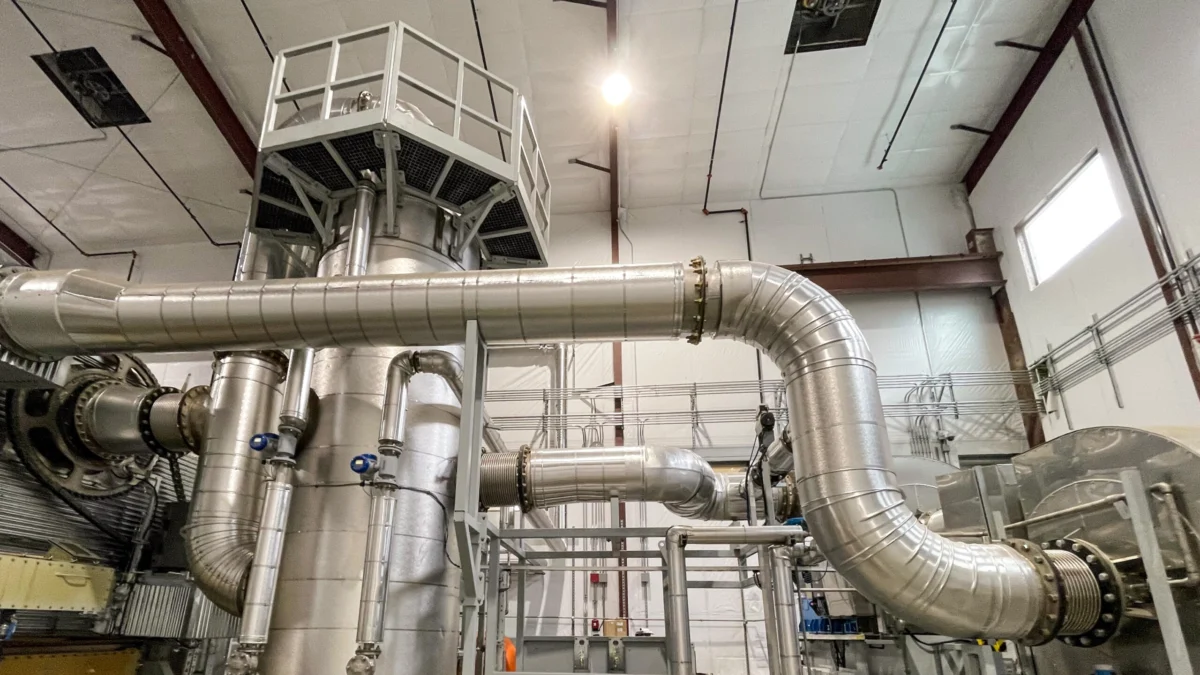
As society navigates these complex technological landscapes, attention is also turning toward the sustainable management of resources. A project in suburban Seattle has gained attention for its innovative approach to industrial waste, specifically the treatment of human and livestock fecal matter. By utilizing advanced, energy-efficient processing, the facility converts waste into high-grade agricultural nutrients. This project serves as a microcosm of a larger necessity: as the global population grows, the linear "take-make-waste" model of the 20th century is proving unsustainable. Scaling these technologies requires not just technical ingenuity but a cultural shift in how we categorize waste, reframing it as a critical natural resource.
Analysis of the Technological Landscape
The current moment is defined by a tension between centralized control and decentralized innovation. In the AI sphere, the US maintains a lead in proprietary model quality, but China’s aggressive open-source strategy is effectively democratizing access to high-compute capability, potentially accelerating the development cycle for non-Western nations. Meanwhile, the privacy concerns raised by period-tracking applications underscore the vulnerability of personal health data in an era of ubiquitous connectivity. As these trackers face scrutiny for data-sharing practices, the need for robust, privacy-preserving infrastructure becomes as critical as the innovations themselves.
Furthermore, the rise of "adversarial clothing"—garments designed to defeat facial recognition systems—indicates a growing public consciousness regarding surveillance. This trend suggests that as AI becomes more invasive, the market for counter-measures will expand, creating a secondary economy focused on digital privacy and personal anonymity.
In summary, the landscape of 2026 is one of rapid acceleration. Whether it is the restoration of physical function through neural implants, the search for life among the stars, or the intense geopolitical rivalry over the future of intelligence, the common thread is the speed of change. Success in this era will depend on the ability of governments and individuals to distinguish between marketing-driven hype and genuine technological progress, ensuring that the innovations of tomorrow are built on a foundation of scientific evidence and human-centric design. As the world watches these disparate fields converge, one thing is certain: the technological path is no longer a straight line, but a series of interconnected, and often disruptive, leaps.