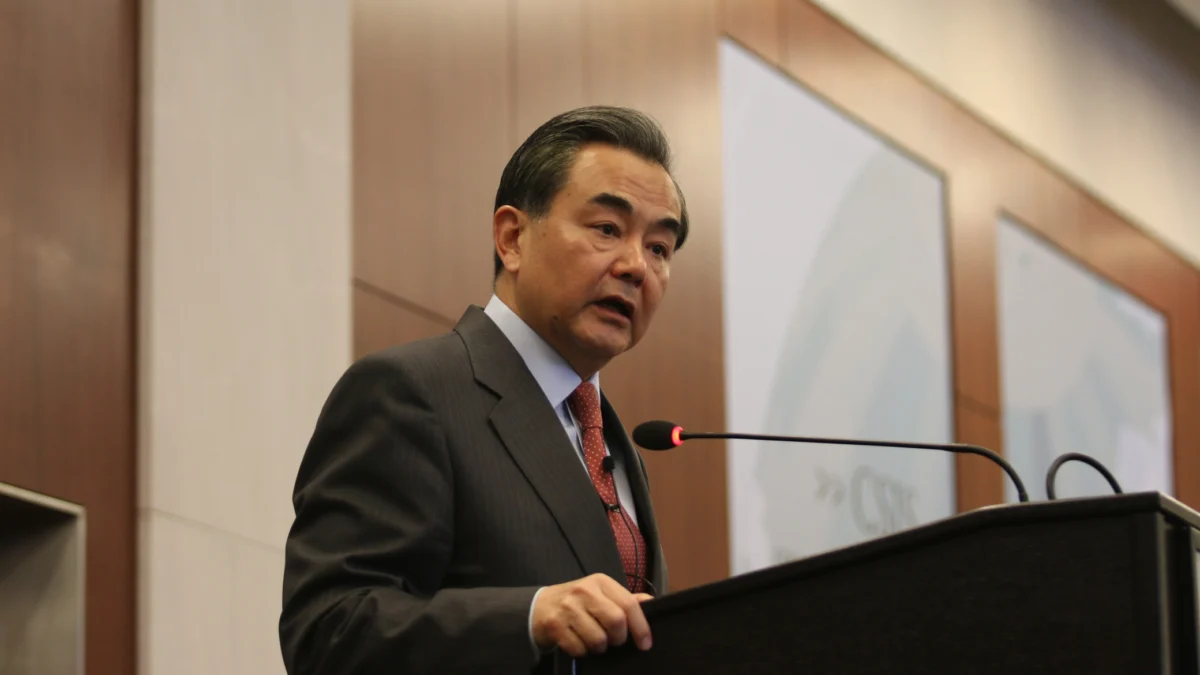
On February 25, 2016, the Center for Strategic and International Studies (CSIS) hosted a high-profile Statesmen’s Forum featuring Wang Yi, the Minister of Foreign Affairs of the People’s Republic of China. The event served as a critical platform for addressing the complexities of the bilateral relationship between Washington and Beijing during a period of shifting geopolitical landscapes. Moderated by Christopher K. Johnson, then-senior fellow and Freeman Chair in China Studies at CSIS, and featuring welcoming remarks from CSIS President and CEO John Hamre, the discussion offered a rare window into the strategic priorities of the Chinese leadership as they sought to navigate an increasingly interconnected and often competitive global arena.
Historical Context and Bilateral Relations
The 2016 visit occurred at a juncture where U.S.-China relations were defined by a "cooperative yet competitive" framework. The Obama administration was actively managing the "Pivot to Asia" (later termed the Rebalance to Asia), a policy shift designed to bolster American presence in the Indo-Pacific region. Simultaneously, Beijing was asserting a more proactive role in international affairs, exemplified by the promotion of the Belt and Road Initiative (BRI), which had been introduced just three years prior.
During this era, the bilateral discourse was dominated by discussions regarding maritime disputes in the South China Sea, the management of global economic stability, and the burgeoning cyber-security tensions that had threatened to derail diplomatic progress. Minister Wang Yi’s presence at CSIS was not merely a diplomatic formality; it was an attempt to articulate China’s "Peaceful Rise" narrative to a Washington policy community that was growing increasingly skeptical of China’s long-term intentions.
Chronology of the 2016 Diplomatic Engagement
The event followed a period of intense diplomatic activity. In the months leading up to the CSIS forum, the two nations had been engaged in delicate negotiations regarding the Joint Comprehensive Plan of Action (JCPOA) concerning Iran’s nuclear program, as well as collaborative efforts to address climate change, which would eventually culminate in the signing of the Paris Agreement later that year.

- September 2015: President Xi Jinping conducted a state visit to the United States, where both sides agreed to reduce cyber-theft of intellectual property.
- February 2016: Minister Wang Yi arrived in Washington for meetings with Secretary of State John Kerry, with the CSIS forum acting as the public-facing component of his visit.
- Post-Forum, 2016: The bilateral relationship saw continued friction over the Permanent Court of Arbitration’s ruling on the South China Sea, which Beijing rejected, setting the stage for the contentious transition into the subsequent U.S. administration.
Strategic Priorities and Economic Data
At the time of the forum, China was grappling with a transition from an export-led economy to one driven by domestic consumption and services. Official data from 2016 indicated that China’s GDP growth had slowed to 6.7%, the slowest pace in a quarter-century. This economic recalibration was a primary concern for international markets, and Minister Wang’s remarks were closely parsed for any signals regarding China’s commitment to market-oriented reforms.
Furthermore, bilateral trade between the U.S. and China reached approximately $578 billion in 2016. The interdependence of the two economies meant that any diplomatic rupture would have immediate, catastrophic impacts on global financial stability. Wang Yi’s dialogue at CSIS emphasized that the "strategic mistrust" between the two nations was the primary obstacle to a more stable partnership, calling for a "new model of major-country relations"—a term that, while popular in Beijing, remained a point of debate in Washington’s foreign policy circles.
Perspectives and Official Responses
The reception of Minister Wang’s visit in Washington was mixed. The Obama administration, represented by officials like John Kerry, viewed the engagement as essential for maintaining open channels of communication on North Korean denuclearization and global health crises. Conversely, members of the U.S. Congress and various think-tank analysts expressed reservations. Critics argued that the rhetoric of "mutual respect" offered by Chinese officials often masked aggressive expansionist policies in the South China Sea.
John Hamre, in his capacity as host, framed the event as an effort to ensure that the U.S. policy establishment understood the internal logic of Beijing’s decision-making. By providing a platform for the Chinese Foreign Minister, CSIS aimed to facilitate a "Track 1.5" style of diplomacy, where public discourse could serve to clarify positions that might otherwise be obscured by the rigid, often adversarial nature of formal state-to-state negotiations.
Broader Implications for Global Stability
The implications of the 2016 forum extend into the modern era. The issues discussed—maritime sovereignty, technological competition, and the necessity of managing great-power rivalry—remain the defining features of contemporary international relations. The 2016 session highlighted a fundamental asymmetry: Washington’s desire for China to conform to a rules-based international order versus Beijing’s insistence that the order itself needed to be reformed to reflect the realities of the 21st century.

Analysts looking back at the transcript and the video of the 2016 event often point to the "cooperation gap." While both nations were successful in cooperating on transnational issues like climate change and public health, the structural competition in the security and technological spheres proved too resilient for diplomatic rhetoric to overcome. The event served as a microcosm of the "Thucydides Trap"—the theory that a rising power and an established power are inherently destined for conflict—and the immense efforts required by diplomats on both sides to avoid such an outcome.
Analysis of the Strategic Shift
Following the 2016 event, the trajectory of U.S.-China relations shifted toward a more confrontational posture. The election of a new U.S. administration later that year signaled a move toward a "great power competition" framework, characterized by tariffs, export controls, and intensified security alliances in the Indo-Pacific.
The 2016 CSIS forum now stands as a marker of a "lost opportunity" or, alternatively, as the final era of a particular style of engagement. It represents a period when the U.S. believed that integrating China into the global system would inevitably lead to political and economic liberalization. The failure of this hypothesis, in the eyes of many current policymakers, has fundamentally altered how Washington views diplomatic interactions with Beijing.
In conclusion, the Statesmen’s Forum with Wang Yi was a pivotal moment that captured the tension between hope and reality in the U.S.-China relationship. While the specific policy goals of 2016 have been eclipsed by subsequent events, the fundamental challenge of managing the relationship between the world’s two largest economies remains the defining task of modern statesmanship. The insights provided by Minister Wang during his visit continue to serve as a critical reference point for scholars and practitioners who study the evolution of Chinese foreign policy and the endurance of American influence in a multipolar world. As the international community continues to navigate these turbulent waters, the record of such dialogues remains essential for understanding the past, present, and potential future of global security.