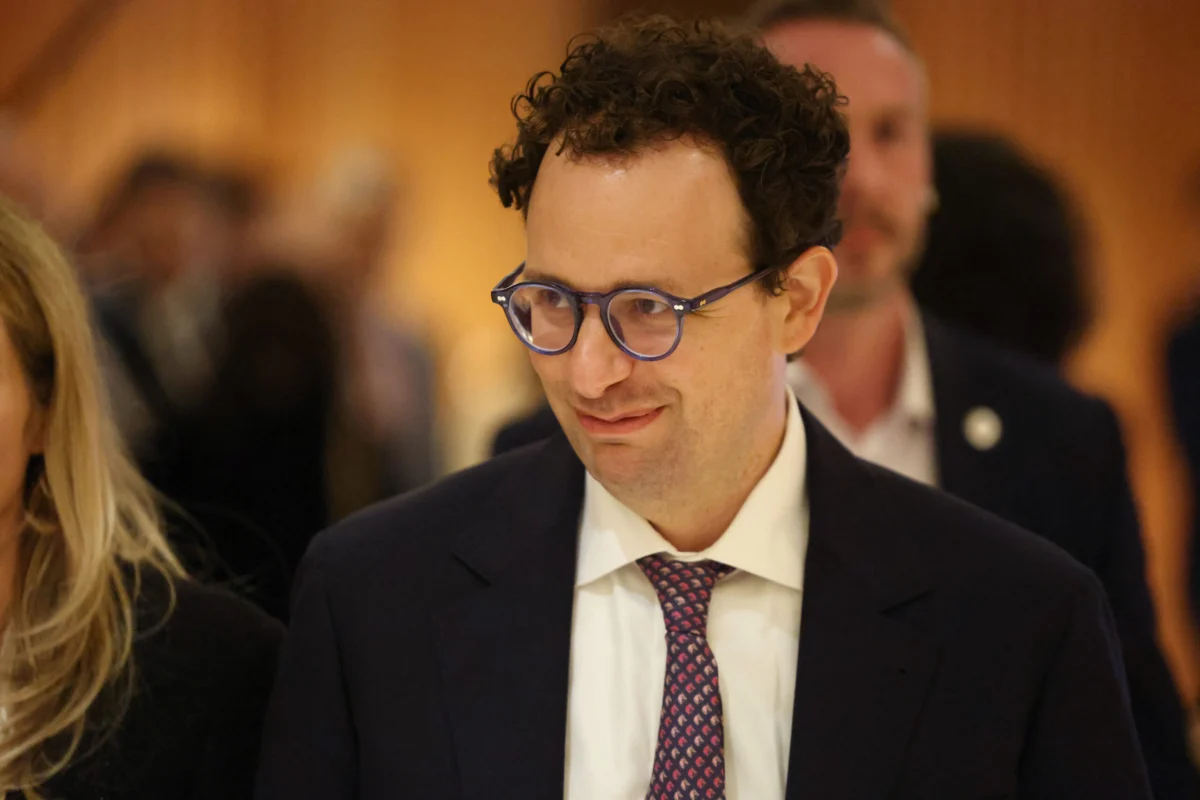
Anthropic CEO Dario Amodei is finding himself at the center of the cultural and political zeitgeist in an extraordinary convergence of mainstream pop culture and high-stakes national policy. Within the span of a single weekend, the prominent artificial intelligence executive was lampooned during the season premiere of NBC’s long-running sketch comedy institution, Saturday Night Live, and subsequently slated to break bread at the White House with President Donald Trump.
The dinner meeting, initially reported by Axios and independently confirmed by industry sources, marks the first one-on-one encounter between the tech leader and the commander-in-chief. The encounter arrives at a critical juncture for both the artificial intelligence sector broadly and Anthropic specifically, as policymakers, national security officials, and industry pioneers grapple with how to govern, pace, and commercialize increasingly capable frontier models.
The high-profile dinner underscores the growing intersection of Silicon Valley leadership and Washington policymaking. As artificial intelligence evolves from a niche computer science discipline into a matter of geopolitical and economic supremacy, the philosophical divides separating AI developers from federal regulators have broken out into the open. Amodei’s White House invitation provides a direct channel for dialogue amid months of escalating tension, regulatory friction, and public posturing regarding the future of machine intelligence.
A Fraught Relationship and Diverging Philosophies
The relationship between Anthropic and the current administration has been characterized by sharp ideological friction, making Sunday evening’s dinner a potentially pivotal diplomatic test. At the heart of the divide are fundamentally opposing views on how to manage the rapid ascent of generative artificial intelligence and autonomous systems.
Amodei has consistently positioned himself as an advocate for cautious, deliberative deployment. Earlier in September, the Anthropic chief executive outlined a comprehensive roadmap designed to pace frontier AI development, arguing that society requires structured safeguards and rigorous testing protocols before labs release systems capable of profound societal disruption. This measured approach, which emphasizes existential risk mitigation and alignment research, has won praise from academic safety advocates but has repeatedly sparked friction with growth-oriented policymakers.
In stark contrast, President Trump has taken a markedly different public stance on the trajectory of the industry. The administration has dismissed widespread concerns over catastrophic AI risks as politically motivated pessimism, with Trump casually characterizing the broader AI backlash as a Democratic hoax. Furthermore, the administration has floated unconventional proposals to reshape the domestic industry, including a controversial push to rebrand artificial intelligence entirely under the banner of "super intelligence" while establishing specialized federal bodies to govern technological advancement.
This ideological clash has long since graduated from mere policy debates into concrete punitive actions. Earlier this year, the U.S. Pentagon designated Anthropic as a supply-chain risk. The unprecedented label was levied in response to the company’s insistence on imposing strict ethical guardrails and operational limitations regarding how national security apparatuses could deploy its proprietary models. Anthropic has actively contested the designation, successfully securing its first major court victory in late August to fight back against the Pentagon’s classification. Nevertheless, the legal battle highlights a lingering government suspicion toward corporate actors attempting to dictate terms to the military-industrial complex.

The Cultural Spotlight: From Prime-Time Comedy to the Oval Office
While the White House meeting highlights the weighty geopolitical dimensions of AI governance, the weekend’s events also demonstrated just how deeply artificial intelligence has permeated popular culture.
On Saturday night, millions of television viewers tuned in for the season premiere of Saturday Night Live, where Amodei became the target of satirical impersonations. The sketch highlighted the absurdities of the modern tech landscape, where modest-seeming software executives find themselves wielding trillions of dollars in potential economic leverage while debating the fate of human civilization. The prime-time lampooning serves as a cultural marker, signaling that Silicon Valley leaders have replaced traditional Wall Street titans and legacy corporate CEOs as the primary subjects of public fascination and critique.
Less than twenty-four hours after his digital caricature played across national televisions, Amodei stepped into a very real arena of power. The juxtaposition of a comedic roast on national television followed immediately by a private audience with the leader of the free world illustrates the dizzying pace at which AI leadership has been thrust onto the global stage.
A Timeline of Regulatory Friction and Government Relations
To understand the stakes of the Amodei-Trump dinner, it is necessary to examine the rapid chronology of developments that have defined Anthropic’s interactions with Washington throughout the year:
- April 2026: Initial signs of a thaw emerged in Anthropic’s complex relations with the federal government, as select administration officials expressed openness to collaborative safety frameworks, even as broader ideological differences persisted.
- August 2026: The friction intensified significantly when the Department of Defense designated Anthropic a supply-chain risk due to the company’s contractual limitations on military technology utilization. On August 28, Anthropic achieved a crucial legal milestone by winning its first court battle challenging the Pentagon’s risk label.
- September 12, 2026: Dario Amodei published a formal strategic blueprint calling on the industry to slow down and thoughtfully pace frontier AI development to ensure alignment and safety testing.
- September 19, 2026: President Trump publicly pushed back against prevailing safety narratives, suggesting a total government rebrand of the technology to "super intelligence" and announcing plans for a dedicated federal AI force.
- September 27, 2026: Amodei was satirized on the season premiere of Saturday Night Live, followed immediately by breaking news—confirmed by TechCrunch—that the CEO was invited to dine with President Trump at the White House.
Broader Implications for the Artificial Intelligence Industry
The private dinner between Amodei and Trump carries profound implications for the wider artificial intelligence ecosystem. As the United States vies with global competitors—most notably China—for undisputed technological dominance, Washington faces a delicate balancing act. On one hand, policymakers are eager to foster unfettered innovation, market expansion, and economic output. On the other hand, national security leaders and safety researchers warn of the profound hazards associated with ungoverned, highly autonomous systems.
Anthropic has uniquely positioned itself as a principled actor willing to sacrifice lucrative government contracts and immediate commercial velocity in exchange for adherence to safety principles. Whether this stance will be interpreted by the White House as corporate obstinacy or responsible stewardship remains to be seen.
Industry analysts suggest that the one-on-one meeting could serve as a vital bridge-building exercise. If Amodei can successfully articulate the rationale behind Anthropic’s safety frameworks to the president, it may help alleviate regulatory hostility and mend fences with the Department of Defense. Conversely, a failure to find common ground could harden the administration’s resolve to favor more compliant, less restrictive AI developers in future federal procurement and policy decisions.
Ultimately, the White House dinner symbolizes a maturation point for the artificial intelligence revolution. The era of unchecked technological optimism pursued entirely within the confines of private research laboratories has officially ended. As artificial intelligence intersects directly with national defense, presidential politics, and prime-time satire, leaders like Dario Amodei must navigate an increasingly complex matrix of public expectations, legal battles, and political realities.