
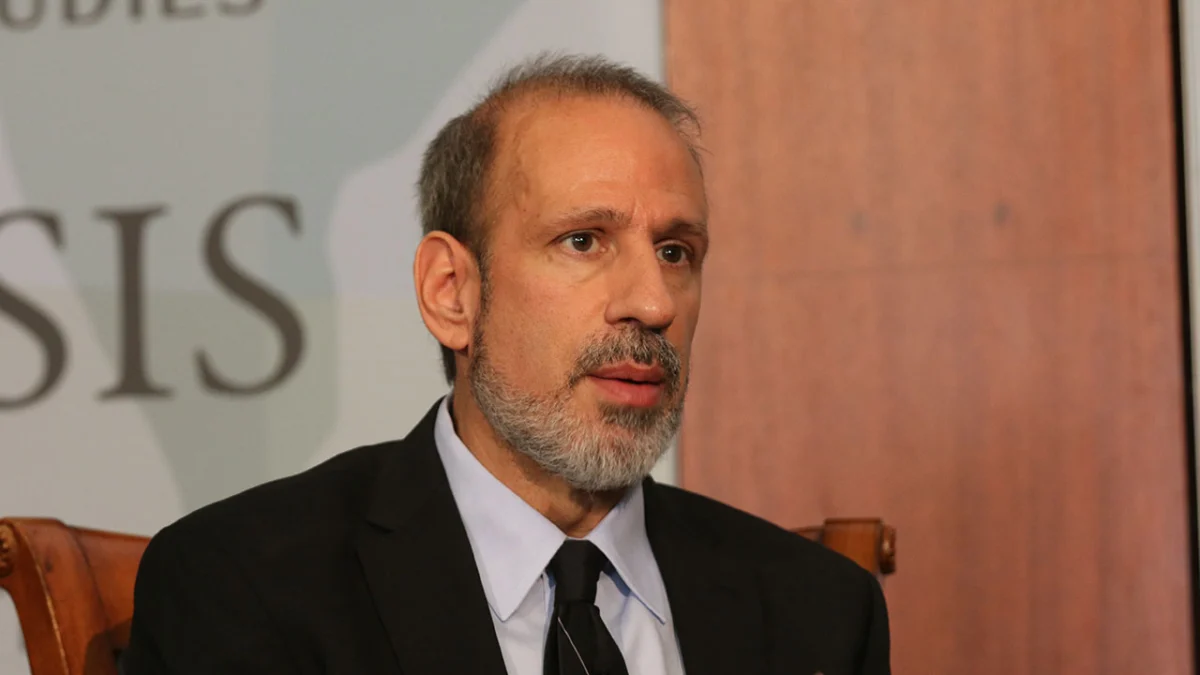
The Center for Strategic and International Studies (CSIS) International Security Program hosted a high-profile, half-day Defense360 conference in Washington, D.C., convening top Pentagon officials, defense economists, and national security experts to dissect the newly released Fiscal Year 2017 (FY2017) defense budget request. The comprehensive gathering served as a critical platform to evaluate the strategic calculus driving the administration’s financial blueprint, addressing how the Department of Defense (DoD) balances modernization, force readiness, and personnel costs against persistent fiscal constraints imposed by the Budget Control Act of 2011 (BCA).
The event featured opening remarks by Dr. John Hamre, President and CEO of CSIS, setting a serious tone regarding the geopolitical pressures and budgetary hurdles facing the U.S. military. Todd Harrison, Director of Defense Budget Analysis and Senior Fellow with the CSIS International Security Program, moderated the morning’s proceedings, which were divided into two main segments: a high-level ministerial discussion featuring senior Pentagon leadership, followed by an independent panel of defense analysts and former government officials offering external critiques.
Main Facts and Event Overview
The core objective of the Defense360 conference was to explore the direct correlation between the nation’s stated national security strategy and the actual funding allocations outlined in the FY2017 defense request. As global security dynamics shifted rapidly—marked by the resurgence of great-power competition with Russia and China, ongoing conflicts in the Middle East, and the persistent threat of violent extremist organizations—the defense establishment faced mounting pressure to justify its spending priorities.
The morning’s opening ministerial session brought together three of the most influential figures shaping the defense enterprise: Mike McCord, Under Secretary of Defense (Comptroller) and Chief Financial Officer; Dr. Jamie Morin, Director of Cost Assessment and Program Evaluation (CAPE); and Robert Scher, Assistant Secretary of Defense for Strategy, Plans, and Capabilities. These officials provided firsthand insights into how the Pentagon built its budget submission, explaining the difficult trade-offs required to preserve long-term technological superiority while maintaining immediate operational readiness.
Following the administration briefing, a distinguished panel of experts took the stage to evaluate the plausibility and coherence of the budget. This panel featured Tina Jonas, former Under Secretary of Defense (Comptroller) and CSIS Senior Adviser; Andrew Hunter, Director of the Defense-Industrial Initiatives Group at CSIS; Mark Cancian, Senior Adviser with the CSIS International Security Program; Shawn Brimley, Executive Vice President and Director of Studies at the Center for a New American Security (CNAS); and Roger Zakheim, Visiting Fellow at the American Enterprise Institute (AEI). Together, they offered rigorous analytical commentary on the strategic alignment—or perceived disconnects—between military strategy and fiscal realities.
Background Context and Chronology of the FY2017 Budget Process
The rollout of the FY2017 defense budget occurred against a backdrop of prolonged fiscal turbulence. To understand the significance of the discussions at the CSIS conference, it is necessary to examine the chronology and legislative framework governing the defense budget cycle during this period.
In early 2016, the Obama administration formulated its final defense budget request, aiming to lock in priorities for the transition period leading to the 2017 presidential inauguration. The process began in earnest during the spring and summer of 2015, when the DoD issued internal guidance directing military services to identify cost savings and efficiencies to comply with the statutory spending caps mandated by the Bipartisan Budget Act of 2015.
The Bipartisan Budget Act, passed in late 2015, had provided a temporary two-year reprieve from the harshest sequester-level cuts of the Budget Control Act, raising the caps for defense and non-defense discretionary spending for FY2016 and FY2017. For defense, the FY2017 baseline was set at approximately $582.7 billion when combining the base budget and the Overseas Contingency Operations (OCO) funding account. Despite this modest relief, Pentagon planners continuously warned that the long-term shadow of the Budget Control Act severely undermined strategic predictability, forcing leadership to make sub-optimal choices regarding force structure and procurement programs.
During the February 2016 rollout of the budget, Secretary of Defense Ashton Carter emphasized that the FY2017 request was shaped by five evolving strategic challenges: countering the rising threat from Russia, managing the long-term challenge posed by China, deterring Iran, defeating terrorist networks, and securing cyberspace. The CSIS Defense360 conference directly interrogated how these five pillars translated into line-item funding, procurement schedules, and research and development (R&D) investments.
Supporting Data and Fiscal Realities
The FY2017 defense request reflected a delicate balancing act between end-strength reductions, compensation reform, and investments in high-end technological capabilities. During the ministerial session, Under Secretary Mike McCord detailed the composition of the $582.7 billion total request, which was divided into a base budget of roughly $514.9 billion and an OCO request of $58.8 billion (with additional funding designated for base requirements).
One of the most heavily scrutinized data points in the budget was the allocation for Research, Development, Test, and Evaluation (RDT&E), which reached nearly $71.8 billion. This robust investment in R&D signaled the Pentagon’s determination to maintain a technological edge through initiatives like the "Third Offset Strategy," championed by the Office of the Secretary of Defense. The strategy focused on leap-ahead technologies such as artificial intelligence, autonomous systems, advanced hypersonics, and quantum computing to counter anti-access/area-denial (A2/AD) capabilities developed by near-peer adversaries.
Concurrently, Dr. Jamie Morin of CAPE discussed the rigorous cost-estimation models used to prevent the type of multi-billion-dollar cost overruns that historically plagued major defense acquisition programs. The FY2017 request reaffirmed commitments to flagship modernization programs, including the F-35 Lightning II Joint Strike Fighter, the Navy’s Virginia-class submarines and the Ohio-class replacement (later designated the Columbia-class ballistic missile submarine), and the Air Force’s B-21 Raider long-range strike bomber.
However, these modernization priorities came at the expense of force size. The Army’s active-duty end strength was projected to draw down to 475,000 soldiers, while the Marine Corps was slated to stabilize at 182,000 personnel. These reductions sparked intense debate among independent analysts regarding whether a smaller force could realistically execute a two-war construct simultaneously.
Official Responses and Expert Assessments
The dialogue between Pentagon leaders and external analysts at the conference highlighted several divergent viewpoints on the health and direction of the U.S. military.
In the ministerial panel, Robert Scher defended the administration’s strategic focus, arguing that the defense posture properly accounted for the complex hybrid warfare tactics observed in Eastern Europe and the South China Sea. Scher underscored the necessity of robust alliances and security cooperation frameworks, noting that the budget provided vital resources for the European Reassurance Initiative (ERI), which saw a quadrupling of funding to $3.4 billion in the FY2017 request to deter Russian aggression along NATO’s eastern flank.
Conversely, the panel of independent experts moderated by Todd Harrison offered a more critical evaluation of the budget’s underlying assumptions. Andrew Hunter raised concerns about the health of the defense-industrial base, noting that feast-or-cycle budget cycles and continuing resolutions (CRs) disrupted long-term planning and discouraged non-traditional commercial innovators from partnering with the DoD.
Mark Cancian pointed out the growing reliance on OCO funding to cover enduring, baseline operational costs—a practice that critics argued bypassed statutory budget caps. Meanwhile, external analysts Shawn Brimley and Roger Zakheim questioned whether the administration’s fiscal plan adequately accounted for the pace of technological innovation by competitors. Zakheim argued that while the emphasis on the Third Offset Strategy was commendable, the actual funding trajectory failed to scale these innovations rapidly enough to counter urgent threats.
An interactive element of the conference also integrated broader stakeholder input through a specialized public survey on defense reform, allowing attendees and online participants to weigh in on structural changes needed to streamline Pentagon bureaucracy and procurement processes.
Broader Impact and Strategic Implications
The discussions at the CSIS Defense360 conference resonated far beyond academic and policy circles, carrying profound implications for national security strategy, legislative oversight, and future defense planning.
First, the conference underscored the structural friction inherent in the U.S. defense budgeting process. The ongoing reliance on short-term funding mechanisms, such as continuing resolutions and OCO adjustments, highlighted the legislative branch’s inability to pass predictable, timely appropriations bills. Analysts emphasized that this fiscal instability degraded military readiness just as severely as budget cuts, as program managers were repeatedly forced to delay contracts and halt training exercises.
Second, the strategic priorities articulated during the event marked a definitive transition away from two decades of counterinsurgency-dominated warfare in Iraq and Afghanistan toward high-intensity, peer-state competition. The emphasis on electronic warfare, cyber defense, long-range precision strike capabilities, and maritime dominance required a cultural shift within the military services—a transition that many experts argued was still occurring too slowly.
Finally, the conference provided a vital intellectual bridge for the impending transition of presidential administrations. By thoroughly examining the assumptions, risks, and fiscal contours of the FY2017 budget, policymakers and analysts established a baseline of empirical data and strategic analysis that informed subsequent defense debates, legislative markups, and long-term force structure planning for years to come.