
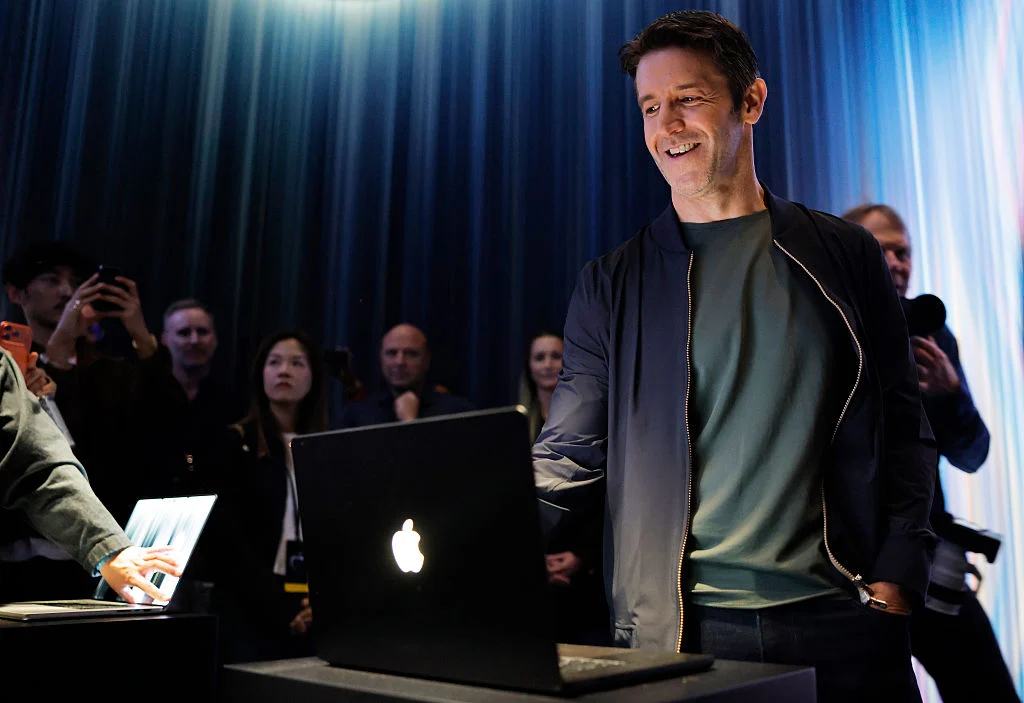
Apple Inc. finds itself at a fascinating crossroads in its illustrious history of technological innovation. Following a high-profile leadership transition that saw longtime hardware engineering chief John Ternus officially step into the role of Chief Executive Officer at the beginning of September 2026, the Cupertino-based tech giant is facing relentless questioning regarding its trajectory in the artificial intelligence sector. In a wide-ranging and candid interview with veteran technology journalist Steven Levy for Wired, CEO John Ternus addressed the persistent narrative that Apple has lagged behind its Silicon Valley competitors in the artificial intelligence race, offering a resolute defense of the company’s measured, user-centric approach to AI integration.
The dialogue highlights a tension that has defined the consumer technology landscape over the past several years: the race toward rapid, aggressive generative AI deployment versus Apple’s historical philosophy of deliberate, polished integration. As Ternus steers the world’s most valuable technology brand into late 2026, industry observers, Wall Street analysts, and everyday consumers are eagerly evaluating whether Apple’s patient strategy will cement its continued dominance or leave it vulnerable to more agile competitors.
The Context of Criticism: Catching Up in a Fast-Moving Market
For the better part of two years leading up to late 2026, Wall Street and technology commentators frequently characterized Apple as being "behind" in the artificial intelligence boom. While competitors like Microsoft, Google, OpenAI, and Meta aggressively rolled out standalone generative AI applications, sprawling conversational interfaces, and sweeping cloud-based automation tools, Apple moved with uncharacteristic caution.
Much of this criticism centered on the delayed rollout of a significantly more powerful, context-aware version of Siri. Originally teased with ambitious capabilities, the upgraded voice assistant faced multiple engineering hurdles and timeline adjustments before its eventual, highly anticipated launch in the summer of 2026. While the summer release finally delivered the long-promised leap in functionality—earning praise for deep ecosystem integration and improved natural language processing—it also prompted lingering industry questions about whether Apple had lost its pioneering edge in core software intelligence.
It was against this backdrop that John Ternus assumed the chief executive mantle in September 2026, succeeding Tim Cook in a transition that marked a new era for the company. Stepping into the spotlight, Ternus inherited not only Apple’s vast hardware and services empire but also the pressing mandate to articulate how the company intends to navigate an AI-first future.
Defending the Philosophy: "AI for AI’s Sake"
Addressing the external critiques during his interview with Wired, Ternus acknowledged the prevailing chatter while firmly pushing back against the notion that Apple is faltering. "Everyone has an opinion," Ternus remarked, before declaring with conviction, "I really like where we’re at."
Rather than viewing AI as a standalone product category, Ternus emphasized that Apple’s engineering philosophy treats artificial intelligence as an underlying enabling technology rather than a marketing buzzword. The company, he stressed, is "absolutely going to leverage AI" across its expanding ecosystem of hardware and software, but it refuses to rush features to market simply to appease quarterly expectations or industry trends.
"We don’t want to ship AI for AI’s sake," Ternus explained to Levy. "When we’re doing it right, people won’t have to think about whether it was AI that made this happen or more traditional software. What matters is, did we build something that they really love?"
This philosophy echoes Apple’s historical playbook. When the company introduced the iPhone, the iPad, and the Apple Watch, it was rarely the absolute first mover in those respective categories. Instead, Apple historically watched early market experiments, identified the friction points in consumer adoption, and waited until hardware efficiency, user experience, and privacy standards aligned to deliver a refined, mass-market solution. Ternus’s comments signal that this deliberate methodology remains deeply entrenched within Apple Park, even as the velocity of artificial intelligence development pressures the entire tech sector to accelerate.

The Threat of Autonomous Agents and the Future of Apps
The conversation between Levy and Ternus also touched upon more existential questions facing the software industry, specifically the rise of autonomous AI agents. As artificial intelligence systems evolve from reactive chatbots into proactive agents capable of executing complex multi-step tasks—such as booking travel, managing finances, and navigating software interfaces on behalf of a user—industry analysts have begun questioning the long-term viability of the traditional application ecosystem. If an AI agent can directly interact with underlying APIs and web services, the traditional graphical user interface and the dedicated mobile app icon could theoretically become obsolete.
When pressed on whether this paradigm shift could fundamentally disrupt Apple’s lucrative App Store economy and its broader ecosystem model, Ternus offered a philosophical and human-centric perspective.
"That could make life really easy, I suppose," Ternus acknowledged, addressing the convenience of autonomous agents. However, he quickly pivoted to what he views as the fundamental soul of Apple’s business model: "The creation of products is a deeply human and personal thing, something that we love to do."
Ternus’s response underscores Apple’s unwavering belief in tangible hardware, curated software experiences, and the emotional connection consumers form with physical devices. While software abstraction layers and invisible AI agents may streamline digital interactions, Apple is betting that human beings will always desire beautifully crafted physical devices, tactile experiences, and secure, locally processed intelligence that respects their personal privacy.
Chronology of Leadership and Technological Milestones
To understand Apple’s current strategic posture, it is helpful to examine the timeline of key developments leading up to Ternus’s CEO tenure and the late 2026 landscape:
- Late 2023 – Throughout 2024: The generative AI boom explodes across the global technology sector. Competitors release advanced foundational models, while Apple faces mounting pressure from investors to detail its proprietary AI strategy and catch up with rivals.
- June 2024 (WWDC): Apple announces Apple Intelligence, outlining a privacy-focused approach to on-device and cloud-based AI processing, while outlining plans for a modernized Siri.
- Summer 2026: Following several delays and meticulous testing phases, Apple officially launches the long-awaited, overhauled version of Siri, successfully integrating advanced context-aware capabilities across iOS, iPadOS, and macOS.
- September 1, 2026: In a major corporate transition, John Ternus officially takes over as Chief Executive Officer of Apple, signaling a new chapter focused on hardware-software synergy and next-generation product design.
- October 31, 2026: In his high-profile interview with Wired, CEO John Ternus publicly defends Apple’s AI timeline, emphasizing user-centric design over rushing features to market.
Industry Implications and Market Analysis
Ternus’s public defense highlights a fundamental philosophical divide in the modern technology sector. On one side are companies pursuing a hyper-fast, cloud-heavy deployment model that prioritizes being first to market with conversational generative tools. On the other side is Apple, which leverages its massive installed base of over two billion active devices to deploy hybrid on-device and private cloud intelligence securely.
Market analysts note that Apple’s strategy carries both distinct advantages and inherent risks. On the positive side, Apple’s strict adherence to data privacy—processed largely via its proprietary Private Cloud Compute infrastructure—remains a powerful differentiator for consumers increasingly wary of corporate data harvesting. Furthermore, integrating AI deeply into the silicon (via advanced Neural Engines in Apple Silicon M-series and A-series chips) allows for low-latency, highly responsive features that work seamlessly without constant internet connectivity.
Conversely, the risk lies in consumer perception. In an era where tech enthusiasts measure innovation in weeks rather than years, any perception of sluggishness can impact stock momentum and developer enthusiasm. By asserting that true innovation is measured by whether users "really love" the final product rather than whether it checks an industry buzzword box, Ternus is doubling down on quality over speed.
Conclusion: A Pivotal Era for the Cupertino Giant
As John Ternus navigates his opening months as Chief Executive Officer, his leadership style is coming into sharp focus. Rather than panicking in the face of external criticism or abandoning Apple’s core tenets to chase fleeting industry fads, Ternus is choosing to lean into the company’s historic strengths: meticulous design, seamless ecosystem integration, and an uncompromising focus on the end-user experience.
Whether Apple’s measured approach to artificial intelligence will successfully quiet the skeptics in the long run remains one of the most compelling storylines in global technology. However, for a leader who values the deeply human and personal craft of product creation, the message is clear: Apple will shape the future of AI on its own terms, when the technology is truly ready to enrich people’s lives without compromise.