
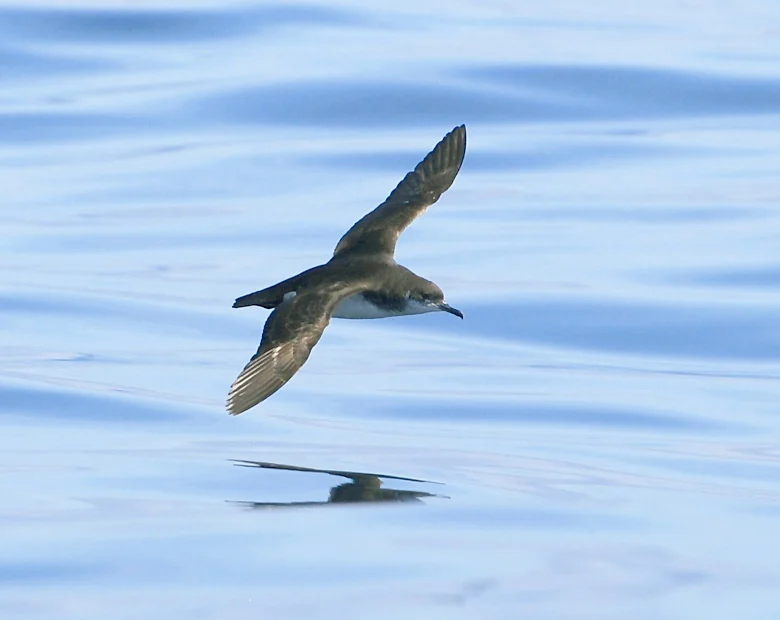
Human travelers crossing multiple time zones are intimately familiar with the symptoms of jet lag: the persistent fatigue, the cognitive fog, and the body’s inability to sync with the local clock. While this phenomenon is often treated as a uniquely human inconvenience, a recent study published in the journal Science reveals that Manx shearwaters—nimble seabirds capable of traversing vast stretches of the North Atlantic—experience a form of avian jet lag that fundamentally alters their navigational accuracy.
For these birds, the consequences of this biological desynchronization are not merely physiological; they are navigational. Because the species relies on a solar compass to orient itself during long-distance foraging flights, a slight shift in their internal timekeeping causes them to drift off course, proving that the struggle to reconcile internal rhythms with external reality is a universal challenge in the animal kingdom.
The Mechanism of Avian Navigation
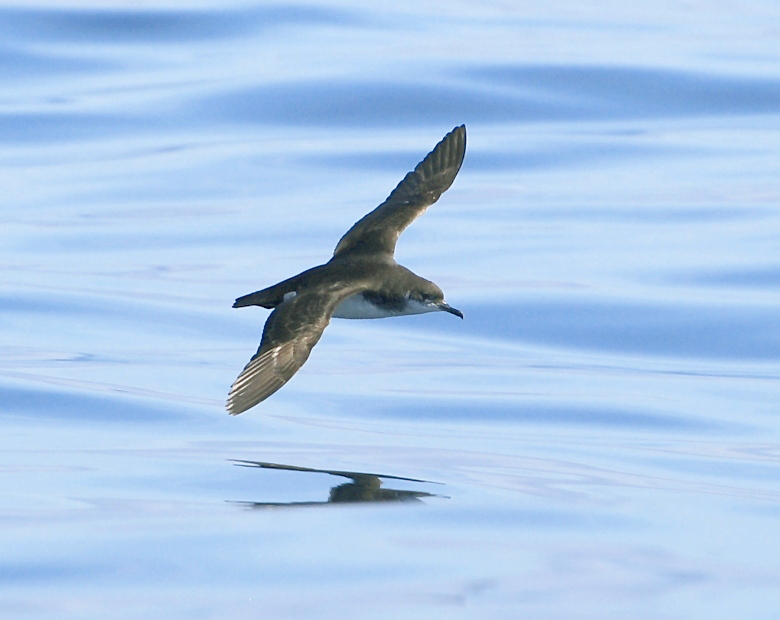
Manx shearwaters, medium-sized seabirds characterized by their distinct black-and-white plumage and long, slender wings, are master navigators. They maintain a complex existence, nesting in underground burrows across coastal islands in the North Atlantic—with a significant portion of the global population concentrated in Wales—and foraging for food hundreds of kilometers out at sea.
To return to their nests, these birds utilize a sophisticated, two-part navigational system. First, they possess a "map sense," a poorly understood mechanism that likely relies on olfactory cues or the Earth’s magnetic field to determine their general location. Second, once they establish their position, they employ a Sun compass to determine their heading.
The Sun, however, is a moving target. As it tracks across the sky, its position relative to the horizon changes constantly throughout the day. To navigate successfully using the Sun as a beacon, a bird must have an internal biological clock that accurately registers the time of day. If a bird’s internal clock is misaligned with the actual time—a state identical to human jet lag—its interpretation of the Sun’s position will be skewed. This leads to predictable errors in flight paths: birds heading east veer off course in a clockwise direction, while those heading west drift anticlockwise.
A Two-Decade Investigation
The findings were made possible by an exhaustive analysis of 20 years of GPS tracking data. Beginning in 2004, when GPS tagging technology became sufficiently miniaturized to be fitted onto birds the size of a pigeon, researchers at the University of Oxford—led by behavioral and sensory ecologist Patrick Lewin, alongside senior researchers Tim Guilford and Chris Perrins—began monitoring the movements of Manx shearwaters.
The resulting dataset is one of the most comprehensive of its kind, encompassing 3,688 foraging trips undertaken by 1,045 individual birds. These trips, which lasted anywhere from 24 hours to two weeks, provided a goldmine of information regarding how birds adjust their flight paths in real-time. By isolating the "homing" segments of these trips—the periods when birds switch from erratic, zigzagging foraging behavior to a direct, high-speed flight back to their burrow—researchers were able to calculate the precise moment a bird’s internal clock likely fell out of sync with its longitudinal position.
The researchers calculated the discrepancy between the bird’s last sunrise location and its current GPS position. They found that for every degree of longitude covered between sunrise and sunset, the birds’ internal clocks fell roughly four minutes out of sync with local time. While a four-minute shift seems negligible, it is enough to cause measurable deviations in a bird’s orientation.
Quantifying the Error
The observed navigational biases were small but statistically significant. In the 335 homing flights analyzed, the birds veered from their path in direct correlation with the predictions derived from a malfunctioning Sun compass. The maximum time shift recorded was approximately one hour, though the vast majority of deviations involved 10 to 15-minute discrepancies.
These shifts resulted in course deviations of up to 15 degrees. While this may seem substantial, the impact on the birds’ energy expenditure was surprisingly minimal. The study found that a shearwater flying 1,000 kilometers eastward—a typical long-distance journey—would experience an average navigational error of roughly seven degrees. Because the birds possess a robust map sense, they are capable of cross-referencing their position and correcting their trajectory. Consequently, these errors added only about five kilometers to the total distance of a 1,000-kilometer flight.
This suggests that birds may operate two parallel navigational systems: one driven by the Sun compass and another by familiar landmarks or environmental cues. The balance between these systems prevents the birds from becoming hopelessly lost, even when their primary internal clock is compromised by rapid travel across longitude lines.
Implications for Autonomous Systems and Biology
The study’s implications extend far beyond ornithology. As engineers continue to develop bio-inspired autonomous navigation systems, understanding how nature compensates for sensory and timing errors is of high strategic value. If birds have evolved to manage constant, minor states of jet lag without significant loss of fitness, these strategies could be integrated into robotics or drone technology.
However, the researchers caution that the current data does not confirm whether the birds experience other classic symptoms of jet lag, such as sleep deprivation, metabolic irregularities, or hunger suppression. Future studies will be required to determine if these time shifts impact the quality of the food retrieved or the overall breeding success of the colony.

Furthermore, this phenomenon is likely not restricted to Manx shearwaters. Any migratory species or long-distance flier that crosses multiple time zones in a single day is theoretically susceptible to this form of navigational bias. Animals living at higher latitudes, where lines of longitude converge and are therefore traversed more quickly, may be particularly prone to these effects.
The Evolutionary Perspective
The broader question for the research team now centers on whether these birds have evolved specific biological mechanisms to "reset" their clocks more efficiently than humans. For humans, chronic jet lag is associated with long-term health risks, including cardiovascular issues and cognitive decline. If birds are routinely subjected to this stress during their foraging cycles, they may provide a roadmap for how to mitigate such biological imbalances.
"In humans, if you do it a lot, in the long term it has really negative health impacts," noted Dr. Lewin. "Maybe we could take some inspiration from these animals that are constantly experiencing jet lag and see if there are ways that we can mitigate jet lag affecting humans."
As the scientific community continues to analyze the dataset, the case of the Manx shearwater serves as a reminder of the precision required for survival in the wild. Even with an internal clock that is millions of years in the making, the act of crossing the globe remains a complex challenge. Whether through environmental correction or redundant navigational systems, the shearwater’s ability to find its way home despite its "jet-lagged" compass is a testament to the resilience of migratory species in an ever-changing, vast, and demanding oceanic environment.
The study, published in the October 2026 issue of Science (DOI: 10.1126/science.adz2542), underscores the necessity of long-term longitudinal studies in understanding the subtle, often invisible pressures that shape the behavior of wild animals. By bridging the gap between two decades of observational data and modern computational modeling, researchers have provided a clearer view into the internal world of one of the ocean’s most accomplished travelers.