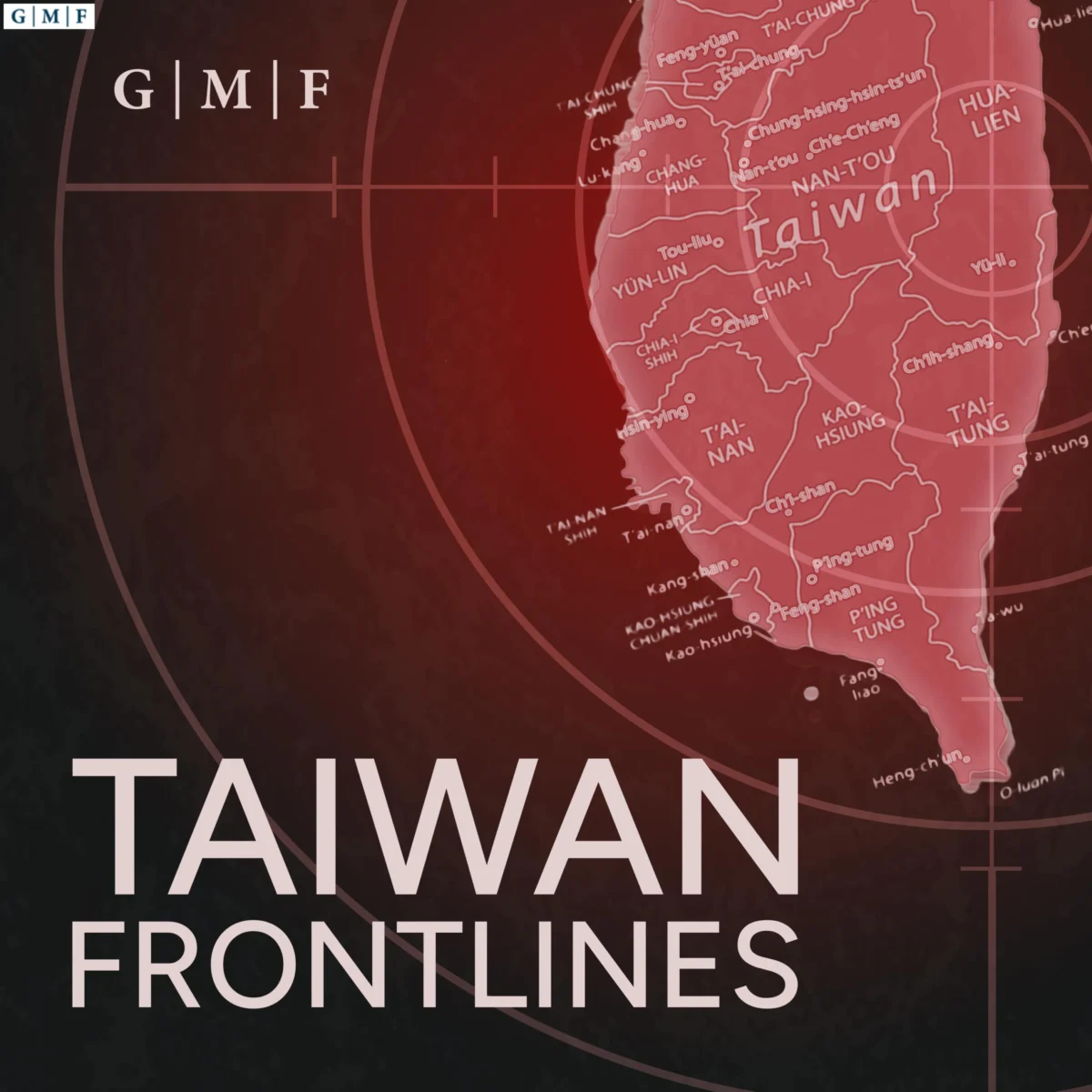
Taiwan stands at a critical juncture in the global technological landscape, serving simultaneously as the indispensable engine of the world’s advanced computing supply chain and as the primary laboratory for modern digital warfare. Home to semiconductor giants like TSMC, UMC, and ASUS, the island is currently managing a dual mandate: fostering an environment conducive to rapid artificial intelligence (AI) innovation while erecting a robust defense against an unprecedented volume of cyber-espionage and information warfare. In a recent episode of the Taiwan Frontlines podcast, hosted by Bonnie Glaser and Jason Hsu, Political Deputy Minister of the Ministry of Digital Affairs, Isabel Hou, provided an in-depth look at how the island is crafting its AI governance framework to balance these conflicting pressures.
The Architect of a New Regulatory Frontier
The passage of Taiwan’s AI Basic Act represents a landmark moment in the island’s legislative history. As the principal architect of this framework, Deputy Minister Isabel Hou brings over 25 years of expertise at the intersection of technology and legal policy to the Ministry of Digital Affairs (MODA). Since assuming her role in September 2025, Hou has been tasked with defining how Taiwan classifies, manages, and mitigates the risks associated with AI.
The Act is designed not as a restrictive barrier, but as a risk-based classification system. It seeks to incentivize development in non-sensitive sectors while imposing stringent transparency and safety standards on AI systems integrated into critical national infrastructure. The legislative process involved balancing the needs of Taiwan’s hyper-competitive tech sector with the existential requirement to protect the island’s democratic institutions from digital subversion.
A Frontline Defense Against Digital Subversion
The urgency of Taiwan’s regulatory efforts cannot be overstated. According to recent data from the Ministry of Digital Affairs, the island is the target of up to 2.4 million cyberattacks on peak days—a volume that reflects a persistent and highly organized campaign of digital intrusion. These attacks target not only corporate intellectual property but also the integrity of government communications and public utility infrastructure.
This ongoing campaign has forced Taiwan to innovate in the realm of "Sovereign AI." The concept goes beyond mere domestic development; it involves building self-reliant AI capabilities that are not dependent on foreign hardware or software architectures that could be compromised. For Taipei, sovereignty in the AI age is a matter of national security. By developing indigenous Large Language Models (LLMs) and local data processing centers, Taiwan aims to minimize the risk of "backdoor" vulnerabilities that could be exploited by hostile state actors during a period of geopolitical tension.
Chronology: The Evolution of Taiwan’s Digital Strategy
The current legislative and security posture is the result of years of incremental policy shifts:
- 2018–2020: The initial phase of "Digital Transformation," focusing on the digitization of public services and the expansion of 5G infrastructure.
- 2022: The official establishment of the Ministry of Digital Affairs (MODA) to centralize the government’s response to cybersecurity threats.
- 2024: The emergence of generative AI on the global stage, prompting an immediate review of Taiwan’s existing legal frameworks.
- September 2025: Isabel Hou assumes the role of Political Deputy Minister, accelerating the legislative push for the AI Basic Act.
- Late 2025–Present: Implementation of the risk-based AI management framework and the focus on "Sovereign AI" as a pillar of national defense.
Supporting Data and the Economic Context
The economic stakes for Taiwan are immense. The island accounts for over 60% of the world’s semiconductor manufacturing and over 90% of the production of the most advanced chips required to train AI models. This "Silicon Shield" has long been viewed as a deterrent against kinetic conflict. However, as the digital realm becomes more volatile, the reliance on these chips has made Taiwan a target for industrial espionage.
Industry analysts suggest that the AI Basic Act is a signal to global partners that Taiwan is a responsible steward of high-tech development. By codifying ethical AI usage, Taiwan seeks to remain the preferred partner for Western nations, particularly the United States and members of the European Union, who are looking to de-risk their supply chains away from non-transparent jurisdictions.
Comparative Analysis: Lessons for Global Democracies
During the Taiwan Frontlines discussion, Deputy Minister Hou emphasized that Taiwan’s regulatory model offers a blueprint for other open societies. Unlike the European Union’s AI Act, which is often criticized for being overly prescriptive and potentially stifling to startups, Taiwan’s approach is categorized as "agile regulation."
The core of the strategy is the ability to adapt. Because the threat landscape evolves daily—with AI-driven disinformation campaigns changing in sophistication—the Taiwanese government has built "flexibility clauses" into its framework. This allows the Ministry to re-classify risk levels for emerging technologies without waiting for the slow, often multi-year cycle of parliamentary amendment.
Official Responses and International Implications
While the PRC has consistently denied allegations of state-sponsored cyberattacks against Taiwan, Western intelligence agencies—including the U.S. Cybersecurity and Infrastructure Security Agency (CISA)—have repeatedly cited Taiwan’s defensive efforts as a "gold standard" for nations facing similar hybrid threats.
International tech policy experts have noted that Taiwan’s "Pax Silica" strategy—a play on the concept of Pax Romana—suggests that global peace can be maintained through the universal integration of, and dependence on, advanced semiconductor and AI architectures. By inviting international stakeholders to participate in the "Pax Silica Summit," Taiwan is effectively creating an international coalition centered on the protection of the digital supply chain.
The Path Forward: Limitations and Future Challenges
Despite the progress, the Ministry of Digital Affairs acknowledges significant hurdles. AI regulation is inherently limited by the speed of technological innovation. A law passed today may be obsolete in six months. Furthermore, the reliance on private-sector partners—the ASUSes and TSMCs of the world—to implement government-mandated security protocols creates a complex relationship between state interests and corporate profitability.
There is also the "talent gap." As Taiwan attempts to build a world-class sovereign AI infrastructure, it competes with global tech giants for the same limited pool of data scientists and cybersecurity engineers. The Ministry is currently looking at new visa incentives and academic partnerships to retain domestic talent and attract global expertise to the island.
Implications for the Global Digital Order
The broader implication of Taiwan’s current trajectory is the transformation of the "Silicon Shield" into a "Digital Firewall." If Taiwan succeeds in creating a robust, secure, and sovereign AI ecosystem, it will reinforce its position as a critical node in the global economy that cannot be easily bypassed or compromised.
As Deputy Minister Hou indicated, the goal is not to isolate Taiwan’s AI sector, but to integrate it into a global network of "trusted ecosystems." This entails a shift in how nations view technological alliances. Security is no longer just about military hardware; it is about the sanctity of data, the integrity of code, and the resilience of the neural networks that will power the next generation of global industry.
As the international community watches, Taiwan continues to act as the primary test case for how an open, democratic society can leverage AI to its advantage while simultaneously defending itself against a persistent, well-funded, and technologically capable adversary. The success of the AI Basic Act will likely dictate not only the island’s own economic future but also the standards by which the rest of the world manages the risks and rewards of the artificial intelligence revolution.