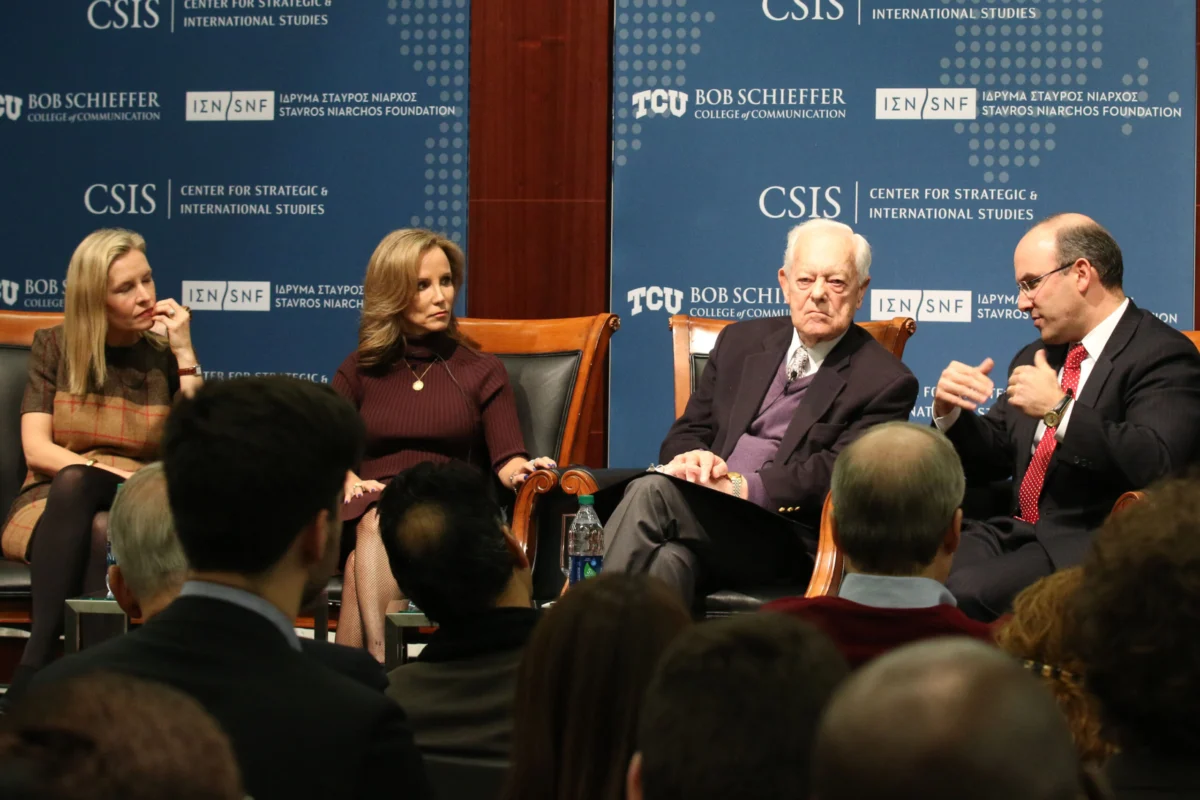
The landscape of international security and domestic counterterrorism faced an unprecedented transformation in the early decades of the 21st century, shifting from centralized extremist networks to decentralized digital movements, lone-actor threats, and complex hybrid warfare. To unpack these critical geopolitical shifts, the Center for Strategic and International Studies (CSIS)—in proud partnership with the TCU Bob Schieffer College of Communication—convened a high-profile public dialogue on January 29, 2016. Moderated by veteran broadcast journalist and former CBS News Chief Washington Correspondent Bob Schieffer, the event brought together leading national security practitioners, intelligence experts, and investigative journalists to evaluate the multifaceted challenges facing the United States and its international allies.
The conversation highlighted the compounding pressures of contemporary geopolitical instability, exploring how policymakers, intelligence agencies, and civil society must adapt to asymmetric threats that transcend traditional national borders. Through the collaborative Schieffer Series, established to foster rigorous public discourse on pressing domestic and foreign policy issues, the panel provided a comprehensive evaluation of global security, intelligence sharing, counter-radicalization, and the delicate balance between civil liberties and national protection.
Context and Background: The Evolving Threat Landscape of the 2010s
By early 2016, the global counterterrorism architecture was under severe strain. The rise of the Islamic State of Iraq and Syria (ISIS) across large swaths of the Middle East, coupled with the persistent threat of Al-Qaeda affiliates and homegrown violent extremists, forced Western intelligence agencies to rethink traditional paradigms of national defense. Unlike previous decades defined by state-sponsored actors or hierarchical militant organizations, the mid-2010s were characterized by sophisticated digital recruitment, encrypted communications, and decentralized inspiration-based attacks.
Concurrently, Western nations were grappling with the complex phenomenon of foreign fighters traveling to conflict zones in Iraq and Syria, raising fears of radicalized individuals returning with operational training and combat experience. Domestic security agencies faced the daunting task of monitoring thousands of potential threat vectors while operating within constitutional frameworks designed to protect free speech and privacy. It was within this climate of heightened anxiety and strategic re-evaluation that the CSIS-Schieffer Series dialogue convened, offering a platform for seasoned architects of national security policy to speak candidly about the efficacy of current strategies and the necessity for international cooperation.

Panel Composition and Expert Insights
The January 29 forum featured an exceptional lineup of national security authorities, each bringing distinct institutional perspectives and deep operational experience to the discussion.
Bob Schieffer, whose illustrious career at CBS News included decades of anchoring Face the Nation and covering Washington politics, guided the conversation with his trademark clarity and probing journalistic inquiry. Joining him on the panel was Frances F. Townsend, who served as the Assistant to the President for Homeland Security and Counterterrorism under President George W. Bush. Townsend brought critical executive branch insights regarding interagency coordination, the evolution of the Department of Homeland Security, and the post-9/11 legal frameworks that continue to govern counterterrorism operations.
The panel also featured the Honorable Juan Zarate, a former Deputy National Security Adviser for Combating Terrorism and Senior Adviser at CSIS. Zarate offered deep expertise on the financial dimensions of counterterrorism, the disruption of illicit financial networks, and the strategic deployment of economic power as an instrument of national security. Rounding out the expert panel was Mary Louise Kelly, an experienced national security correspondent for National Public Radio (NPR), who provided a vital journalistic lens on how intelligence operations are communicated to the public, the role of media in shaping security narratives, and the ground-level realities faced by intelligence reporters.
Key Themes Explored During the Dialogue
The discussion spanned several critical domains of modern security policy, addressing both operational challenges and long-term strategic imperatives.
The Shift from Al-Qaeda to Decentralized Extremism
Panelists analyzed the strategic pivot in global terrorism, noting that while core Al-Qaeda networks had been significantly degraded through sustained counterterrorism pressure, the movement had metastasized into regional affiliates and autonomous cells. Furthermore, the emergence of ISIS introduced a new model of psychological warfare, leveraging high-definition media production, social media platforms, and direct peer-to-peer digital recruitment to inspire individuals thousands of miles away from traditional conflict zones.

Information Sharing and Intelligence Integration
A central theme of the dialogue was the ongoing evolution of intelligence sharing among federal, state, and local law enforcement agencies, as well as international partners. Participants evaluated the structural reforms implemented after the September 11 attacks—such as the establishment of the Office of the Director of National Intelligence and various fusion centers—assessing their effectiveness in breaking down bureaucratic silos and preventing domestic attacks. The panel emphasized that modern threat detection relies heavily on seamless data integration and timely interagency cooperation.
Financial Counterterrorism and Economic Statecraft
Drawing on extensive government experience, the discussion turned to the financial mechanisms that sustain extremist networks. Panelists underscored the importance of targeting illicit financial flows, combating underground banking systems, and leveraging international financial institutions to freeze assets and isolate bad actors. This financial warfare approach proved vital in complementing traditional military and intelligence operations.
Balancing Security, Privacy, and Civil Liberties
The dialogue directly addressed the persistent tension between robust counterterrorism measures and the protection of constitutional rights. In an era marked by rapid technological advancement and encrypted digital communications, security agencies faced unprecedented hurdles in intercepting plots without infringing upon individual privacy. The panel deliberated on how democratic societies can maintain public safety while upholding the rule of law and transparency.
Institutional Background and Support
The CSIS-Schieffer Series is a cornerstone public affairs initiative co-hosted monthly by the Center for Strategic and International Studies—a premier bipartisan public policy institution based in Washington, D.C.—and the TCU Bob Schieffer College of Communication. Designed to bridge the gap between policymakers, academics, journalists, and the general public, the series tackles the most complex challenges shaping domestic politics and international relations.
The execution and accessibility of these high-level dialogues are made possible through the generous philanthropic support of the Stavros Niarchos Foundation. By funding open forums and educational outreach, the partnership ensures that vital national security discussions reach a broad audience, fostering an informed citizenry capable of engaging with the nuances of foreign policy.

Broader Impact and Long-Term Implications
Looking back at the strategic discourse of early 2016, the insights shared during the CSIS-Schieffer Series session anticipated many of the defining security debates of the subsequent decade. The transition toward cyber warfare, the weaponization of social media by violent extremist organizations, and the complexities of domestic radicalization remain central concerns for national security architects today.
As global security dynamics continue to evolve amid shifting geopolitical alliances and emerging technologies—including artificial intelligence and quantum computing—the principles articulated by the panel underscore the enduring need for adaptive, legally sound, and coordinated counterterrorism strategies. The dialogue serves as a historical benchmark of how expert analysis and public communication intersect to guide democratic nations through periods of profound uncertainty and threat.