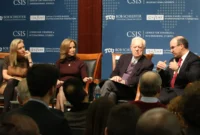

In a deliberate departure from traditional diplomatic protocols that have historically centered on the corridors of Washington, D.C., German Federal Defense Minister Boris Pistorius recently completed a high-stakes visit to the United States, marked by a significant detour to the state of Texas. This mission, which included high-level consultations with U.S. Secretary of Defense Pete Hegseth, served as a tangible manifestation of Berlin’s evolving strategy to secure the future of the transatlantic alliance by embedding itself into the regional fabric of the American industrial and military complex.
The centerpiece of the Texas excursion was a site visit to inspect the production progress of the F-35 Lightning II aircraft. These fifth-generation stealth fighters represent a cornerstone of Germany’s military modernization efforts, serving as a symbolic and practical commitment to NATO interoperability. By engaging directly with the hubs of American defense manufacturing, Berlin is signaling that it views the transatlantic relationship not merely as a political arrangement between capitals, but as an inextricable integration of defense-industrial bases.
A Shifting Diplomatic Paradigm
For decades, the standard operating procedure for European diplomats has been to cultivate relationships within the Beltway. However, the current political climate—characterized by increasing volatility and a perceptible trend toward American retrenchment from European security guarantees—has compelled Berlin to diversify its outreach. By focusing on the 99.8% of the U.S. population residing outside the capital, Germany is adopting a "bottom-up" diplomatic strategy.
This move is fundamentally distinct from the concept of "strategic autonomy" often championed by other European capitals, which frequently posits a decoupling from U.S. influence. Conversely, Germany is doubling down on interdependence. This policy of "patient pragmatism," spearheaded by Chancellor Friedrich Merz, recognizes that the most durable security architecture is one that is insulated from the immediate shifts in electoral cycles and executive administrations.
Chronology of Recent Transatlantic Engagements
The recent visit by Minister Pistorius follows a series of calculated efforts to stabilize the partnership. The timeline of this strategic pivot can be traced as follows:
- Early 2024: Heightened internal debate within the German Bundestag regarding the future of the European security umbrella, following signals of reduced U.S. focus on NATO’s eastern flank.
- Mid-2024: Berlin initiates preliminary discussions regarding the expansion of the National Guard’s State Partnership Program (SPP) to deepen ties with specific U.S. states.
- November 2024: Strategic assessment sessions between German and U.S. defense officials in Washington to align procurement timelines for the F-35 fleet.
- Current Week: Minister Pistorius conducts his tour of Texas and holds bilateral meetings with Secretary Hegseth, focusing on technical integration and long-term supply chain resilience.
Economic and Military Integration: The State-Level Strategy
The German approach is increasingly granular. Rather than relying solely on federal-level diplomacy, Berlin is actively courting U.S. states to act as anchors for economic and military cooperation. A primary example of this is the ongoing courtship of South Carolina for a formal collaboration under the U.S. National Guard’s State Partnership Program.
The SPP, which pairs U.S. National Guard units with foreign counterparts, has historically been a tool for building military capacity in developing nations. By seeking to leverage this mechanism, Germany is signaling a desire to formalize institutionalized cooperation that remains functional regardless of the political climate in Washington. This strategy recognizes that regional economic partnerships—based on shared manufacturing interests and military procurement—create powerful local lobbies in the United States that favor the maintenance of the transatlantic alliance.
Supporting Data and Security Realities
The urgency of this strategy is underscored by a shifting geopolitical landscape. Recent data from the Pew Research Center highlights a complex environment for the transatlantic alliance. While a majority of the American public continues to support a positive relationship with Europe, there has been a documented rise in anti-American sentiment within certain European demographics. This creates a dual-pressure environment for the German government: it must justify its deep alignment with the United States to a skeptical domestic electorate while simultaneously convincing a potentially hesitant U.S. administration of its value as a partner.
Furthermore, the defense-industrial integration is backed by significant financial commitments. Germany’s procurement of the F-35 is part of a broader €100 billion Zeitenwende fund (a turning point in defense policy). Integrating these systems into the German Luftwaffe requires not just the hardware, but a permanent, multi-decade framework of cooperation on maintenance, pilot training, and software updates—all of which are tethered to U.S.-based industrial partners.
Official Responses and Internal Tensions
While the German government maintains that this outreach is a necessary evolution of the alliance, it is not without its domestic critics. Within Germany, political factions across the spectrum have questioned whether such deep integration limits Berlin’s sovereign foreign policy options. Chancellor Merz, however, has consistently argued that the "status quo" is no longer an option.
In Washington, reactions to this localized diplomatic approach have been largely positive. By focusing on industrial partnership and regional security, German officials are speaking a language that resonates with state-level representatives and congressional delegations who are more concerned with jobs and domestic manufacturing than with abstract geopolitical theories. This alignment of interests—German security needs and American industrial prosperity—serves as the bedrock of the new, pragmatic transatlanticism.
The Broader Implications of Patient Pragmatism
The long-term success of this strategy hinges on its ability to withstand the "ebb and flow" of transatlantic political tides. By anchoring the relationship in industrial production and state-level partnerships, Germany is effectively building a "firewall" against diplomatic volatility. If a project like the F-35 delivery is inextricably linked to the economies of specific U.S. states, the political cost of disrupting that relationship increases for any future administration.
However, the risks are substantial. This strategy requires a high degree of transparency and consistent engagement from both sides. If the German strategy is perceived as an attempt to "bypass" the White House rather than complement it, it could backfire, leading to accusations of interference or undermining of federal authority.
Moreover, Germany must carefully navigate the "dependency paradox." The more it integrates its defense industry with the United States, the more difficult it becomes to achieve the independent security capabilities that many in the EU still desire. For now, Berlin has made its choice: it is prioritizing the immediate, tangible benefits of a strong, institutionalized alliance over the theoretical pursuit of complete strategic independence.
Conclusion: A Signal to the World
As the global security environment becomes increasingly fragmented, the German decision to bring the alliance to the American heartland is a calculated gamble. Whether it yields the desired stability remains to be seen. Yet, for the majority of Americans who view the transatlantic relationship as a vital component of national security, the sight of high-level German officials inspecting advanced military hardware on U.S. soil provides a clear message. The alliance is not merely a historical artifact of the 20th century; it is being actively maintained, updated, and re-engineered to meet the realities of the 21st.
The success of this mission, and the future of the transatlantic link, will ultimately be measured not by the rhetoric delivered in the halls of power, but by the strength of the bonds forged in the factories, training grounds, and state houses of a changing America. Germany’s bet is that these local, functional, and industrial ties will prove more durable than the passing political fashions of a polarized era.