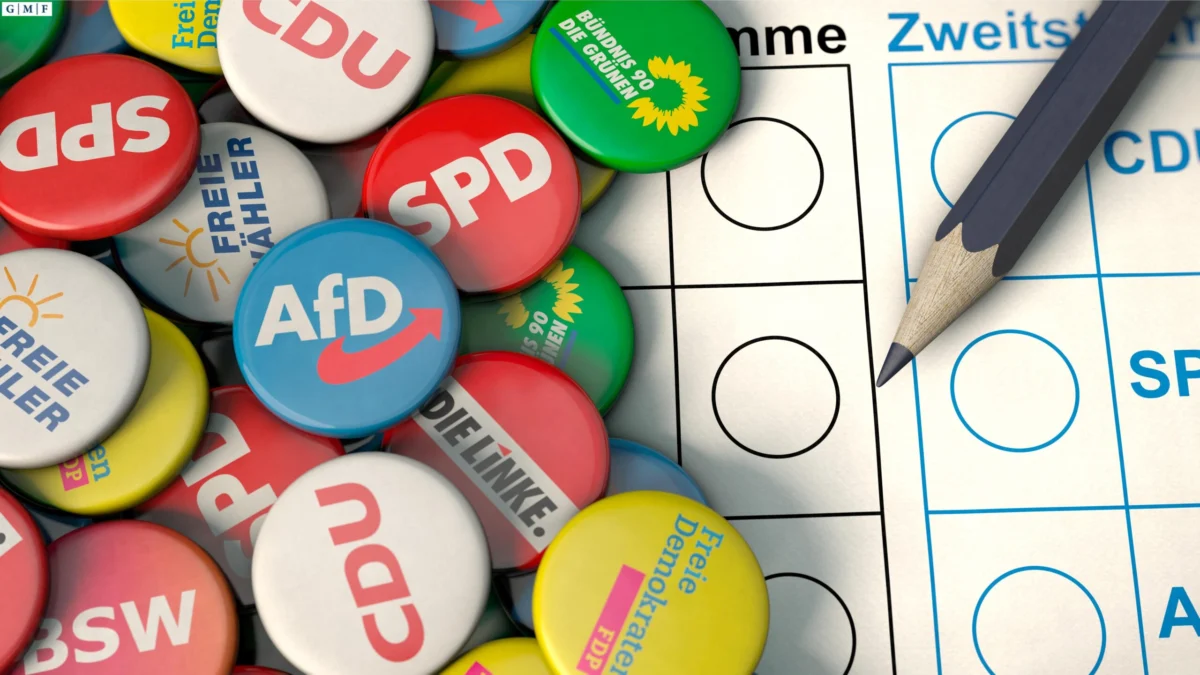
The political foundations of the Federal Republic of Germany are undergoing a tectonic shift, as a disastrous string of state election results has left Chancellor Friedrich Merz and the Christian Democratic Union (CDU) in a state of profound vulnerability. Following a brutal electoral rebuke in Mecklenburg-Vorpommern and Berlin this past Sunday, the Chancellor’s authority has been severely compromised. These results, arriving just two weeks after a seismic surge by the far-right Alternative for Germany (AfD) in Saxony-Anhalt, have transformed a period of legislative uncertainty into a full-blown existential crisis for the current federal government.
A Chronology of the Electoral Collapse
The current wave of instability began with the regional contest in Saxony-Anhalt, where the AfD achieved a staggering 44% of the vote. For the CDU, which has historically dominated the region, the outcome was humiliating; the party plummeted to a historic low of just over 17%. Many observers initially hoped this might be an isolated anomaly, a localized protest against federal policies.
However, Sunday’s elections confirmed that the "Saxony-Anhalt effect" is, in fact, a broader trend across Eastern Germany. In Mecklenburg-Vorpommern, the AfD secured a first-place finish with 38% of the vote. The CDU’s performance there was nothing short of historic in the worst sense: the party failed to reach the 5% threshold required to enter the state parliament—a scenario unseen in the history of the Federal Republic since its inception after the Second World War.
Simultaneously, in the capital city of Berlin, the CDU failed to provide a strategic counterbalance, sliding below 19%. The city saw a resurgence of the far-left Die Linke, which claimed 27% of the vote, largely fueled by a demographic shift among voters aged 16 to 34 who are increasingly disenchanted with the status quo. The AfD also made gains in the capital, climbing to 16%.
Disintegration of the CDU’s Regional Foundations
For decades, the CDU prided itself on being a "Volkspartei" (people’s party) with deep, enduring roots across the German landscape. In the East, this narrative is rapidly fraying. The argument that the CDU lacks a historical connection to the region is factually incorrect; the party has governed Saxony continuously since reunification and led Saxony-Anhalt for decades.
The current crisis suggests that these institutional roots have not merely withered; they have disintegrated. The party is now suffering from a dual-front assault. In the East, it is being hollowed out by populist forces that absorb protest voters, while pragmatic, center-right voters are increasingly migrating to entrenched state premiers from other parties who have successfully cultivated powerful local political machines. Conversely, the CDU’s attempts to mirror right-wing rhetoric in an effort to recapture lost ground in the East are actively alienating moderate, middle-class voters in the West and in Germany’s major urban centers.
The Chancellor’s Dilemma and Official Responses
In an unprecedented move that signaled the gravity of the situation, Chancellor Merz addressed the media shortly after the polls closed on Sunday. His tone was one of grim resolve, as he pledged to "double down" on his government’s current trajectory of structural reforms and market-oriented adjustments.
However, political analysts remain skeptical about whether he possesses the requisite leverage to execute this agenda. The federal coalition, which includes the Social Democratic Party (SPD), is equally weakened. Faced with their own shrinking base, SPD leaders are reportedly signaling a refusal to sign off on unpopular welfare cuts or radical market overhauls that could further alienate their core constituency. This creates a paralyzing impasse: the Chancellor is demanding reforms that his coalition partners cannot afford to support, and that his own party is no longer unified enough to champion.
The internal dissent within the CDU is becoming impossible to ignore. Senior party figures, including the influential Prime Minister of North Rhine-Westphalia, Hendrik Wüst, and the Bavarian leader and Christian Social Union (CSU) heavyweight, Markus Söder, are reportedly observing the situation with increasing alarm. The growing discourse regarding a potential leadership transition has turned Merz into a "lame duck" in the eyes of many political observers, limiting his ability to negotiate both domestically and on the European stage.
The Broader Implications for Europe and NATO
The paralysis of the German government—Europe’s primary economic engine and a critical pillar of NATO’s European defense strategy—has sent shockwaves through Western capitals, particularly Washington.
The policy implications are immediate and concerning. Both the AfD and Die Linke, despite their disparate ideologies, share a common thread: deep skepticism toward Germany’s military and financial support for Ukraine. Both parties have advocated for a diplomatic pivot that would improve relations with Moscow, with the AfD specifically campaigning on the promise of restoring cheap Russian energy imports.
As NATO navigates a precarious period defined by heightened Russian hybrid threats along its eastern flank, and as Ukraine prepares for its fifth winter under wartime conditions, a distracted and internally divided Germany creates a dangerous power vacuum. The stability of the European security architecture relies heavily on a coherent, proactive Berlin—a quality that is currently absent.
Analysis: No Silver Lining
For the CDU, the calculus for the next federal election is becoming increasingly dire. The argument that entering the next contest under a "damaged" Chancellor guarantees defeat is gaining traction among party elites. With the next state elections in the West scheduled for early Spring 2027, the window for a recovery is narrow. Any further electoral setback in the coming months would almost certainly mark the end of the Merz era.
There is, as some senior CDU strategists have privately conceded, no immediate "silver lining" to be found in these results. The party is caught between a past that no longer resonates and a future that it currently lacks the consensus to shape. The transition from the era of long-term, comfortable stability that characterized the post-war Federal Republic to a more fragmented and volatile political landscape appears complete.
Whether Chancellor Merz can navigate this storm, or whether the CDU will opt for a radical change in leadership to forestall a broader collapse, remains the central question of German politics. For now, the Chancellor remains at the helm, but his ship is taking on water, and the political winds are blowing harder than at any point in the last three decades. The coming months will be a crucible, not just for the CDU, but for the stability of the European Union itself as it faces a unified, increasingly radicalized opposition and a domestic political system that is struggling to process the grievances of its citizenry.