
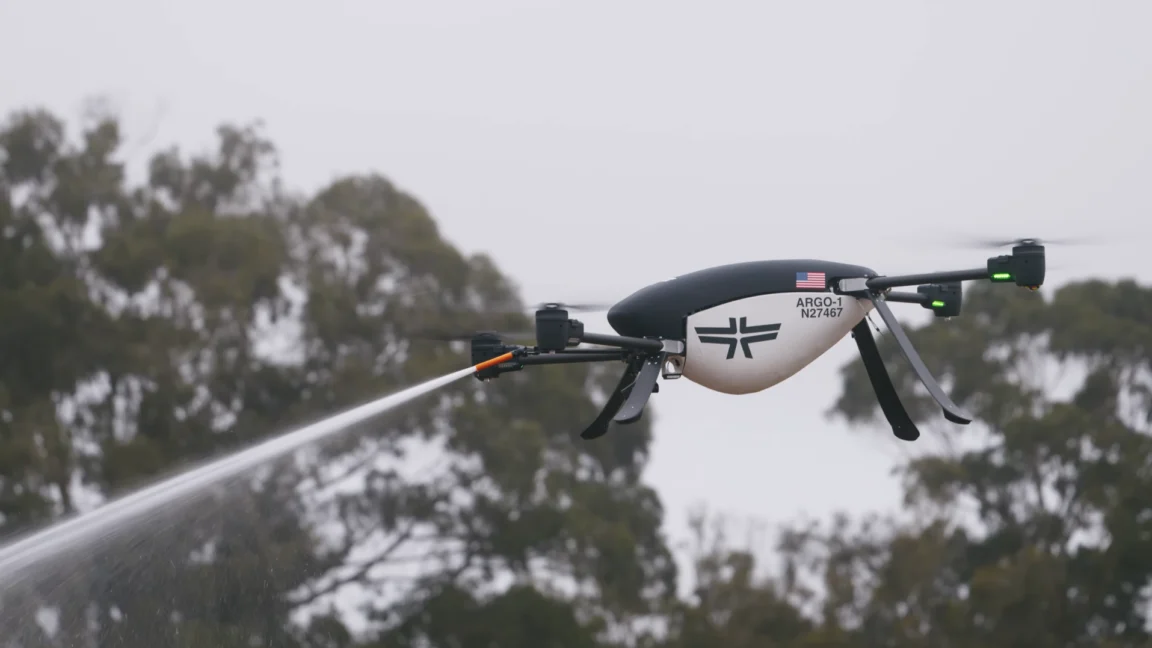
As climate change continues to alter meteorological patterns, increasing the frequency and intensity of wildfires, firefighting agencies are moving beyond traditional methods. The conventional approach, which relies heavily on ground crews and large, piloted airtankers, is increasingly being supplemented by a new, agile category of autonomous aerial vehicles. This summer, specialized testing programs in California and Alaska have showcased the potential for drone swarms to act as a rapid-response mechanism, targeting nascent blazes before they evolve into catastrophic, landscape-level fire events.
The Strategic Evolution of Aerial Firefighting
For decades, the standard for aerial firefighting has been the heavy-lift airtanker, such as the Boeing 747 Global SuperTanker or the DC-10 Air Tanker. While these behemoths can drop thousands of gallons of retardant in a single pass, they are constrained by their sheer size, logistical requirements, and the necessity for pilot safety in turbulent, smoke-filled skies.
The current shift toward drone technology—often referred to as Unmanned Aerial Systems (UAS)—represents a paradigm shift. These drones are not intended to replace heavy aircraft; rather, they serve as a surgical, high-speed intervention layer. By arriving at the coordinates of a fire within minutes of detection, these autonomous systems aim to suppress the "incipient" phase of a wildfire, potentially neutralizing the threat before it necessitates a massive mobilization of human personnel.
Chronology of the Recent California Field Trials
The urgency of these developments was highlighted on July 15, when the California Department of Forestry and Fire Protection (CAL FIRE) conducted a sophisticated field exercise. This demonstration, which took place under the observation of fire management experts, involved a swarm of five autonomous drones working in synchronized concert.
The exercise was the result of a strategic partnership between the state agency, the nonprofit organization FireWERX, and Seneca, a California-based technology firm. The drones successfully deployed a combined payload of 500 to 1,000 gallons of fire-suppressant foam, effectively blanketing a simulated ignition point. This event serves as a milestone in the integration of autonomous swarms into state-level emergency response operations. The technology tested is slated for commercial availability by 2026, signaling that the integration of UAS into official fire-response protocols is no longer a distant prospect but an imminent reality.
Technical Specifications and Operational Capabilities
The specific units deployed in the California trials, known as the Argo-1, represent a significant advancement in localized firefighting. Each individual drone in the Argo-1 system is engineered to carry approximately 100 pounds of water or specialized fire retardant. The efficacy of the system lies in its "swarm" logic: by operating in groups of four to six, the drones can deliver a volume of suppressant that is competitive with smaller manned helicopters, but at a fraction of the cost and risk.
The operational workflow is highly automated. Once a human operator inputs a specific GPS waypoint—often derived from satellite thermal imaging or ground-based fire sensors—the drones navigate to the target autonomously. Onboard sensor arrays allow the units to detect the specific heat signature of a fire, enabling them to calculate the optimal hovering altitude. This precision is critical; by lining up in a sequence, the drones create a coordinated, overlapping spray pattern that maximizes the density of the suppressant on the fire’s leading edge.
From a logistics perspective, the Argo-1’s design is optimized for rapid deployment in rugged, inaccessible terrain. With a round-trip range of approximately 10 miles and a cruising speed of 30 miles per hour, these drones are best utilized as "pre-positioned" assets. Their compact form factor—fitting easily into the bed of a standard pickup truck—means that they can be moved along fire lines by ground crews, allowing for a mobile, highly responsive firefighting capability that does not depend on large airbases.
Data and Environmental Context
The push for this technology is grounded in sobering data regarding the increasing severity of wildfire seasons. According to the National Interagency Fire Center (NIFC), the acreage burned annually in the United States has trended upward over the last two decades. Climate change has induced prolonged droughts, shifting precipitation patterns, and the expansion of the "wildland-urban interface" (WUI), where human development meets fire-prone ecosystems.
Current firefighting expenditures reflect this crisis. Federal agencies and states like California spend billions of dollars annually on suppression efforts. The cost of failing to catch a fire early is exponential; the transition from a 10-foot-wide fire to a 1,000-acre blaze can happen in a matter of hours under high-wind conditions. By reducing the time-to-arrival for suppression agents, drones offer a clear mathematical advantage in terms of cost-per-acre saved and property protected.
Official Responses and Industry Involvement
The development of these technologies is being accelerated by high-stakes initiatives, most notably the $11 million XPRIZE competition. This competition challenges global innovators to solve the "wildfire problem" through technological breakthroughs in detection and suppression. The involvement of such a high-profile competition underscores the belief among stakeholders that the current trajectory of fire risk requires disruptive innovation.
Fire agencies, historically conservative in adopting new technologies due to safety concerns, have shown increased willingness to partner with the private sector. The collaboration between CAL FIRE, FireWERX, and Seneca serves as a model for how public-private partnerships can accelerate the testing of "dual-use" technologies—tools that have both commercial and emergency-response applications.
While fire officials maintain that autonomous systems will not eliminate the need for traditional crews, they are increasingly viewing these drones as a "force multiplier." The objective is to keep firefighters out of the most dangerous, smoke-choked environments during the early stages of a fire, reserving human capital for direct structure protection and large-scale containment lines.
Broader Implications and Future Trajectory
The integration of autonomous firefighting drones carries significant implications for the future of emergency management. First, it addresses the labor shortage within wildfire response. With the pool of qualified wildland firefighters becoming increasingly strained, automating the initial suppression response allows agencies to allocate human resources more efficiently.
Second, the environmental impact of drone swarms is comparatively lower than that of heavy aerial assets. Large airtankers require significant jet fuel and specialized airbases, whereas electric or hybrid-powered drones offer a more sustainable, lower-carbon alternative for fire suppression.
However, the path forward is not without challenges. Regulatory hurdles remain a primary concern. The Federal Aviation Administration (FAA) maintains strict oversight of airspace, particularly during active emergencies where firefighting aircraft are already in the air. Integrating autonomous swarms into this complex "deconfliction" environment—ensuring that drones do not collide with or interfere with manned water-bombers—is a technological and regulatory challenge that will require robust software solutions and strict communication protocols.
Furthermore, there is the issue of reliability. In the high-heat, high-wind, and soot-heavy environment of a wildfire, electronic systems are subjected to extreme stress. Ensuring that these drones can operate under adverse conditions without technical failure is the next hurdle for companies like Seneca.
Despite these challenges, the trajectory is clear. As the climate continues to shift and the risk of wildfire becomes a constant factor rather than a seasonal one, the technology tested in California and Alaska this summer serves as a blueprint for the future. The ability to deploy a swarm of drones to a remote, high-altitude ignition point in under ten minutes could mean the difference between a minor incident and a generational disaster. As commercial availability nears in 2026, the industry is poised to move from the experimental phase into a new era of proactive, technology-driven fire suppression.