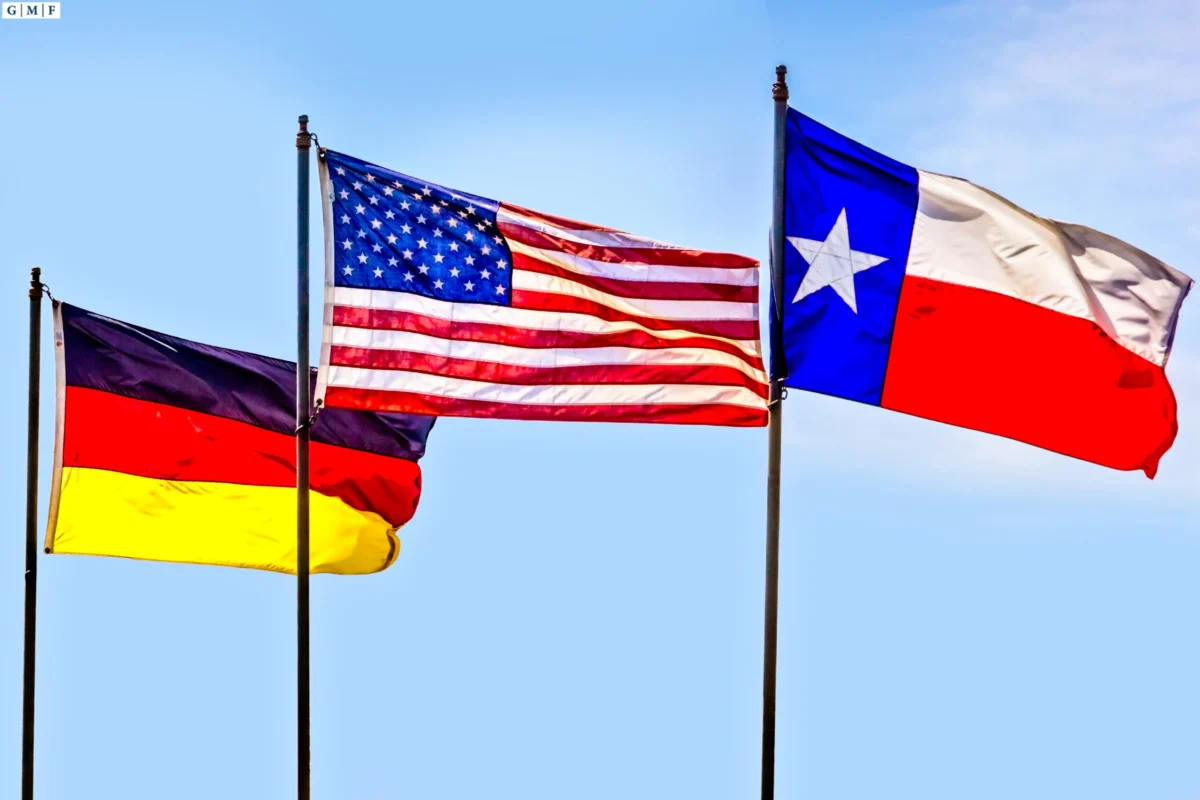
German Federal Defense Minister Boris Pistorius’s visit to the United States this week underscored a calculated shift in Berlin’s foreign policy, moving beyond the traditional confines of Washington, D.C., to secure the future of the transatlantic security architecture. While the geopolitical landscape remains volatile, Pistorius’s stop in Texas—following high-level defense talks in the capital—signals a deliberate effort to bypass federal political volatility by fostering deep-rooted, state-level industrial and security partnerships. This strategy, which emphasizes the integration of defense-industrial bases and long-term hardware acquisition, highlights a pragmatic German response to shifting American political priorities.
A Strategic Inspection in the Lone Star State
The centerpiece of Minister Pistorius’s visit to Fort Worth was the inspection of the F-35 Lightning II aircraft production lines. As Germany prepares for the delivery of these advanced stealth fighters, the visit served both a symbolic and functional purpose. By engaging directly with the production hubs of the American defense industry, Berlin is effectively signaling that its security commitments are not merely rhetorical, but are anchored in the tangible, long-term procurement of cutting-edge military technology.
This visit followed crucial consultations in Washington with U.S. Secretary of Defense Pete Hegseth. The primary focus of those discussions was the operational integration of the U.S. and German defense-industrial sectors. Given the current administration’s signals regarding a potential retrenchment of American military commitments in Europe, Pistorius’s outreach is an attempt to create "structural stickiness"—ensuring that German and American military capabilities remain so tightly woven that political shifts in the White House cannot easily sever the bond.
Chronology of Evolving Transatlantic Relations
The current state of U.S.-German relations is the product of several years of recalibration:
- 2022: Following the invasion of Ukraine, Germany announced its Zeitenwende (historic turning point) policy, committing to a massive increase in defense spending and a fundamental shift in its security posture.
- 2023: Negotiations for the procurement of F-35 fighters were finalized, marking a transition toward deeper interoperability with U.S. air power.
- Early 2024: Berlin began formalizing its "sub-national" strategy, identifying key U.S. states for industrial and National Guard partnerships to insulate bilateral ties from Washington’s political churn.
- Late 2024/Early 2025: High-level visits, including the current Texas delegation, focus on cementing these state-level ties and ensuring the continuity of supply chains amidst global geopolitical instability.
The Logic of Sub-National Diplomacy
Germany’s pivot toward American states is not merely a diplomatic exercise; it is a calculated risk-mitigation strategy. By courting states like South Carolina for potential collaboration under the U.S. National Guard’s State Partnership Program (SPP), Germany is building a network of allies within the United States that transcends federal executive changes.
The SPP, which has been in operation for over 30 years, pairs National Guard units with foreign countries to build enduring security relationships. By seeking to integrate more deeply into this framework, Berlin is effectively decentralizing its security policy. This "states-first" approach is designed to ensure that even if federal support for European security wavers, the economic and security interdependencies—such as joint training, shared equipment maintenance, and regional industrial partnerships—remain intact.
Data and Defense Industrial Integration
The financial stakes of this relationship are immense. Germany remains one of the largest foreign investors in the United States, with German firms supporting over 700,000 U.S. jobs. In the defense sector, the procurement of the F-35 represents a multi-billion-dollar commitment that links the German Luftwaffe to American supply chains for the next three decades.
According to recent data from the German-American Chamber of Commerce, the economic output generated by German-affiliated companies in the U.S. contributes significantly to the GDP of states like Texas, South Carolina, and Alabama. By emphasizing these economic linkages, Pistorius is appealing to the 99.8% of the American population living outside the Beltway, framing the German-American relationship not as a political abstract, but as a critical component of local economic stability and domestic job security.
Navigating Political Currents and Public Sentiment
The political environment in which Chancellor Friedrich Merz and Minister Pistorius operate is fraught with complexity. Domestically, Germany faces rising skepticism regarding its heavy reliance on the United States. Recent polling from the Pew Research Center indicates that anti-American sentiment is percolating across Europe, driven by fears of U.S. isolationism and the unpredictability of the American electoral process.
Berlin’s approach—which some critics describe as "patient pragmatism"—is an attempt to navigate these competing pressures. The strategy is to maintain the status quo while subtly diversifying security dependencies. However, this carries the risk of appearing overly subservient to the U.S. in the eyes of a skeptical German electorate, while simultaneously struggling to convince a potentially isolationist Washington that Europe is a partner worth retaining.
Official Responses and Strategic Implications
While official statements from the Pentagon have remained focused on the strength of the NATO alliance, the underlying message from the German delegation has been one of "resilience through integration."
"Our relationship is not defined by a single election cycle or a single administration," a German diplomatic source noted during the Texas visit. "It is defined by decades of shared industry, shared security challenges, and a fundamental belief in the stability of the Western democratic order."
Analysts argue that the implications of this strategy are profound. If successful, Germany will have created a "transatlantic safety net" that is resistant to the shifting winds of domestic U.S. politics. If it fails, Germany may find itself increasingly isolated, forced to grapple with the reality of a diminished U.S. presence in Europe without having adequately prepared its own domestic defense-industrial base to compensate for the gap.
Broader Impact on the Free World
For the majority of Americans, who continue to view the transatlantic alliance as a pillar of global stability, the commitment shown by the German government is a welcome, if quiet, reassurance. The effort to deepen ties at the state level ensures that the "leader of the free world" is not a title held by a person, but an idea supported by a network of states, industries, and military institutions.
As the geopolitical rivalry with global competitors intensifies, the structural integration of the U.S. and German defense bases will likely become the definitive metric of Western security success. The visit to Fort Worth was not just about fighter planes; it was a visible manifestation of a transition from the post-Cold War era of unquestioned alliance to a new era of transactional, localized, and highly pragmatic security partnerships. Whether this bet on the American heartland will shield Germany from the global tremors of the 21st century remains to be seen, but for now, Berlin is betting that the foundation of the transatlantic relationship is stronger in the states than it is in the halls of Washington.