
The artificial intelligence sector is undergoing a profound paradigm shift, moving away from pure text-based large language models toward systems that understand physical reality. At the forefront of this movement are world models, an emerging category of AI designed to automate spatial intelligence, predict physical outcomes, and simulate real-world environments. However, despite capturing billions of dollars in venture capital and intense industry buzz, the sector is defined by radical secrecy, commercial ambiguity, and a distinct lack of pressure to generate near-term revenue.
This tension between astronomical funding and profound operational silence was on display at the All In conference, where industry leaders, researchers, and suppliers gathered to debate the trajectory of spatial computing. Behind the closed doors of panel discussions and networking hallways, a common theme emerged: the heavyweights of the world model space—most notably Yann LeCun’s AMI Labs and Fei-Fei Li’s World Labs—are operating in a self-imposed information vacuum, refusing to disclose their commercial roadmaps or product deployment timelines.
The Anatomy of World Models and Spatial Intelligence
To understand the secrecy, one must first understand the technology. Traditional generative AI models excel at processing language, writing code, and generating static images or brief video clips based on statistical patterns in text. World models, by contrast, attempt to build an internal representation of the physical rules governing the universe.
At their core, these models are engineered to automate spatial intelligence. This capability allows an AI to look at a room, a roadway, or a manufacturing floor and predict how objects will move, interact, and respond to external forces. The potential applications are vast and commercially transformative, spanning autonomous driving systems, advanced robotics, interactive video game environments, biomedical simulations, and industrial manufacturing.
For instance, the same fundamental architectural approach that allows an autonomous vehicle like Waymo to safely navigate unpredictable pedestrian traffic could theoretically enable a humanoid robot to sort inventory in a warehouse, or assist a surgeon by simulating complex anatomical procedures. World Labs has showcased foundational capabilities through platforms like Marble, which generates explorable 3D environments from media inputs, serving as a powerful demonstration of spatial rendering. Similarly, AMI Labs has explored early partnerships across biomedicine, robotics, and medical software through initiatives like its Nabia collaboration.
Yet, despite this sweeping theoretical utility, the bridge from theoretical physics simulation to profitable commercial enterprise remains largely unbuilt.
The Cone of Silence: Inside AMI Labs and World Labs
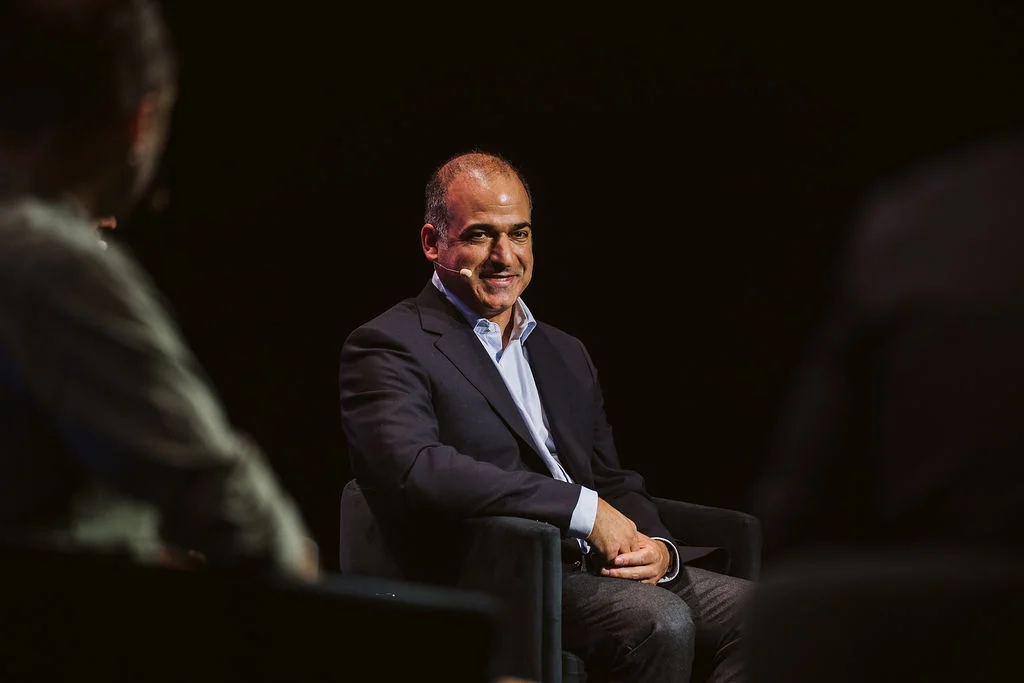
When pressed on commercialization timelines, representatives from the leading labs offer remarkably little clarity. Michael Rabbat, co-founder of AMI Labs and the company’s Vice President of World Models, addressed the issue during a panel discussion at the All In conference. When questioned about specific product pipelines, Rabbat maintained a guarded stance, offering a simple refrain: the company will discuss its commercial applications when it is ready.
In follow-up communications, Rabbat elaborated that AMI Labs remains firmly entrenched in a foundational research and building phase, making public timelines and product disclosures premature. Given that AMI Labs is less than a year old, such caution is arguably standard procedure for deep-tech startups. However, this defensive posture characterizes the entire vertical.
The secrecy extends outward, affecting even the supply chain partners tasked with feeding these data-hungry algorithms. Alex de Vigan, CEO of Physicl, a specialized data supplier for the burgeoning world model industry, noted that his firm frequently supplies critical datasets without knowing the ultimate application. According to de Vigan, while he is confident that Physicl’s data is actively contributing to these models, the lack of communication creates inefficiencies. Suppliers are left to guess what types of data will be most valuable, hampered by a lack of transparency from their primary enterprise clients.
The Economics of Easy Capital and the Threat of Preemptive Competition
To comprehend why these firms are operating under a shroud of secrecy, industry analysts point to the macroeconomic conditions of their funding rounds. World model startups have enjoyed an exceptionally receptive fundraising environment, securing massive capital injections from venture capitalists eager to back the next foundational layer of artificial intelligence.
Because capital is readily available, these startups face very little immediate pressure to narrow their focus, monetize their platforms, or commit to a single vertical market. In fact, maintaining a broad research agenda serves as a strategic hedge.
However, this abundance of capital creates a paradox. The same venture-backed liquidity that allows a lab to research multiple sectors simultaneously is also flowing freely to potential competitors. In a market where the ultimate path to commercial dominance remains undefined, revealing a specific product strategy—such as unveiling a proprietary humanoid robotics platform or a next-generation cinematic rendering engine—acts as a flare for rival entities.
If a dominant world model lab were to declare its commercial intentions prematurely, it would immediately incentivize competing startups, well-funded neolabs, and tech giants like OpenAI and Anthropic to pivot their resources toward that exact vertical. By keeping their cards close to their chest, these companies can extend their research runway and delay the onset of intense market competition.
The Dark Forest Theory of Artificial Intelligence
Within technology circles, this strategic behavior has drawn comparisons to a famous sci-fi concept: the dark forest hypothesis, popularized by author Cixin Liu in his acclaimed novel The Dark Forest. In Liu’s universe, civilizations avoid broadcasting their locations into the cosmos because they do not know what hostile forces might be listening. Space is treated as a dark forest filled with armed hunters; making noise is an existential risk.
In the contemporary AI landscape, world model labs are treating the commercial market much like a dark forest. With numerous well-capitalized players operating in the shadows and the rules of monetization still unwritten, the safest strategy is silence. Until the technology matures to a point where market leadership is secure, the pioneers of spatial intelligence will likely keep the lights off and the details hidden, building their worlds far away from the prying eyes of competitors.