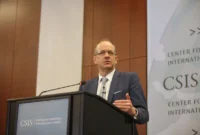

The Center for Strategic and International Studies (CSIS) International Security Program hosted a high-profile, half-day Defense360 conference to dissect the newly released Fiscal Year 2017 (FY2017) defense budget request and evaluate the underlying strategic priorities driving the nation’s military posture. The event convened top-tier Pentagon officials, prominent defense budget analysts, and leading national security experts in Washington, D.C., to examine the delicate balance between fiscal constraints, legislative caps, and evolving global security threats. With a packed agenda featuring keynote remarks, a senior-level administration panel, and an independent expert assessment, the conference served as a critical forum for debating the future direction of United States defense policy.
The release of the annual defense budget request is routinely one of the most anticipated milestones in Washington’s policy calendar, serving as the definitive blueprint for how the Department of Defense (DOD) plans to allocate resources across personnel, operations, maintenance, procurement, and research and development. The FY2017 request arrived at a particularly complex juncture for national security planners, who were forced to reconcile the statutory funding limitations imposed by the Bipartisan Budget Act of 2015 with a rapidly deteriorating security environment characterized by great power competition in Europe and Asia, persistent counterterrorism operations in the Middle East, and emerging technological challenges in the cyber and space domains.
Opening the proceedings, Dr. John Hamre, President and Chief Executive Officer of CSIS, delivered keynote remarks that established the overarching tone for the morning. Dr. Hamre emphasized the systemic pressures facing the defense enterprise, noting that while the Bipartisan Budget Act provided a temporary reprieve from the most draconian cuts associated with sequestration for FY2016 and FY2017, the fundamental mismatch between operational tempo, force structure size, and available funding remained largely unresolved. His remarks underscored the urgency of strategic prioritization, challenging policymakers to confront hard choices regarding which capabilities to sustain, modernize, or divest.
Inside the Pentagon Strategy: The Administration Perspective
The first substantive panel of the conference provided a direct window into the executive branch’s strategic calculus, featuring three of the Pentagon’s most influential resource and policy architects: Mike McCord, Under Secretary of Defense (Comptroller) and Chief Financial Officer; Dr. Jamie Morin, Director of Cost Assessment and Program Evaluation (CAPE); and Robert Scher, Assistant Secretary of Defense for Strategy, Plans, and Capabilities. Moderated by Todd Harrison, Director of Defense Budget Analysis and Senior Fellow with the CSIS International Security Program, the session explored how the administration formulated its FY2017 top-line request and aligned it with the broader National Defense Strategy.
Mr. McCord outlined the structural realities of the FY2017 budget proposal, walking the audience through the baseline and Overseas Contingency Operations (OCO) funding streams. He detailed the administration’s efforts to protect readiness and modernization accounts despite being held to the statutory caps established in the budget deal. Mr. McCord highlighted the challenges of managing personnel costs, healthcare, and military compensation within a constrained top-line, stressing that long-term fiscal sustainability requires ongoing structural reforms rather than short-term budgetary gimmicks.
Dr. Morin brought the analytical rigor of the CAPE office to the discussion, explaining how cost assessment methodologies influenced major acquisition programs and force structure decisions in the FY2017 request. He addressed the analytical trade-offs between near-term readiness and long-term technological superiority, noting that the department prioritized investments in high-end warfighting capabilities—such as advanced aviation, submarine programs, and electronic warfare—to deter near-peer competitors like Russia and China. Dr. Morin also discussed the continuous challenge of managing cost growth in complex defense acquisition programs and the implementation of Better Buying Power initiatives aimed at achieving greater efficiency across the defense industrial base.
Rounding out the administration panel, Mr. Scher focused on the strategic framework that underpinned the budget submission. He explained how the department translated geopolitical risk assessments into budgetary priorities, emphasizing that the FY2017 request was designed to maintain a globally engaged posture while preparing for high-end conflicts. Mr. Scher addressed the enduring demands of regional security architectures in Europe, the Middle East, and the Indo-Pacific, detailing how the department balanced rotational forces, security cooperation initiatives, and posture enhancements within the constraints of the fiscal blueprint.
Independent Assessment: Expert Panel Evaluates Strategy and Budget Connectivity
Following the administration briefing, a panel of independent defense experts convened to offer critical commentary, assess the connectivity between strategy and spending, and evaluate the feasibility of the FY2017 proposals. Moderated once again by Todd Harrison, the panel featured Tina Jonas, former Under Secretary of Defense (Comptroller) and Senior Adviser at CSIS; Andrew Hunter, Director of the Defense-Industrial Initiatives Group at CSIS; Mark Cancian, Senior Adviser with the CSIS International Security Program; Shawn Brimley, Executive Vice President and Director of Studies at the Center for a New American Security (CNAS); and Roger Zakheim, Visiting Fellow at the American Enterprise Institute (AEI).
The independent panel wasted little time in scrutinizing the assumptions embedded in the FY2017 request, particularly regarding the use of Overseas Contingency Operations funding as a mechanism to evade statutory budget caps for base budget requirements. Panelists debated whether the administration’s reliance on OCO funding for enduring base requirements created a looming fiscal cliff for subsequent fiscal years, warning that such accounting practices risked masking deeper structural funding shortfalls.
Ms. Jonas brought her extensive executive branch experience to bear on the discussion, analyzing the execution risks associated with the budget request. She noted that while the strategic intent behind many modernization programs was sound, the reality of congressional oversight, legislative delays, and potential continuing resolutions could severely disrupt procurement schedules and force structure adjustments. Her commentary emphasized the critical importance of a predictable, timely appropriations process for maintaining stability within the defense industrial base.
Mr. Hunter focused heavily on the implications of the budget for defense acquisition, technology development, and the industrial supply chain. He pointed out that while funding levels for research, development, test, and evaluation (RDT&E) showed positive momentum, the overall volume of procurement accounts remained insufficient to rapidly field next-generation systems at scale. Mr. Hunter stressed that the defense-industrial base requires consistent, multi-year commitments to justify private capital investments in critical technologies such as autonomy, artificial intelligence, and hypersonics.
Mr. Cancian provided a comprehensive assessment of force structure and readiness trends, evaluating whether the proposed end-strength levels and operational tempos were sustainable. He argued that despite incremental improvements in readiness accounts, the armed forces remained stretched thin across multiple theaters, creating a high-risk environment if unexpected contingencies were to arise. His analysis underscored the persistent tension between the desire for a larger, more capable force and the reality of a constrained top-line budget.
Adding external perspectives from leading Washington think tanks, Mr. Brimley and Mr. Zakheim broadened the conversation to encompass the geopolitical and legislative dimensions of the budget debate. Mr. Brimley discussed the evolving nature of modern warfare and the imperative for the Department of Defense to accelerate innovation cycles, warning that bureaucratic inertia could cause the United States to lose its technological edge over peer adversaries. Mr. Zakheim examined the congressional outlook, predicting fierce partisan debates on Capitol Hill regarding defense top-lines, base closure authorities, military compensation reform, and the appropriate balance between defense and non-defense discretionary spending.
Chronology of the FY2017 Defense Budget Cycle
The CSIS Defense360 conference took place against the backdrop of a well-established annual federal budget timeline, which dictates the rhythm of defense policy formulation and legislative review. Understanding this chronology provides essential context for the debates that unfolded during the conference:
- Summer and Fall of 2015: The Office of Management and Budget (OMB) and the Department of Defense formulate the initial budget request, negotiating top-line figures under the shadow of sequestration caps before the passage of the Bipartisan Budget Act of 2015 in November, which provided temporary relief for FY2016 and FY2017.
- February 2016: The White House formally submits the President’s FY2017 budget request to Congress, setting off the congressional authorization and appropriations cycle. The CSIS Defense360 conference was convened immediately following this release to analyze the initial numbers.
- Spring and Summer of 2016: The House and Senate Armed Services Committees (HASC and SASC) markup and debate the National Defense Authorization Act (NDAA), while the Appropriations Committees draft defense spending bills to set legally binding funding levels.
- Fall 2016: Congress works to reconcile authorization and appropriation bills, frequently relying on continuing resolutions (CRs) when final agreement cannot be reached prior to the start of the fiscal year on October 1.
- October 1, 2016: The official commencement of Fiscal Year 2017, entering a period where defense programs are often governed by temporary funding measures pending final enactment of the defense appropriations act.
Supporting Data and Financial Architecture of the Request
The FY2017 budget request reflected a complex financial architecture designed to navigate statutory spending limits while attempting to meet global security requirements. The administration’s top-line request for the Department of Defense (Function 050) totaled approximately $583 billion, comprising two primary components:
- Base Budget: Set at approximately $523.9 billion, this portion funded the routine, day-to-day operations, training, maintenance, personnel, and core modernization programs of the military departments. This figure strictly adhered to the statutory defense spending caps established by the Bipartisan Budget Act of 2015.
- Overseas Contingency Operations (OCO): Set at approximately $58.8 billion, this war-fighting fund was designated to support ongoing operations in Afghanistan, the Middle East, and European deterrence initiatives. Notably, a portion of the OCO request—roughly $15 billion—was allocated to finance base-budget-like requirements, a practice that drew intense scrutiny and debate from budget analysts and lawmakers alike.
Within these funding streams, key programmatic allocations prioritized targeted modernization and technological superiority:
- Procurement and RDT&E: Combined funding for these accounts exceeded $180 billion, reflecting a concerted effort to protect long-term investments in high-end systems such as the F-35 Lightning II joint strike fighter, the Columbia-class ballistic missile submarine program, the B-21 long-range strike bomber, and ground combat vehicle modernizations.
- Personnel and Readiness: Funding for military end-strength arrested previous downward trends, stabilizing active-duty and reserve force levels to prevent further degradation of unit readiness. The request also included a modest base pay raise for service members, alongside ongoing efforts to reform military healthcare (TRICARE) to curb rising internal overhead costs.
Broader Impact and Strategic Implications
The discussions at the CSIS Defense360 conference highlighted several profound implications for the future of U.S. national security and defense management. Most notably, the conference underscored the persistent structural friction between national military strategy and available resources. As panelists observed, the Department of Defense is currently attempting to maintain a globally dominant military force across multiple competing domains while operating under a fiscal framework that fails to fully account for inflation, technological obsolescence, and the rising costs of personnel and health care.
Furthermore, the heavy reliance on OCO funding to plug baseline readiness and modernization gaps signaled a continuing structural vulnerability in federal budget planning. While OCO provides a temporary workaround to bypass statutory caps, it creates significant fiscal uncertainty for military planners who cannot reliably forecast multi-year procurement programs based on temporary war-fighting funds. This dynamic complicates long-term defense industrial planning, potentially discouraging private sector investment in vital defense technologies.
The conference also served as a vital call to action regarding internal defense reform. As emphasized by both administration officials and independent analysts, achieving genuine efficiency requires tackling politically sensitive topics such as base realignments and closures (BRAC), military compensation reform, and the streamlining of bloated acquisition bureaucracies. Without comprehensive legislative support for these structural reforms, the Department of Defense risks remaining trapped in a perpetual cycle of readiness crises and budgetary brinkmanship.
In parallel with the conference proceedings, CSIS launched an interactive public survey on defense reform, inviting defense professionals, academics, and citizens to weigh in on structural changes needed to modernize the defense establishment. This public engagement initiative reflected a broader recognition that modernizing the U.S. military requires not just additional funding, but a fundamental reevaluation of how defense resources are governed, allocated, and managed in an increasingly complex and competitive global environment.
Ultimately, the CSIS Defense360 conference on the FY2017 defense budget request provided an indispensable forum for dissecting the intersection of fiscal policy and national strategy. By bringing together senior government leaders, financial comptrollers, acquisition experts, and independent analysts, the event crystallized the central dilemmas facing American defense planners: how to sustain a globally engaged, technologically superior military force within a constrained fiscal reality, and how to bridge the gap between strategic ambition and budgetary execution.