
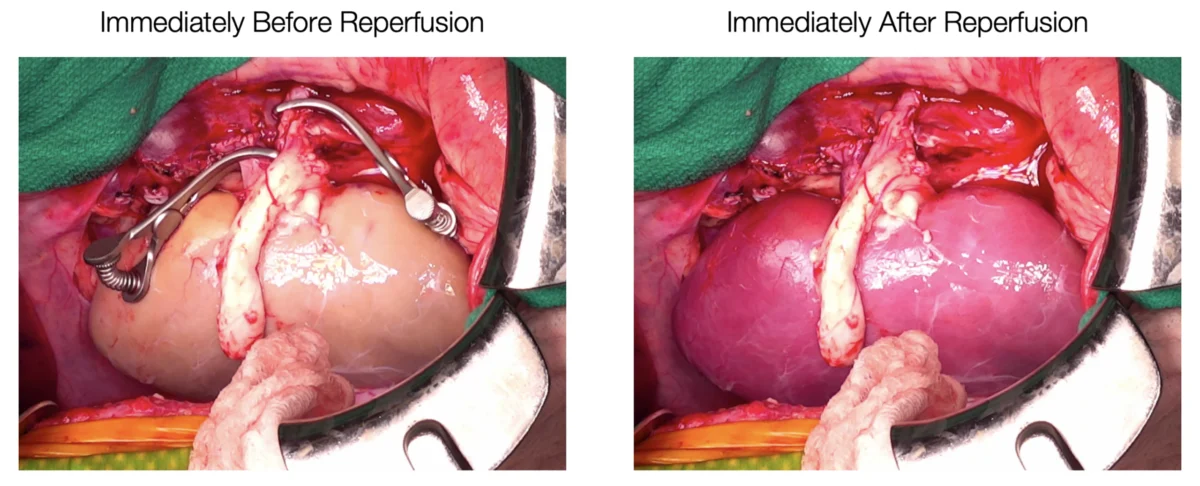
The race against time is the defining constraint of modern transplant medicine. Every year, thousands of viable organs are discarded simply because they cannot be transported or matched with a recipient before biological degradation renders them unusable. However, a team of researchers at Texas A&M University, led by thermodynamicist Matthew Powell Palm, has unveiled a breakthrough that could fundamentally alter the landscape of organ donation. By developing a specialized device capable of supercooling kidneys to -4 °C (25 °F) without the formation of ice crystals, the researchers have successfully extended the viable storage window for kidneys to 72 hours—and potentially beyond—significantly outperforming the current clinical gold standard.
The Tyranny of the Clock in Transplant Medicine
For decades, the standard practice for preserving donor organs has been cold storage on ice at approximately 4 °C. While this method slows metabolic activity, it is a race against inevitable cellular decay. Once an organ is removed from a donor, it begins a process of ischemia—a restriction in blood supply that leads to tissue damage. Current clinical guidelines generally limit the "cold ischemic time" for a human kidney to between 18 and 24 hours. If an organ is not transplanted within this narrow window, its functionality drops precipitously, often leading to delayed graft function or total rejection upon transplantation.
The human toll of these logistical constraints is staggering. According to data from the Health Resources and Services Administration (HRSA), more than 104,000 individuals in the United States are currently waiting for a kidney transplant. The scarcity of organs is compounded by the fact that roughly one in three donated kidneys is discarded annually. These losses are rarely due to poor organ quality at the time of procurement, but rather the failure to overcome the geographic and administrative hurdles required to deliver the organ to a recipient in time. With an average of 17 people dying every day in the U.S. while on the transplant waiting list, the development of a technology that buys even an extra 48 hours is not merely an incremental improvement; it is a potential life-saving shift.
Thermodynamic Innovation: From Ice to Supercooling
Previous attempts to extend storage times by freezing organs have largely failed due to the formation of ice crystals. When water inside cells freezes, it expands, puncturing cellular membranes and destroying the delicate architecture of the organ. To mitigate this, scientists have explored the use of cryoprotectants—chemical agents that act as biological antifreeze. However, these chemicals often carry toxicity risks and would require lengthy and expensive FDA regulatory approval processes before they could be used in human clinical settings.
Matthew Powell Palm’s approach, which he describes as "low-tech high science," eschews complex chemical additives in favor of thermodynamic precision. By utilizing a hermetically sealed chamber that maintains constant pressure, the research team discovered they could prevent ice formation even at sub-zero temperatures. The device, which features a transparent lid and an integrated monitoring system, ensures the organ remains submerged in a standard, clinically accepted preservation solution while the temperature is held steady at -4 °C. This method suppresses metabolic activity far more effectively than traditional ice baths, effectively putting the organ’s biological clock into a deeper state of suspended animation.
Chronology of the Research and Experimental Success
The validation of this technology followed a rigorous experimental design. The researchers began by removing single kidneys from porcine models, flushing them with standard preservation solutions to remove residual blood. The study compared the traditional method—keeping organs on ice for 24 hours—against the experimental device, which held organs at -4 °C for durations of 24, 48, and 72 hours.
The findings, presented at the American Transplant Congress in Boston, were decisive. Upon re-implantation, the kidneys that had been supercooled for 24 hours began producing urine almost immediately, a critical marker of physiological viability. Even more impressive were the results for the 48-hour and 72-hour cohorts. These organs recovered function at a rate comparable to those stored for shorter periods, far outpacing the slow recovery typical of organs subjected to long-term cold storage.

Long-term follow-up studies further solidified these findings. The team monitored the health of the transplanted kidneys over a 30-day period. During this time, the pigs grew by approximately 30%, and the supercooled kidneys demonstrated remarkable compensatory growth, effectively scaling their function to meet the needs of the growing animals. One subject was monitored for 200 days, with post-mortem analysis revealing that the kidney remained healthy and fully functional, showing no signs of the latent damage typically associated with prolonged ischemic storage.
Expert Perspectives and Clinical Implications
The broader medical community has reacted to these findings with cautious optimism. Kevin Myer, President and CEO of the organ procurement organization LifeGift, characterized the research as a "landmark achievement." Myer, who was not involved in the study, noted that the current 24-hour limit is a "bottleneck" that forces surgeons to make rushed decisions. Extending this window to 72 hours would facilitate more rigorous cross-matching, allow for more complex logistical planning, and potentially enable international organ sharing.
Heidi Yeh, a transplant surgeon at Mass General Brigham for Children, emphasized the functional recovery speed observed in the study. "Often, kidneys that have been stored for 48 hours take a week or two before they start working again," Yeh observed. The fact that the supercooled kidneys began functioning almost immediately suggests that the cellular integrity of the organs is being preserved in a way that current methods cannot match.
The Road to Human Clinical Trials
The path from the laboratory to the hospital ward involves several key hurdles. While the device has proven its efficacy in the back of a vehicle—transporting kidneys across the U.S. in a Kia Sorento to simulate real-world shipping conditions—it has yet to be subjected to the rigors of commercial air travel or the complexities of the human immune system.
However, the team’s strategy for regulatory approval is promising. Because the device does not rely on novel, unapproved cryoprotectants, the path to obtaining FDA clearance for human trials is expected to be significantly faster than that of alternative technologies. Powell Palm and his colleague, Sebastian Giwa, are currently in the process of launching a company dedicated to the commercialization of this technology. Their vision extends beyond kidneys; they are currently investigating whether these protocols can be applied to other solid organs, such as livers and hearts, which are even more sensitive to ischemic injury.
A New Era for Organ Logistics
The implications of this technology reach far beyond the operating room. Currently, the logistics of organ donation are highly localized, restricted by the short time frame between procurement and transplant. If an organ can be kept in a "supercooled" state for three to five days—a timeframe the researchers believe is possible based on preliminary data from 120-hour storage tests—the entire global supply chain for donor organs could be reorganized.
Reduced pressure to transplant immediately would allow for more equitable allocation systems, ensuring that the best-matched patients receive organs regardless of their physical distance from the donor. Furthermore, the simplicity and portability of the device mean that it could eventually be deployed in remote regions, increasing the overall pool of available organs.
As the research team prepares for the next phase of development, the medical community remains focused on the potential to turn a once-fatal logistical challenge into a manageable, standardized procedure. By essentially "stopping biological time," Powell Palm and his colleagues are providing more than just an engineering solution; they are providing time—the most precious commodity for the thousands of patients waiting for a second chance at life. The transition from pig models to human trials remains the final, and most significant, test, but the data suggests that a transformative shift in transplant medicine is now within reach.