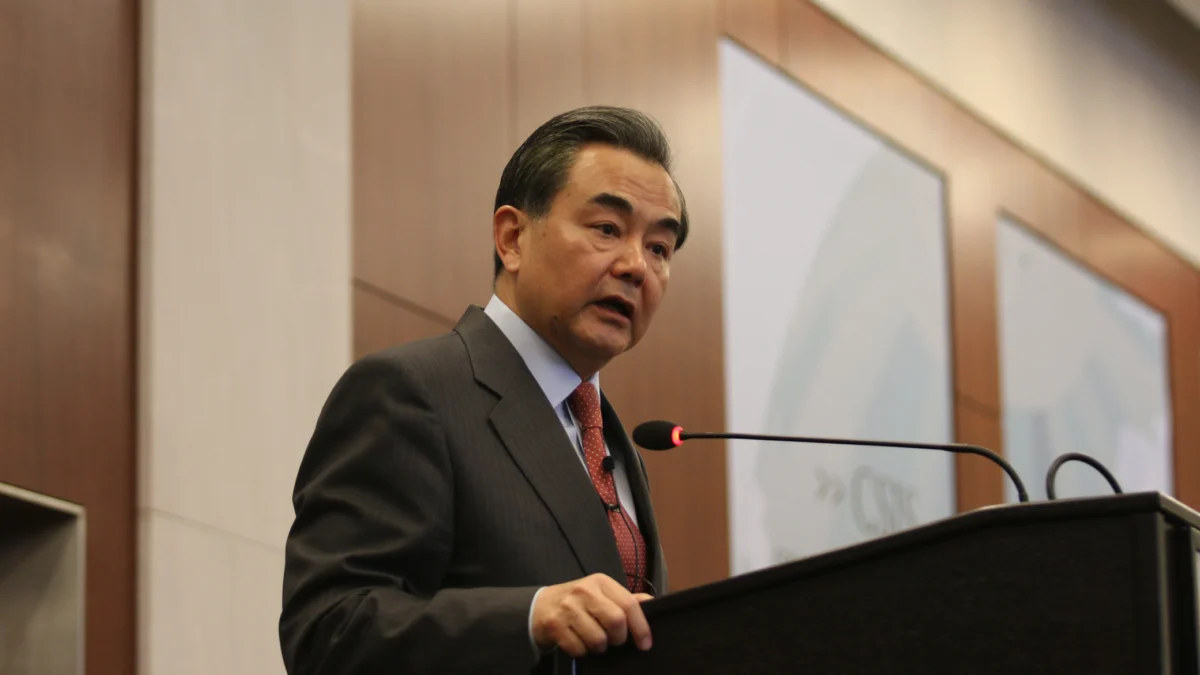
On February 25, 2016, the Center for Strategic and International Studies (CSIS) hosted a significant diplomatic engagement as part of its prestigious Statesmen’s Forum series. The event featured Wang Yi, the Minister of Foreign Affairs for the People’s Republic of China, who delivered a comprehensive address on the trajectory of Chinese foreign policy and the evolving nature of U.S.-China relations. This dialogue, occurring at a critical juncture in the Obama administration’s "pivot to Asia," provided a rare, direct window into the strategic thinking of Beijing regarding regional stability, global governance, and the bilateral security architecture between the world’s two largest economies.
The event, which ran from 7:30 to 9:00 pm EST, featured welcoming remarks from CSIS President and CEO John Hamre and was moderated by Christopher Johnson, then the Freeman Chair in China Studies. The session served as a platform for Wang to articulate China’s vision for a "new type of major-country relations," a conceptual framework Beijing had been promoting to minimize friction with the United States by emphasizing mutual respect and the avoidance of the so-called "Thucydides Trap."
Historical Context and the 2016 Strategic Landscape
To understand the weight of Minister Wang Yi’s 2016 appearance, one must consider the geopolitical climate of the time. The U.S.-China relationship in early 2016 was characterized by a paradoxical mix of deep economic interdependence and mounting security anxieties. The South China Sea was the primary theater of tension, with China accelerating its land reclamation efforts and the construction of military-grade infrastructure on disputed reefs and shoals. Simultaneously, the Obama administration was strengthening its security alliances with regional partners like the Philippines and Vietnam, signaling a commitment to maintaining freedom of navigation.
Furthermore, 2016 marked the final year of the Obama presidency. Beijing was closely observing the burgeoning U.S. presidential election cycle, which had begun to display the first signs of a populist shift toward protectionism and a more confrontational stance on trade—a precursor to the systemic changes that would define the subsequent Trump administration. Against this backdrop, Wang Yi’s visit to Washington was an exercise in diplomatic damage control and long-term strategic messaging.
Key Pillars of Wang Yi’s Address
During his address, Minister Wang Yi focused on the concept of "win-win cooperation," arguing that the U.S.-China relationship should be predicated on the understanding that both nations’ success was mutually reinforcing rather than a zero-sum game. Wang emphasized that China’s rapid economic ascent was not an existential threat to the international order established after World War II, but rather an evolution that required a more inclusive approach to global governance.

Wang’s remarks touched upon several critical themes:
- Economic Reform: He highlighted China’s commitment to "supply-side structural reform," an economic strategy aimed at shifting the country’s growth model from heavy industry and exports to services and domestic consumption.
- Regional Security: Wang maintained that China’s regional activities were defensive in nature, asserting that the sovereignty claims in the South China Sea were historical and that China sought a peaceful resolution through bilateral negotiations rather than external arbitration.
- Bilateral Stability: He urged the United States to respect China’s "core interests," a term covering issues from the political system to territorial integrity, suggesting that friction was largely the result of the U.S. failing to adequately account for China’s domestic stability requirements.
Chronology of U.S.-China Diplomatic Exchanges (2015-2016)
The CSIS event did not occur in a vacuum. It was the culmination of a high-frequency period of diplomatic shuttling between Washington and Beijing:
- September 2015: President Xi Jinping conducted a state visit to Washington, where he and President Obama discussed the "cyber-espionage" issue, resulting in a bilateral agreement to refrain from state-sponsored theft of intellectual property for commercial gain.
- January 2016: In the weeks preceding the CSIS event, Secretary of State John Kerry traveled to Beijing to discuss the North Korean nuclear threat, following Pyongyang’s fourth nuclear test earlier that month.
- February 23–25, 2016: Minister Wang Yi arrived in Washington for meetings with Secretary Kerry and National Security Advisor Susan Rice. The CSIS forum served as the public capstone to these closed-door deliberations.
- March 2016: Following the visit, the U.S. and China began coordinating more closely on UN Security Council Resolution 2270, which imposed harsh new sanctions on North Korea.
Supporting Data and Bilateral Trade Dynamics
The context of the 2016 discussion was deeply rooted in the economic reality of the two nations. According to data from the U.S. Trade Representative, the bilateral trade volume in goods and services between the U.S. and China exceeded $600 billion in 2015. However, this trade was increasingly marred by disputes regarding overcapacity in steel and aluminum production, as well as the treatment of American technology firms in the Chinese market.
Wang Yi’s visit was intended to reassure the American business community that China remained "open for business" despite the rhetoric of reform. Yet, the data told a story of increasing friction; American companies were reporting a worsening regulatory environment, and the U.S. was becoming increasingly wary of Chinese state-owned enterprises (SOEs) acquiring strategic U.S. technology assets. The CSIS forum allowed Wang to frame these concerns as growing pains rather than systemic ideological conflicts.
Official Responses and Academic Analysis
The reception of Wang Yi’s speech was polarized. Within the Washington policy community, many viewed his rhetoric as a polished performance that masked an underlying hardening of China’s foreign policy stance. Observers noted that while Wang spoke of cooperation, the reality on the ground—particularly the militarization of the South China Sea—suggested a strategy of "salami slicing," where China incrementally changed the status quo without triggering a full-scale military conflict.
Conversely, some proponents of engagement argued that Wang’s visit was essential to prevent a downward spiral in relations. By keeping the lines of communication open, both the Obama and Xi administrations were able to prevent localized maritime incidents from escalating into broader crises. Analysts at the time, including those associated with CSIS, noted that the forum highlighted the widening gap between Beijing’s stated peaceful intentions and the growing unease among regional U.S. allies.

Broader Impact and Long-term Implications
The 2016 Statesmen’s Forum with Wang Yi serves as a historical marker for the end of the "engagement era." With the benefit of hindsight, it is clear that the diplomatic efforts of 2016 were struggling against the tide of rising nationalism in both countries.
The implications of that period are still felt today. The strategies discussed by Wang—specifically the emphasis on sovereign developmental models and the challenge to U.S.-led institutional norms—have since become the pillars of a more assertive Chinese foreign policy under the "Xi Jinping Thought on Diplomacy." Furthermore, the skepticism expressed by U.S. policymakers during and after the forum laid the intellectual groundwork for the bipartisan consensus that emerged in the U.S. Congress, leading to a much more competitive and adversarial relationship in the years following 2016.
The CSIS event remains a significant case study in the limits of public diplomacy. Despite the sophistication of the arguments presented and the stature of the participants, the fundamental strategic divergence between the two powers proved too great to be bridged by a single forum. Instead, the dialogue underscored the reality that U.S.-China relations had entered a period of structural competition, where rhetoric, no matter how carefully crafted, could no longer conceal the deep-seated friction over the future of the international order.
In conclusion, the 2016 Statesmen’s Forum was more than just a routine diplomatic appearance; it was a snapshot of a turning point. As Minister Wang Yi stood on the stage at CSIS, he represented a China that was attempting to manage its integration into the global system while simultaneously asserting its right to challenge the rules of that system. The subsequent years have shown that the tensions articulated in the shadows of that conversation were not fleeting, but rather the beginning of a prolonged and complex era of global power competition that continues to define 21st-century international relations.