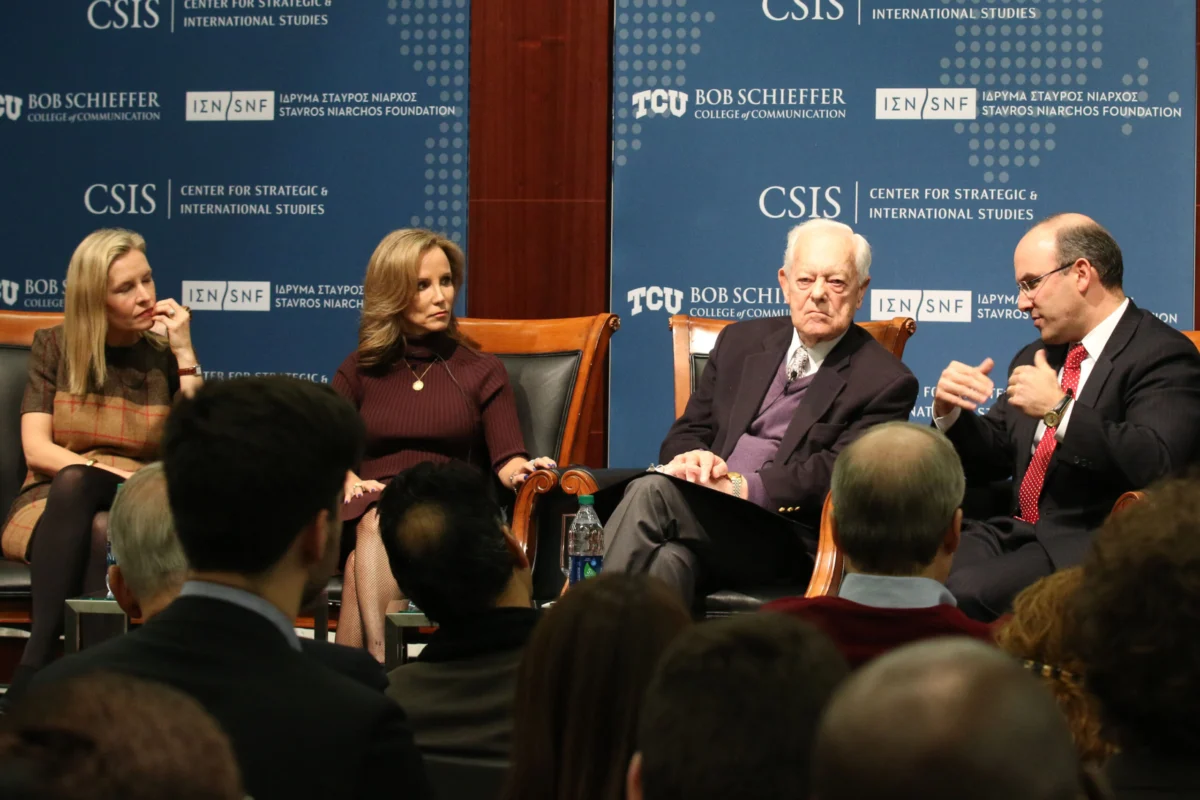
The landscape of international security underwent a profound transformation at the dawn of 2016, a period marked by shifting geopolitical alliances, the persistent threat of transnational extremist networks, and the complex challenge of countering radicalization both at home and abroad. On January 29, 2016, the Center for Strategic and International Studies (CSIS), in partnership with the TCU Bob Schieffer College of Communication, convened a high-level panel discussion to dissect these pressing issues. Moderated by legendary journalist and former CBS News Chief Washington Correspondent Bob Schieffer, the event brought together some of the nation’s foremost experts on national security, intelligence, and counterterrorism to evaluate the efficacy of current strategies and the trajectory of global threats.
The dialogue, held as part of the ongoing monthly CSIS-Schieffer Series made possible by the generous support of the Stavros Niarchos Foundation, featured a distinguished panel. Participants included Frances Townsend, former Assistant to the President for Homeland Security and Counterterrorism and CSIS Trustee; Mary Louise Kelly, National Security Correspondent for NPR; and the Honorable Juan Zarate, former Deputy National Security Adviser for Combating Terrorism and Senior Adviser at CSIS. As global powers grappled with the fallout from conflicts in the Middle East and the digital recruitment strategies of groups like ISIS and al-Qaeda, the panel offered critical insights into the intersection of intelligence, policy, and public safety.
Background Context: Countering Terrorism in a Changing Threat Environment
To fully understand the urgency of the January 2016 discussion, one must examine the geopolitical backdrop of the mid-2010s. The global security architecture was strained by the rapid rise of the Islamic State (ISIS), which had successfully utilized advanced digital encryption, social media propaganda, and decentralized "lone wolf" operational models to inspire attacks across Western Europe and North America. Simultaneously, protracted civil wars in Syria and Iraq had created vast power vacuums, facilitating the movement of foreign fighters and generating the worst refugee crisis since the Second World War.

In the United States, counterterrorism policy had evolved significantly since the enactment of the USA PATRIOT Act and the establishment of the Department of Homeland Security following the September 11 attacks. However, by 2016, policymakers faced a new paradigm. The challenge was no longer solely about dismantling centralized hierarchical command structures, but rather about countering nebulous, internet-driven radicalization networks that could radicalize individuals thousands of miles away from traditional conflict zones. This evolution demanded a reassessment of domestic surveillance, international intelligence sharing, and community-level counter-radicalization initiatives.
Panel Insights: Bridging Domestic Security and International Strategy
During the hour-long session, Bob Schieffer guided the conversation through a comprehensive examination of how government agencies, intelligence communities, and international partners were adapting to these modern security realities.
Frances Townsend brought her extensive executive branch experience to the discussion, emphasizing the critical balance between safeguarding civil liberties and maintaining robust intelligence collection capabilities. Townsend noted that the bureaucratic apparatus designed in the immediate aftermath of 2001 had matured, yet it continually struggled to keep pace with the rapid technological advancements utilized by threat actors. She stressed that intelligence agencies needed greater agility, improved inter-agency cooperation, and deeper trust with Silicon Valley technology firms to intercept encrypted communications without compromising user privacy.
Juan Zarate focused his remarks on the financial and economic dimensions of counterterrorism. Drawing on his tenure as Deputy National Security Adviser, Zarate discussed how cutting off terrorist financing had become a cornerstone of modern statecraft. He highlighted the evolution of illicit financial networks, moving from traditional hawala systems and state sponsors to digital currencies, decentralized crowdfunding, and local extortion rackets employed by groups like ISIS to sustain their territorial holdings and operational tempo. Zarate argued that financial intelligence must remain a primary instrument of national security power.

NPR’s Mary Louise Kelly provided a journalistic and analytical perspective, questioning the efficacy of public communication strategies surrounding national security threats. Kelly addressed the psychological impact of constant threat advisories on the American public and the delicate media balance required to report accurately on national security matters without unnecessarily inciting panic or amplifying terrorist propaganda.
The Chronology of the CSIS-Schieffer Dialogue Series
The January 29, 2016 event was part of a broader, sustained effort by CSIS and TCU to foster public discourse on critical public policy challenges. The collaboration between the academic institution and the Washington-based think tank has long served as a bridge between policymakers, journalists, and citizens.
- Founding and Partnership: The CSIS-Schieffer Series was established to provide a nonpartisan platform for deep-dive discussions on foreign policy, defense, and domestic governance.
- Thematic Focus: While earlier sessions in the series often concentrated on traditional state-to-state diplomacy and economic trade agreements, the mid-2010s installments pivoted heavily toward transnational security threats, cybersecurity, and asymmetric warfare.
- January 29, 2016 Event Timeline:
- 4:00 AM – 5:00 AM EST: Broadcast and panel discussion featuring Bob Schieffer, Frances Townsend, Mary Louise Kelly, and Juan Zarate, examining modern counterterrorism frameworks.
- 5:00 PM – 6:00 PM EST: Pre-event and post-session networking reception bringing together policy experts, students, and defense professionals.
Broader Implications and Strategic Analysis
The insights shared during the January 2016 Schieffer Series dialogue underscored several enduring implications for global security strategy. First, the conversation made clear that conventional military force alone is insufficient to eradicate decentralized extremist movements. While coalition airstrikes and ground offensives could degrade territorial control—as seen in the eventual multi-national campaigns against ISIS strongholds—the underlying ideological drivers of radicalization required sustained diplomatic, economic, and cultural engagement.
Second, the intersection of technology and national security emerged as a defining policy battleground. The panel’s discussion foreshadowed the intense debates surrounding data privacy, encryption backdoors, and the responsibility of social media platforms in moderating extremist content. As extremist organizations weaponized consumer-facing applications to recruit and direct operatives, the traditional boundaries between national security and corporate governance blurred significantly.

Finally, the event highlighted the indispensable role of international alliances. Transnational terrorism respects no borders; consequently, effective counterterrorism relies heavily on multilateral intelligence sharing, mutual legal assistance treaties, and coordinated financial sanctions. The panel’s expert consensus was that unilateralism is inherently limited when addressing global networks that exploit weak state capacities and porous borders.
Conclusion
The January 29, 2016 installment of the CSIS-Schieffer Series offered a timely, rigorous examination of the multifaceted threats facing the international community. By convening veteran policymakers, investigative journalists, and strategic thinkers, the platform provided the public with a nuanced understanding of the complexities inherent in modern counterterrorism. As security paradigms continue to evolve in response to emerging technological and geopolitical developments, the analyses articulated by figures such as Bob Schieffer, Frances Townsend, Mary Louise Kelly, and Juan Zarate remain valuable reference points for understanding the delicate architecture of global stability and national defense.