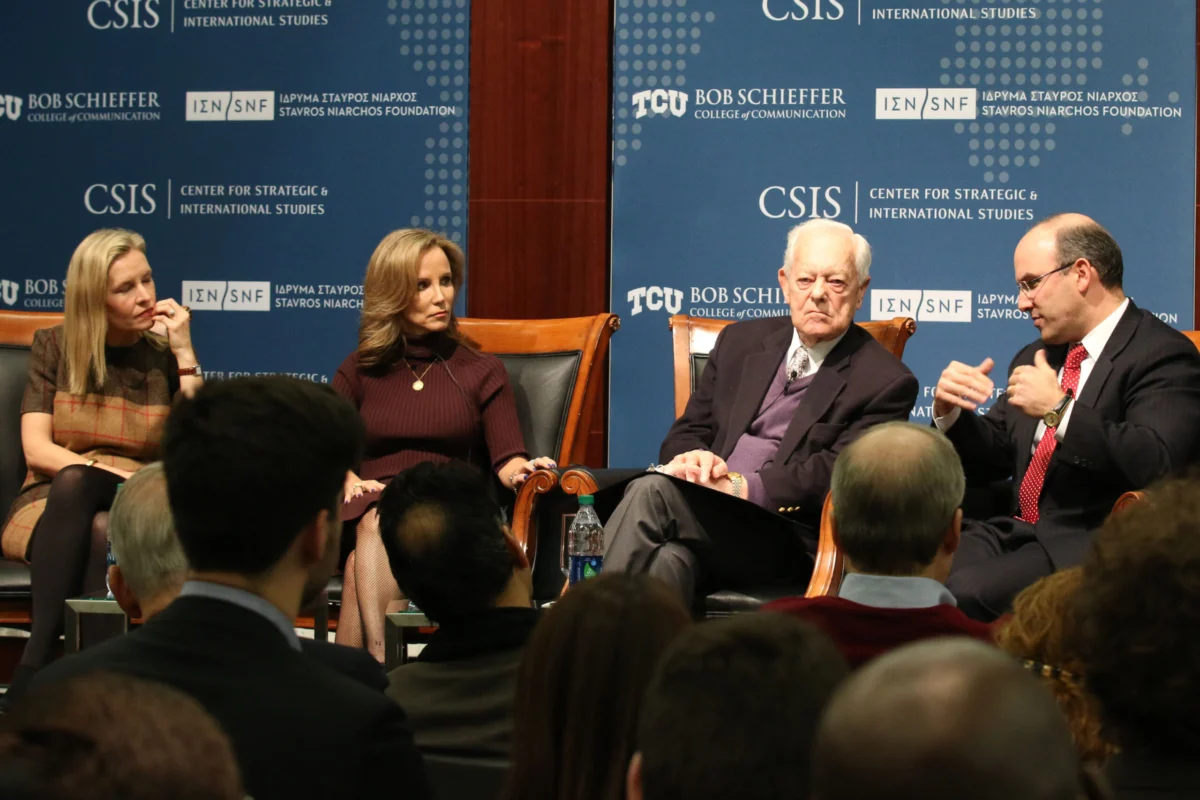
The landscape of international security underwent profound scrutiny on January 29, 2016, as prominent national security experts, journalists, and policymakers convened for a high-level dialogue on global terrorism. Hosted by legendary broadcast journalist Bob Schieffer, the event served as a focal point for analyzing the complex challenges facing Western democracies, intelligence communities, and military coalitions in an era defined by asymmetrical warfare, decentralized extremist networks, and the rapid proliferation of digital propaganda.
Held under the auspices of the Center for Strategic and International Studies (CSIS) in partnership with the TCU Bob Schieffer College of Communication, the panel brought together some of the foremost minds in American counterterrorism policy. The discussion, made possible through the generous support of the Stavros Niarchos Foundation, addressed not only the immediate tactical threats posed by groups such as the Islamic State (ISIS) and al-Qaeda, but also the broader strategic, legal, and intelligence dilemmas confronting governments in the post-9/11 world.
Background Context and the Evolving Threat Environment
To fully understand the gravity of the discussions held during the January 2016 Schieffer Series, one must examine the geopolitical and security climate of the mid-2010s. The global counterterrorism apparatus was grappling with a paradigm shift. Traditional, hierarchical terrorist organizations were increasingly giving way to decentralized, network-based movements capable of radicalizing individuals across international borders via encrypted messaging applications and social media platforms.
The rise of the self-directed "lone wolf" actor, combined with the territorial ambitions of ISIS in Iraq and Syria, created a two-pronged crisis for intelligence agencies. Governments were forced to simultaneously combat traditional state-level threats and sophisticated cyber-recruitment operations. Furthermore, the outflow of foreign fighters traveling from Western nations to conflict zones in the Middle East presented an unprecedented domestic security challenge upon their eventual return.

It was against this tense backdrop that Bob Schieffer moderated a panel designed to strip away political rhetoric and examine the operational realities of modern security governance.
Distinguished Panelists and Institutional Leadership
The discussion featured a lineup of speakers with deep operational experience at the highest levels of United States national security governance:
- Bob Schieffer: Serving as the host and moderator, Schieffer brought decades of journalistic authority to the proceedings. As the former anchor of Face the Nation and chief Washington correspondent for CBS News, he guided the conversation with a focus on accountability, transparency, and public comprehension.
- Frances Townsend: Offering critical insights from executive-level crisis management, Townsend served as the Assistant to the President for Homeland Security and Counterterrorism under President George W. Bush. In addition to her executive experience, her role as a CSIS Trustee provided institutional depth to the dialogue.
- The Honorable Juan Zarate: Bringing expertise in financial intelligence and counter-proliferation, Zarate served as the Deputy National Security Adviser for Combating Terrorism and as a Senior Adviser at CSIS. His work has long focused on choking off the financial lifelines of illicit networks.
- Mary Louise Kelly: Representing the perspective of investigative journalism, Kelly contributed a sharp analytical lens as a national security correspondent for National Public Radio (NPR), questioning how intelligence failures and policy decisions are communicated to the public.
Key Themes Explored During the Dialogue
The conversation was structured around several critical pillars of modern counterterrorism, reflecting the multifaceted nature of the threats facing the international community.
1. Intelligence Sharing and Inter-Agency Coordination
A central point of debate among the panelists was the perennial tension between intelligence collection and civil liberties, as well as the mechanical efficiency of inter-agency cooperation. In the wake of previous intelligence gaps exposed prior to and after major attacks, the speakers emphasized the necessity of breaking down bureaucratic silos between domestic law enforcement, the intelligence community, and military branches.
Townsend emphasized that while mechanisms like the Department of Homeland Security and the National Counterterrorism Center significantly improved information flow post-9/11, the modern threat environment—accelerated by digital communications—demanded even greater agility and real-time data integration with international allies.

2. Dismantling Terrorist Financing
Drawing on his extensive background in financial warfare, Juan Zarate addressed the mechanics of state and non-state terror financing. While historical models relied heavily on state sponsors or wealthy donors, contemporary groups had adapted to rely on localized revenue streams, including extortion, kidnapping for ransom, illicit oil sales, and taxation within controlled territories. Zarate underscored the critical role of the U.S. Treasury Department in leveraging global financial systems to freeze assets, target facilitators, and disrupt the economic ecosystems that sustain extremist organizations.
3. The Role of Media and Public Communication
Mary Louise Kelly brought journalistic rigor to the discussion, examining how public perception of terrorism is shaped by media coverage and official government messaging. The panel analyzed the dual-edged sword of digital technology: while extremist groups weaponized social media to amplify their propaganda and recruit vulnerable youth, intelligence agencies similarly relied on digital footprints to track operatives and disrupt plots. The dialogue stressed the importance of maintaining public trust through transparent communication without compromising classified operational methods.
Chronology of Counterterrorism Governance: A Historical Retrospective
To contextualize the arguments presented by the panel, it is instructive to view the 2016 discourse within the broader timeline of modern counterterrorism policy:
- September 11, 2001: The watershed terrorist attacks on the United States fundamentally alter global security paradigms, prompting the creation of the Department of Homeland Security and the passage of the USA PATRIOT Act.
- 2003–2004: Establishment of key coordinating bodies, including the Terrorist Threat Integration Center (later the National Counterterrorism Center), to centralize threat analysis.
- 2011: The death of al-Qaeda leader Osama bin Laden in Abbottabad, Pakistan, marks a symbolic milestone in the war on terror, though it simultaneously triggers the dispersal and decentralization of affiliated extremist groups.
- 2014–2015: The rapid territorial expansion of ISIS across Iraq and Syria, accompanied by coordinated terrorist attacks in Paris, Brussels, and San Bernardino, thrusts the international community into a new phase of urban warfare and homegrown radicalization.
- January 2016: The CSIS-Schieffer Series dialogue convenes experts to evaluate these shifting dynamics, calling for updated legal, financial, and intelligence frameworks to address decentralized threats.
Broader Impact and Policy Implications
The insights generated during the January 29 session extended far beyond the academic and policy halls of CSIS, offering foundational frameworks for subsequent legislative and executive actions. As national security strategies evolved into the late 2010s and 2020s, several key takeaways from the panel resonated across the broader defense community:
First, the discussions reinforced the principle that traditional military interventions alone are insufficient to eradicate decentralized extremist networks. A whole-of-government approach—incorporating financial sanctions, diplomatic engagement, cyber defense, and community-level counter-radicalization programs—remains essential.

Second, the dialogue highlighted the enduring challenge of balancing national security imperatives with democratic values and privacy rights. As encryption technologies advanced, law enforcement agencies continually navigated the delicate boundary between protecting public safety and preserving civil liberties.
Finally, the partnership between the TCU Bob Schieffer College of Communication and CSIS underscored the vital role of public education and open dialogue. By bringing high-level strategic analysis out of closed-door government briefings and into a public forum, the series contributed to a more informed citizenry capable of engaging with the complex realities of 21st-century geopolitics.
The comprehensive archive of the event, including video recordings and expert contributor profiles, remains accessible through CSIS, serving as an important historical benchmark for scholars, policymakers, and students of international relations seeking to understand the evolution of global security governance.