
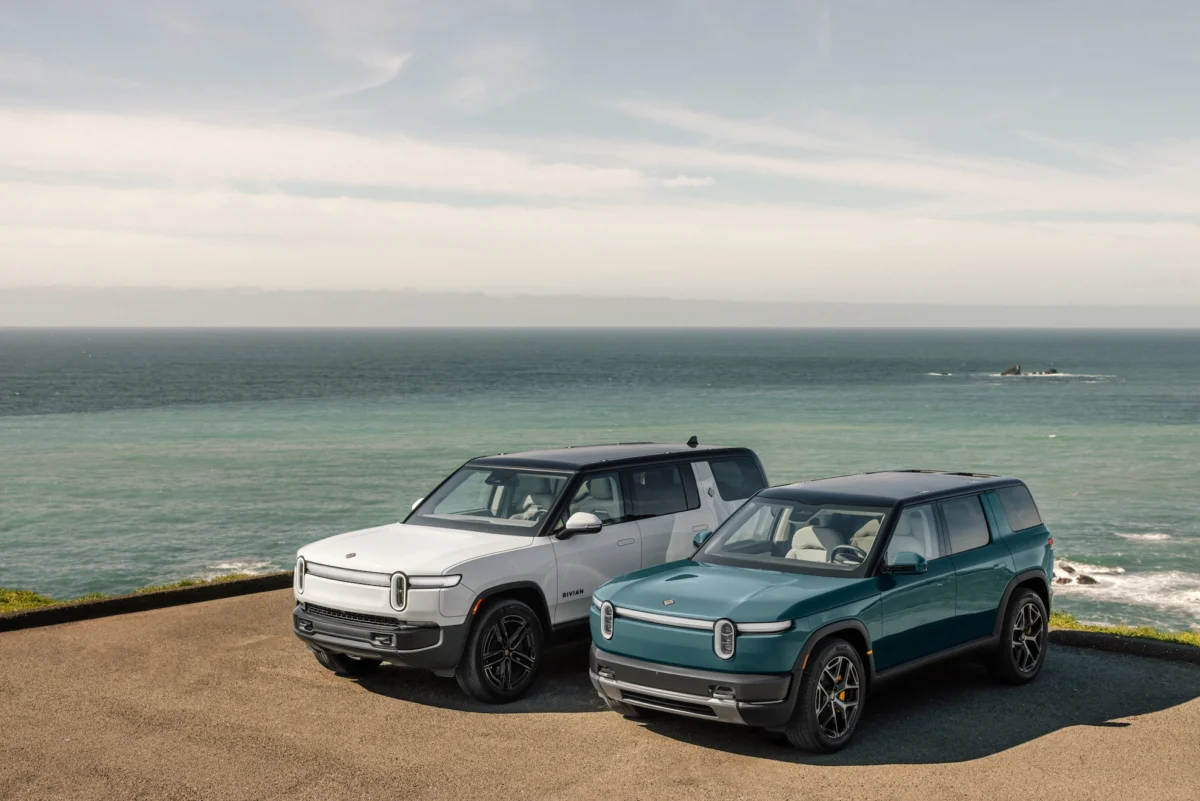
Rivian has achieved a significant milestone by rolling the first customer-ready R2 SUVs off the production line at its factory in Normal, Illinois. This accomplishment comes just days after the facility was struck by an EF-1 tornado, which caused substantial damage, including the tearing off of a portion of the roof. Despite this significant setback, Rivian founder and CEO RJ Scaringe expressed confidence that the tornado would not impede the crucial rollout of the R2, a vehicle widely seen as vital for the company’s future viability.
The tornado’s impact was considerable, with Scaringe detailing to Bloomberg Television that the storm "went through the south end of the plant, and ripped the roof off the building, and knocked down some of the plant as well." He described the intense 72-hour period following the event as "around the clock," during which the company had to adapt its material intake and assembly processes. However, Scaringe emphasized a steadfast commitment to the production schedule, stating, "we’re not making any changes to the plan," referring to the company’s established production roadmap.
While the interview did not specify the exact date of the first R2 deliveries, Rivian has previously indicated that shipments are slated to commence before the end of the first half of 2026. This timeline positions the R2’s production launch as a pivotal moment for Rivian. It represents the company’s first vehicle designed with the potential for mass-market appeal, primarily due to its significantly lower price point compared to its current R1 lineup. The R2 is also expected to be the key driver in achieving profitability, a long-sought goal for the electric vehicle manufacturer which has historically incurred losses on each vehicle sold.
Rivian harbors ambitious expectations for the R2. Earlier this year, the company projected deliveries of between 20,000 and 25,000 units by the close of 2026. Should these targets be met, the R2 would join the ranks of the fastest-scaling new electric vehicles launched in the United States, rivaling only the phenomenal success of Tesla’s Model Y.
Navigating Pricing Adjustments and Market Expectations
Despite the excitement surrounding the R2’s production, the vehicle’s pricing strategy has undergone notable adjustments. The initial launch edition of the R2 is priced at $57,990, a figure considerably higher than the $45,000 price point that Rivian had actively promoted for years. A slightly more accessible variant, priced at $53,990, is anticipated by the end of the current year. However, a truly sub-$50,000 R2 is not expected until the first half of 2027, with the base model at the long-advertised $45,000 price tag slated for market entry even later, in late 2027.
Furthermore, the arrival of the $45,000 R2 remains subject to confirmation. When Rivian initially disclosed pricing for the SUV in March, the company qualified the base model price as starting "around $45,000," a departure from the more definitive "at $45,000" previously featured on its website as recently as February. This nuanced language has raised questions about the ultimate accessibility of the most affordable R2 configuration.
Tornado Aftermath: Resilience in the Face of Adversity
The tornado that impacted Rivian’s Normal, Illinois, plant occurred just prior to a crucial period for the company. The EF-1 tornado, characterized by its wind speeds typically ranging from 86 to 110 miles per hour, caused significant structural damage to the facility. While specific details on the extent of the damage beyond the roof are limited, the immediate aftermath necessitated a rapid and coordinated response to minimize disruption to ongoing operations.
The factory in Normal, Illinois, is a cornerstone of Rivian’s manufacturing capabilities. Acquired from Mitsubishi Motors in 2017, the 2.6 million-square-foot facility has been instrumental in bringing Rivian’s R1T pickup truck and R1S SUV to market. The tornado’s impact, therefore, posed a direct threat not only to the R2 launch but also to the ongoing production of existing models.
The swift response from Rivian’s workforce, as highlighted by CEO RJ Scaringe, underscores a culture of resilience and dedication. The ability to quickly reconfigure logistical pathways and operational procedures demonstrates the company’s agility in overcoming unforeseen challenges. This resilience is particularly critical for a company navigating the complex and capital-intensive landscape of automotive manufacturing.
The Strategic Importance of the R2
The Rivian R2 is positioned as a transformative product for the company. Its more accessible price point is designed to attract a broader customer base, moving beyond the premium segment occupied by the R1 vehicles. This expansion into the mass market is essential for Rivian to achieve significant sales volume and, consequently, profitability.
Key Features and Market Positioning of the R2:
- Target Market: Designed to compete in the highly popular mid-size SUV segment, appealing to families and individuals seeking a capable and environmentally conscious vehicle.
- Pricing Strategy: While initial launch prices are higher than originally advertised, the tiered pricing structure aims to offer various entry points, with the most affordable models slated for later release. This strategy allows Rivian to capture early adopters willing to pay a premium while gradually introducing more budget-friendly options.
- Technological Advancements: Rivian has emphasized the R2’s technological capabilities, including its advanced driver-assistance systems, integrated software, and potential for over-the-air updates, mirroring the innovations seen in the R1 platform.
- Production Scalability: The R2’s success hinges on Rivian’s ability to scale production efficiently. The Normal, Illinois, plant is central to this effort, and its recent operational challenges underscore the importance of robust contingency planning.
Broader Implications for the EV Market and Rivian’s Future
The successful launch of the R2 is not just a victory for Rivian; it has broader implications for the electric vehicle industry. A strong showing from Rivian could further validate the potential for new automotive entrants to challenge established players and offer compelling alternatives to traditional gasoline-powered vehicles.
Analysis of the R2’s Impact:
- Increased Competition: The R2’s entry into the mid-size electric SUV market intensifies competition, potentially driving innovation and price reductions across the segment. This benefits consumers by offering more choices and better value.
- Path to Profitability: For Rivian, the R2 represents a crucial step towards financial sustainability. Achieving profitability is essential for long-term growth and to attract and retain investor confidence.
- Brand Expansion: By offering a more affordable vehicle, Rivian can expand its brand recognition and customer loyalty beyond the early adopters of its premium R1 models.
- Supply Chain Resilience: The tornado incident highlights the importance of supply chain and manufacturing resilience in the automotive sector. Companies must be prepared for unexpected disruptions and have contingency plans in place to mitigate their impact.
The coming months will be critical for Rivian as it works to ramp up R2 production, manage its pricing strategy effectively, and continue its recovery from the recent tornado damage. The company’s ability to navigate these challenges will be a key determinant of its success in the highly competitive electric vehicle market. The resilience demonstrated in the immediate aftermath of the tornado, coupled with the strategic importance of the R2, suggests that Rivian is determined to forge ahead and achieve its ambitious goals.
Looking Ahead: The Road to Mass Market Adoption
Rivian’s journey with the R2 is a testament to the volatile yet promising nature of the automotive startup landscape. The company’s ability to recover from a significant natural disaster and continue its production rollout speaks volumes about its operational fortitude. As the R2 begins to reach customers, its performance in terms of sales volume, customer satisfaction, and contribution to the company’s bottom line will be closely watched by industry analysts, competitors, and potential buyers alike. The success of this model is not merely about Rivian’s future; it’s about the broader acceleration of electric vehicle adoption and the ongoing transformation of the automotive industry.