
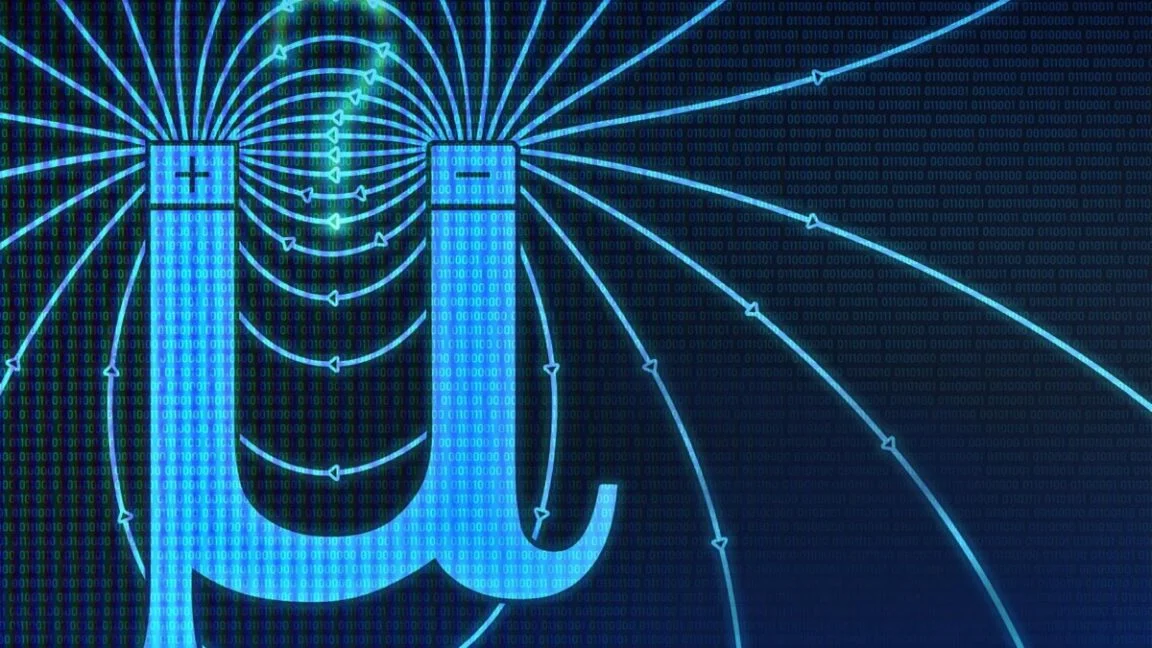
Physicists have spent the last two decades captivated by a perplexing anomaly in the behavior of muons, the heavier cousins of electrons. This discrepancy, observed in the magnetic properties of muons, hinted at the tantalizing possibility of a fifth fundamental force of nature, a discovery that would have fundamentally reshaped our understanding of the universe. However, a groundbreaking new paper published in the prestigious journal Nature has decisively resolved this long-standing puzzle. The researchers have demonstrated that the anomaly was not a harbinger of new physics but rather a consequence of complex calculation uncertainties. This meticulous work not only reaffirms the robust predictive power of the Standard Model of particle physics but also provides an unprecedented validation of quantum field theory.
The muon, a subatomic particle belonging to the lepton family, shares many characteristics with the electron but possesses a significantly greater mass. This mass difference makes muons particularly sensitive probes of the quantum vacuum, a dynamic realm where virtual particles flicker in and out of existence. Muons are therefore invaluable tools for physicists seeking to test the limits and accuracy of the Standard Model, the prevailing framework that describes the fundamental particles and forces governing the universe.
The muon’s magnetic moment, a measure of its intrinsic magnetism, exhibits a subtle deviation from its classically predicted value. This deviation, known as the anomalous magnetic moment, is influenced by interactions with these fleeting virtual particles. For years, experimental measurements of this anomalous magnetic moment have shown a persistent, albeit small, difference compared to the theoretical predictions derived from the Standard Model. This persistent mismatch, often cited as a 3.7-sigma effect in earlier analyses and later reaching 4.2 sigma, had fueled hopes and speculation for the existence of new physics, potentially a fifth fundamental force beyond the known strong, weak, electromagnetic, and gravitational forces.
"There were many calculations in the last 60 years or so, and as they got more and more precise, they all pointed toward a discrepancy and a new interaction that would upend known laws of physics," explained Zoltan Fodor, a physicist at Penn State University and a co-author of the new study. "We applied a new method to calculate this discrepancy quantity, and we showed that it’s not there. This new interaction we hoped for simply is not there. The old interactions can explain the value completely."
The Intriguing Muon g-2 Experiment: A Two-Decade Quest
The quest to precisely measure the muon’s anomalous magnetic moment has been spearheaded by the Muon g-2 experiment, a collaborative international effort. Pronounced "gee minus two," the experiment is meticulously designed to detect even the slightest deviations from the Standard Model’s predictions. It achieves this by precisely measuring the "wobble" or precession of a muon’s magnetic moment when it is placed in a strong magnetic field. This wobble is a direct consequence of the muon’s interaction with virtual particles that populate the quantum vacuum.
Historically, the first significant hints of a discrepancy emerged from experiments conducted at Brookhaven National Laboratory. In 2006, the final results from Brookhaven’s Muon g-2 experiment reported a difference between the measured and predicted values of the muon’s anomalous magnetic moment. This discrepancy, initially at a statistical significance of 3.7 sigma, was substantial enough to suggest the possibility of physics beyond the Standard Model. A 3-sigma result is considered a strong hint, while the gold standard for claiming a discovery in particle physics is a 5-sigma result, analogous to a highly improbable sequence of random events.
The tantalizing nature of the Brookhaven results prompted the revival of the Muon g-2 experiment at Fermilab. The goal was to either confirm or refute this intriguing anomaly with even greater precision. In 2021, the first results from the upgraded Fermilab experiment were announced, showing "excellent agreement" with the discrepancy observed at Brookhaven. When combined with the Brookhaven data, the statistical significance of the anomaly rose to 4.2 sigma, bringing physicists tantalizingly close to the threshold for a discovery. This sustained evidence for a deviation led to the experimental teams receiving a Breakthrough Prize in Fundamental Physics, underscoring the significance of their findings.
A New Computational Approach Revolutionizes Precision
The persistent anomaly, despite its statistical significance, remained in a realm that, while suggestive, did not meet the stringent criteria for a definitive discovery. This situation underscored the need for more precise theoretical calculations to either corroborate the experimental findings or pinpoint potential sources of error. The breakthrough arrived with a novel computational approach developed by Fodor and his colleagues.
This new methodology focused on precisely calculating the "hadronic vacuum polarization" contribution to the muon’s magnetic moment. This complex quantum effect arises from the interactions of quarks and gluons within the framework of quantum chromodynamics (QCD), the theory describing the strong nuclear force. Unlike previous methods that relied on reinterpreting a multitude of experimental results to derive a single value for the magnetic moment, Fodor’s team employed a fundamentally different strategy: large-scale supercomputer simulations.
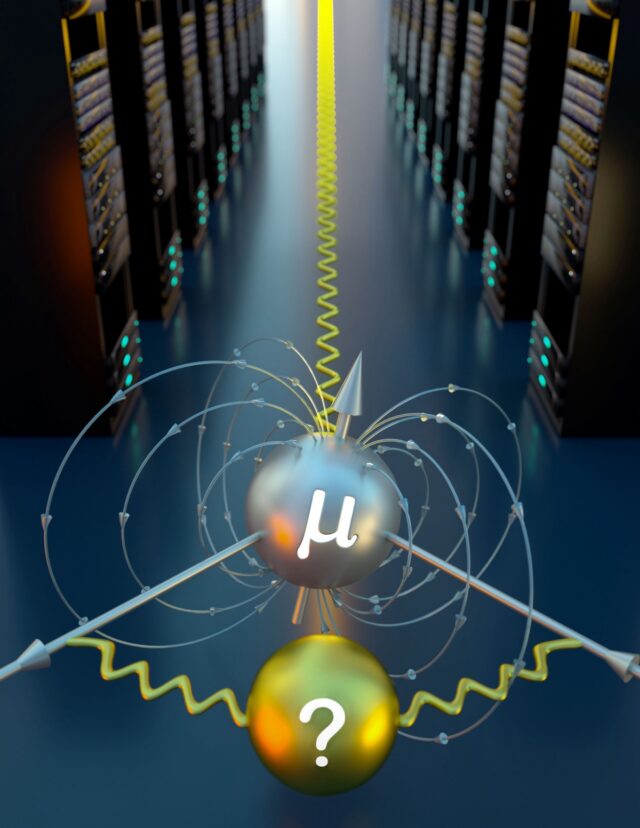
"The old methodology involved collecting thousands of experimental results and reinterpreting them to get the single number, the magnetic moment of the muon," Fodor explained. "Our approach was completely different. We divided space-time into very small cells, a lattice, then we solved the equations of the Standard Model on that. There was an awful lot of theory, mathematics, programming, computational knowledge and computer architecture behind this calculation."
This monumental computational undertaking, which spanned a decade, involved dividing spacetime into incredibly fine grids and solving the complex equations of the Standard Model within this discretized framework. The researchers meticulously factored in the intricate interactions governed by quantum chromodynamics, leveraging the power of advanced supercomputing resources.
The Verdict: Standard Model Confirmed, New Physics Constrained
The results of this decade-long computational effort, published in Nature, have delivered a resounding confirmation of the Standard Model. Fodor and his team found that their calculated value for the muon’s anomalous magnetic moment agreed with the Standard Model’s predictions to an astonishing degree of precision – within half a standard deviation and accurate to an unprecedented 11 decimal places. This represents a level of accuracy down to parts per billion, the most precise calculation of this quantity to date.
The implications of this finding are profound. The meticulously calculated theoretical value now aligns remarkably well with the experimental measurements, effectively dissolving the discrepancy that had fueled speculation about new physics. While this does not entirely rule out the existence of new particles or forces, it significantly constrains the regions where such phenomena might exist, pushing them further into unexplored territory or rendering them far more subtle than previously imagined.
The impact of this work extends beyond just the muon anomaly. It serves as a powerful validation of quantum field theory, the fundamental mathematical framework upon which the Standard Model is built. The ability to perform such precise calculations within this framework demonstrates its robustness and predictive power.

Fodor expressed a sense of bittersweet accomplishment regarding the findings. "People ask me how it feels to make this discovery and, to be honest, I feel somewhat sad," he admitted. "When we started to calculate this quantity, we thought we were going to have a good and trustworthy calculation for a new fifth force. Instead, we found there is no fifth force. We did find a very precise proof of not just the Standard Model but also of quantum field theory, which is the foundation on which the Standard Model was built."
The precise value of the muon’s anomalous magnetic moment, as calculated by Fodor’s team, is expected to be published with a DOI of 10.1038/s41586-026-10449-z in Nature. This landmark achievement marks the end of a significant chapter in particle physics, not with the discovery of new fundamental forces, but with a profound deepening of our confidence in the existing, elegant, and remarkably accurate framework that governs the universe at its most fundamental level. The search for physics beyond the Standard Model continues, but this particular avenue, once a beacon of hope for revolutionary discoveries, has now been illuminated by the steady light of precise calculation and empirical verification.