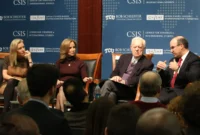

In an era defined by compounding global security challenges, constrained fiscal environments, and rapid technological evolution, the Center for Strategic and International Studies (CSIS) launched a landmark initiative on January 27, 2016. Titled Defense Outlook: A CSIS Series on Strategy, Budget, Forces, and Acquisition, this comprehensive program by the International Security Program (ISP) was designed to meticulously examine the complex dynamics and critical interlinkages shaping the current and future state of the United States Armed Forces. Hosted at CSIS headquarters in Washington, D.C., the premiere event brought together prominent defense experts, policymakers, and military analysts to address the systemic challenges facing the U.S. defense enterprise.
The launch event served a dual purpose: unveiling a multi-faceted analytical framework through three major publications and introducing the Defense 360 website, a dedicated digital platform created to provide ongoing, data-driven insights into defense policy. As the geopolitical landscape shifted toward renewed great-power competition and asymmetric threats, the initiative provided a timely roadmap for navigating the delicate balance between national security strategy, defense spending, military force structure, and weapon system acquisition.
Background Context and Strategic Imperatives
To understand the impetus behind the 2016 CSIS Defense Outlook initiative, one must examine the turbulent fiscal and strategic backdrop of the U.S. military during the post-Cold War transition and the drawdown from long-term counterinsurgency conflicts in Iraq and Afghanistan. Following the Budget Control Act of 2011, the Department of Defense (DoD) faced severe budgetary pressures, including sequestration, which placed artificial caps on defense spending and forced abrupt, unplanned cuts to readiness and modernization.
Simultaneously, the global security environment underwent a dramatic transformation. Traditional adversaries like Russia and China were aggressively modernizing their military capabilities, investing heavily in anti-access/area-denial (A2/AD) systems, cyber warfare, and advanced conventional platforms. This divergence—between a U.S. military strained by decades of continuous combat and a modernized peer-competitor threat landscape—created an urgent need for holistic reform. Strategy, budget, forces, and acquisition could no longer be treated as isolated silos; a synchronized approach was essential to maintain the technological and tactical edge of the U.S. Armed Forces.

Key Publications and Analytical Framework
At the core of the Defense Outlook launch were three flagship publications produced by the CSIS International Security Program. Each report targeted a distinct pillar of the defense ecosystem, offering rigorous empirical analysis and actionable recommendations for defense leadership.
Defense Acquisition Trends 2015: Acquisition in an Era of Budget Uncertainty
Authored by leading defense acquisition experts, this report examined how the Pentagon procured weapon systems amid volatile funding streams. The analysis highlighted the inefficiencies introduced by continuing resolutions, budget impasses, and legislative gridlock. It emphasized that unpredictable funding not only delayed critical modernization programs but also significantly increased overall lifecycle costs. The report advocated for greater stability in defense procurement and streamlined acquisition processes to foster innovation and faster delivery of capabilities to the warfighter.
Defense Modernization Plans through the 2020s: Addressing the Bow Wave
This publication tackled one of the most pressing fiscal dilemmas facing the Pentagon: the "bow wave" of modernization. The term refers to a future fiscal node where the planned procurement cycles of major defense acquisition programs—spanning the nuclear triad, tactical aviation, surface combatants, and ground vehicle replacements—converge simultaneously, threatening to overwhelm available defense budgets. The CSIS analysis projected a severe funding mismatch in the 2020s, warning that the Department of Defense would be forced to either drastically increase defense top-lines, cancel major modernization programs, or accept a smaller, less capable force structure.
Defense Outlook 2016: What to Know, What to Expect
Serving as an overarching guide for policymakers, this publication synthesized macroeconomic defense trends, personnel shifts, and strategic priorities for the coming year. It provided a comprehensive overview of the global threats facing the United States and outlined the critical decision points confronting Congress and the Pentagon as they negotiated the fiscal year 2017 defense budget request.
The Digital Frontier: Launch of Defense 360
Recognizing the need for a modern, accessible medium to communicate complex defense data to a broader audience, CSIS leveraged the event to launch the Defense 360 website. Designed as an interactive digital hub, the platform integrated data visualization, expert commentary, and multimedia content to demystify defense policy. By transforming dense budgetary spreadsheets and acquisition timelines into intuitive charts and digestible analyses, Defense 360 bridged the gap between defense insiders, academic researchers, and the interested public.

Expert Leadership and Institutional Contributions
The success of the Defense Outlook initiative was driven by the collective expertise of prominent scholars and researchers within the CSIS International Security Program and its affiliated projects. The initiative featured contributions from several leading figures in American defense policy:
- Dr. John J. Hamre: Serving as CEO Emeritus and holding the Langone Chair in American Leadership, Dr. Hamre brought decades of high-level government experience, including his tenure as the 26th U.S. Deputy Secretary of Defense. His leadership provided foundational context on institutional governance and civil-military relations.
- Todd Harrison: As the former Director of Defense Budget Analysis and Senior Fellow at CSIS, Harrison contributed extensive quantitative research on defense economics, force structure costing, and long-term fiscal trends.
- Mark F. Cancian: A Senior Adviser with the CSIS Defense and Security Department and a retired U.S. Marine Corps colonel, Cancian offered pragmatic insights into force planning, military manpower, and conventional warfare capabilities.
- Andrew Philip Hunter: A recognized authority on defense industrial base dynamics, procurement policy, and technology integration, Hunter contributed vital perspectives on the defense acquisition lifecycle.
- Dr. Kathleen H. Hicks: As a former Principal Deputy Under Secretary of Defense for Policy and a central figure in international security studies, Dr. Hicks helped anchor the initiative within broader national security strategy and global alliance frameworks.
Official Reactions and Policy Implications
While the event itself was structured as an analytical symposium rather than a legislative hearing, the findings released by CSIS immediately resonated across Washington, influencing congressional debates and defense committee deliberations.
Lawmakers on both sides of the aisle acknowledged the gravity of the modernization bow wave. Members of the House Armed Services Committee and the Senate Armed Services Committee cited CSIS data during hearings on defense authorization and appropriations bills. The consensus emerging from the discourse was clear: incremental adjustments to the defense budget would no longer suffice. Structural reforms were required to align strategy with resources.
Defense industry stakeholders also monitored the findings closely. Contractors operating within the defense industrial base utilized the acquisition trends report to benchmark their internal R&D investments and align their portfolios with the Pentagon’s projected capability gaps, particularly in areas such as electronic warfare, hypersonic defense, and command, control, communications, computers, cyber, intelligence, surveillance, and reconnaissance (C5ISR).
Broader Impact and Long-Term Legacy
The launch of Defense Outlook on January 27, 2016, marked a watershed moment for defense policy analysis at CSIS. By establishing an interconnected framework linking strategy, budget, forces, and acquisition, the initiative set a new benchmark for how think tanks and academic institutions approach national security challenges.

In the years following the launch, the defense landscape continued to evolve in alignment with the trajectories mapped out by CSIS researchers. The return of great-power competition codified in the 2018 National Defense Strategy directly mirrored many of the capability gaps and readiness concerns highlighted during the Defense Outlook series. The Defense 360 platform likewise grew into an indispensable resource, continuously adapting to new fiscal cycles, legislative battles, and technological disruptions.
Ultimately, the Defense Outlook initiative underscored a fundamental truth of modern statecraft: military superiority is not merely a function of national wealth, but of disciplined strategy, prudent fiscal management, and agile procurement. By fostering rigorous debate and providing transparent, data-driven analysis, CSIS equipped policymakers with the analytical tools necessary to navigate an increasingly dangerous and unpredictable world.