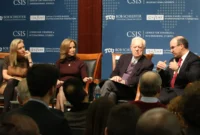

The Center for Strategic and International Studies (CSIS) International Security Program convened a prominent gathering of defense officials, financial comptrollers, policy analysts, and national security experts for a half-day Defense360 conference in Washington, D.C. The primary objective of the high-level symposium was to dissect, evaluate, and contextualize the newly released Fiscal Year 2017 (FY2017) defense budget request alongside the overarching strategic priorities of the United States Department of Defense (DoD).
As fiscal pressures, shifting geopolitical landscapes, and technological advancements continue to redefine modern military requirements, the conference served as a critical platform for policymakers and defense intellectuals to debate the alignment between the nation’s stated security strategies and its funding allocations. The event featured comprehensive opening remarks, a high-level dialogue with key Pentagon officials responsible for financial management and strategic planning, and an independent expert panel designed to scrutinize the connectivity between strategy and budgetary execution.
Main Facts of the FY2017 Defense Budget Request
The release of the FY2017 defense budget request arrived at a pivotal juncture for the U.S. military. The budget blueprint reflected the complex balancing act required by the Bipartisan Budget Act of 2015, which provided temporary relief from the harsh, automatic sequestration spending caps mandated by the Budget Control Act of 2011. However, despite the marginal funding predictability afforded by the two-year budget agreement, defense planners faced severe long-term fiscal constraints driven by growing personnel costs, major modernization imperatives, and readiness shortfalls across the armed services.
The morning proceedings commenced with opening remarks delivered by Dr. John Hamre, President and Chief Executive Officer of CSIS, who framed the overarching challenges facing the defense enterprise. Dr. Hamre emphasized the critical need for structural reform, technological innovation, and disciplined fiscal management to ensure that the U.S. military maintains its qualitative edge against near-peer competitors such as Russia and China, while simultaneously managing persistent counterterrorism operations globally.
Following the presidential introduction, the conference transitioned into its marquee policy discussion, featuring three of the most influential figures in the Pentagon’s resource allocation apparatus: Mike McCord, Under Secretary of Defense (Comptroller) and Chief Financial Officer; Dr. Jamie Morin, Director of Cost Assessment and Program Evaluation (CAPE); and Robert Scher, Assistant Secretary of Defense for Strategy, Plans, and Capabilities. Moderated by Todd Harrison, Director of Defense Budget Analysis and Senior Fellow with the CSIS International Security Program, this session delved into the fundamental strategic calculus that informed the administration’s funding requests.
Chronology and Structure of the Conference Events
The carefully structured agenda allowed attendees to progress from official administration justifications to independent academic and analytical critiques.
The schedule commenced at 9:00 AM with Dr. John Hamre’s scene-setting address, highlighting the institutional and fiscal realities confronting the Department of Defense. This was immediately followed by the administration panel running from 9:00 AM to 10:30 AM. During this segment, McCord, Morin, and Scher outlined how the FY2017 request attempted to balance current operational readiness with future force structure investments. McCord addressed the technical dimensions of the budget, detailing the constraints imposed by statutory spending limits and the internal prioritization processes used by the Pentagon. Dr. Morin elaborated on the analytical methodologies utilized by CAPE to evaluate program cost-effectiveness and capability trade-offs. Scher provided vital context regarding the linkage between the National Defense Strategy and the tangible force packages requested in the budget.
At 10:30 AM, the focus shifted to the independent expert panel, which was also moderated by Todd Harrison. This second session brought together a diverse group of former senior government officials and leading think-tank analysts to provide an unvarnished assessment of the budget’s merits and shortcomings. The panel featured Tina Jonas, former Under Secretary of Defense (Comptroller) and current Senior Adviser at CSIS; Andrew Hunter, Director of the Defense-Industrial Initiatives Group and Senior Fellow at CSIS; Mark Cancian, Senior Adviser in the CSIS International Security Program; Shawn Brimley, Executive Vice President and Director of Studies at the Center for a New American Security (CNAS); and Roger Zakheim, Visiting Fellow at the American Enterprise Institute (AEI).
Supporting Data and Context: The Fiscal Landscape of 2017
To fully appreciate the discussions held during the Defense360 conference, it is essential to examine the underlying macroeconomic and legislative data that defined the FY2017 defense debate. The base defense budget request for FY2017 was approximately $583 billion, divided roughly between $524 billion for the base budget and $58.8 billion for Overseas Contingency Operations (OCO).
While the Bipartisan Budget Act of 2015 mitigated the worst-case funding reductions previously feared under sequestration, defense spending remained effectively capped relative to the ambitious modernization plans articulated by the military services. The U.S. Navy sought funding to maintain its shipbuilding cadence while confronting rising costs for the Ohio-class ballistic missile submarine replacement (the Columbia-class). The U.S. Air Force prioritized the ongoing acquisition of the F-35 Lightning II joint strike fighter and the development of the B-21 Raider long-range strike bomber, even as legacy aircraft required costly maintenance life extensions. Meanwhile, the U.S. Army focused on rebuilding combat readiness, addressing equipment shortfalls, and transitioning personnel end-strength downward from wartime peaks to more sustainable baseline levels.
Critics and budget analysts frequently pointed out that the heavy reliance on OCO funding to cover enduring, baseline operational costs created a precarious fiscal cliff. Furthermore, persistent delays in passing appropriations bills and the frequent resort to Continuing Resolutions (CRs) severely disrupted defense procurement, program management, and long-term strategic planning within the Pentagon and the defense-industrial base.
Official Responses and Expert Perspectives
The dialogue between administration officials and the independent panel highlighted a recurring tension in American defense policy: the gap between global strategy and resource availability.
During the primary administration session, Comptroller Mike McCord defended the fiscal prudence of the request, noting that difficult choices had to be made to protect research, development, test, and evaluation (RDT&E) accounts—the lifeblood of future technological superiority. McCord stressed that while the department would prefer greater budgetary certainty and higher top-line numbers, the FY2017 proposal represented an optimized compromise within the legal confines of the Budget Control Act.
Dr. Jamie Morin emphasized the analytical rigor applied by CAPE to ensure that every taxpayer dollar was directed toward high-priority capabilities. Morin noted that programs failing to demonstrate cost efficiency or strategic relevance were systematically restructured or terminated to free up resources for high-end warfighting requirements.
Robert Scher reinforced these points from a strategic perspective, arguing that the security environment had fundamentally shifted from a post-Cold War era of uncontested American dominance to a competitive landscape defined by the return of great power competition. Scher explained that the budget was intentionally designed to pivot resources toward electronic warfare, cyber capabilities, precision-guided munitions, and advanced aerospace platforms necessary to deter sophisticated adversaries.
However, the independent expert panel offered a more critical lens on these justifications. Tina Jonas, drawing on her extensive financial management experience inside the Pentagon, questioned whether the baseline funding levels were truly sufficient to sustain a globally active military without inducing severe readiness fatigue. Jonas underscored the administrative and operational burdens placed on the financial management workforce when navigating chronic budget uncertainty.
Andrew Hunter and Mark Cancian focused heavily on defense-industrial and force-structure implications. Hunter highlighted the vulnerabilities within the defense acquisition system, noting that schedule slips and cost overruns in major modernization programs continued to erode purchasing power. Cancian analyzed the trade-offs between force structure size and force modernization, expressing concern that the military was slowly trading away capacity in exchange for exquisite, highly expensive technological capabilities that might be deployed in insufficient numbers during a major conflict.
Shawn Brimley of CNAS and Roger Zakheim of AEI brought external policy perspectives to the debate, emphasizing the geopolitical urgency of the moment. Both analysts argued that the strategic environment was deteriorating faster than the defense budget could accommodate. Zakheim asserted that statutory caps were actively harming national security by artificially constraining defense investments below the thresholds recommended by independent strategic commissions. Brimley pointed to the need for institutional agility, urging the Department of Defense to accelerate the adoption of commercial technologies and streamline its cumbersome acquisition bureaucracy.
Broader Impact and Strategic Implications
The deliberations at the CSIS Defense360 conference resonated far beyond the walls of the auditorium, holding profound implications for the trajectory of U.S. national security policy. The conference underscored several critical takeaways for the future of defense planning:
First, the persistent friction between strategy and budgeting remained an unresolved systemic vulnerability. Participants agreed that until the structural mechanisms governing federal spending—specifically the Budget Control Act—were fundamentally reformed or permanently replaced, defense planners would continue to struggle with chronic mismatches between strategic ambitions and fiscal realities.
Second, the imperative to modernize the force for high-end, near-peer conflict was increasingly at odds with the immediate demands of global presence and counterterrorism operations. The FY2017 budget represented an ongoing, sometimes painful transition away from two decades of counterinsurgency focus toward the complex demands of multi-domain warfare against technologically advanced adversaries.
Third, the discussions highlighted the vital importance of defense reform. Throughout the conference, participants frequently returned to the themes of acquisition reform, IT modernization, and business process streamlining. To maximize the value of every defense dollar, experts argued that the Pentagon must reduce overhead, divest legacy systems more aggressively, and foster a closer partnership with commercial technology sectors, particularly in fields such as artificial intelligence, autonomous systems, and cyber defense.
Finally, the event served as a reminder of the indispensable role played by non-partisan research institutions and public forums in fostering transparent, rigorous debate on national security issues. By bringing together senior government officials, seasoned financial managers, and independent defense analysts, the CSIS International Security Program provided a vital public service in illuminating the complex choices that shape the defense of the United States. As lawmakers prepared to deliberate the FY2017 National Defense Authorization Act and defense appropriations bills, the insights generated at the conference offered an essential roadmap for navigating the legislative and strategic battles ahead.