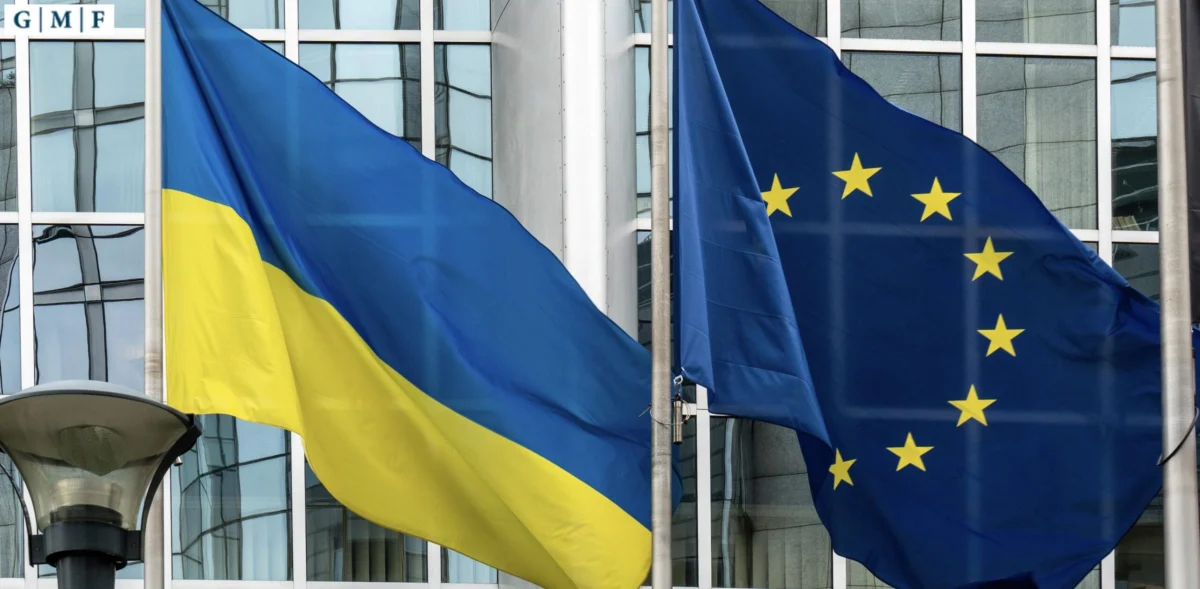
Five years into the full-scale conflict, the war in Ukraine has evolved into a grueling contest of attrition characterized by stagnant, fortified frontlines and a relentless campaign of aerial bombardment targeting civilian infrastructure. As the theater of war settles into a new, grim status quo, the geopolitical landscape surrounding potential negotiations is shifting. While the United States remains the primary interlocutor with Moscow, the European Union—the continent’s largest financial contributor to Ukraine’s survival—finds itself in a paradoxical position: funding the defense and reconstruction of the nation while remaining largely sidelined in the high-stakes diplomacy that will define Europe’s future security architecture.
A Chronology of Escalation and Economic Commitment
The trajectory of the conflict has been marked by distinct phases that have necessitated increasing levels of European involvement. Following the initial invasion in February 2022, the European Union moved rapidly from emergency humanitarian aid to systematic military and financial support.
By mid-2023, the focus shifted toward sustaining Ukraine’s defensive capabilities as the initial momentum of the war slowed into the static frontline conditions observed today. Throughout 2024 and 2025, the focus expanded to include the integration of Ukrainian defense standards with NATO and EU protocols. By April 2026, the European Union solidified its long-term commitment by approving a €90 billion Ukraine Support Loan, with a significant €60 billion tranche earmarked specifically for military and defense modernization.
This financial commitment is unprecedented in EU history. To date, the EU and its member states have funneled over €220 billion into Ukraine, with nearly €89 billion directed exclusively toward military assistance. However, as the conversation shifts from pure survival to the potential for a negotiated settlement, these massive investments are being tested by a diplomatic structure that still prioritizes a bilateral Washington-Moscow track, often leaving European capitals to receive briefings only after key decisions have been made.
The Structural Deficit in European Diplomacy
The current diplomatic architecture reflects the remnants of a post-Cold War security order that no longer accounts for the reality of the European Union as a sovereign security actor. Because the EU lacks a unified mechanism for strategic negotiation, it is forced to rely on a fragmented patchwork of coalitions and ad-hoc communication channels.
This lack of structural representation carries significant risks. A settlement negotiated primarily between Washington and Moscow risks overlooking the specific, existential requirements of European stability. These include the long-term enforcement of sanctions, the integration of Ukraine into the European single market, and the creation of a credible, continent-wide security deterrent that prevents future Russian aggression.
Analysts suggest that without a dedicated EU seat at the table, the risk of a "premature peace"—one that fails to address the underlying territorial violations or provides insufficient security guarantees—increases. For the EU, the stakes are not merely geopolitical; they are foundational to the integrity of the bloc’s enlargement policy and the credibility of its internal security pacts.
Economic Reconstruction and Security Interdependency
The economic reality of the post-war landscape is staggering. Independent assessments place the cost of Ukraine’s reconstruction at over €500 billion over the coming decade. This figure, however, is inseparable from the security environment. Investors and international lenders are unlikely to commit capital to a nation whose borders remain under threat of renewed conflict.
Consequently, reconstruction and security are two sides of the same coin. The United States, while a critical military partner, cannot provide the institutional framework of EU membership, nor can it unilaterally manage the complex regulatory and economic reforms necessary for Ukraine’s recovery. The integration of Ukraine into the European industrial base—particularly in the defense sector—is essential for both the sustainability of the Ukrainian state and the growth of the European defense-industrial complex.
Proposal for a European Special Representative
In response to the growing recognition of this diplomatic vacuum, there is an intensifying debate within Brussels and major capitals, including Rome, regarding the appointment of a dedicated EU Special Representative for the Ukraine peace process.
Such a position would serve as a singular, authoritative voice representing the collective interests of the 27 member states. The mandate of this representative would be clear: to ensure that any ceasefire agreement does not constitute an implicit recognition of territorial annexations achieved through force, and to synchronize the eventual lifting of sanctions with concrete, verifiable compliance by the Russian Federation.
Furthermore, this representative would act as the primary liaison for the democratic reforms requested of Kyiv. The EU has made it clear that continued support is contingent upon progress in the rule of law, anti-corruption efforts, and the professionalization of law enforcement. A special representative would be uniquely positioned to guide these reforms, ensuring they align with the requirements for eventual EU accession.
Towards a European Security Council
A diplomatic envoy is only as effective as the policy they represent. To ensure that the European position is not just a collection of competing interests, experts are increasingly advocating for the establishment of a formal European Security Council.
Currently, the EU lacks a permanent, high-level forum capable of rapid strategic decision-making in the face of acute crises. A European Security Council, embedded within the European Council and chaired by its president, could bridge this gap. By utilizing qualified majority voting, such a council would allow the EU to act with the necessary agility, bypassing the paralysis often associated with unanimous decision-making processes.
Crucially, this proposed body would invite Ukraine as a permanent associate member, alongside strategic partners like the United Kingdom and Norway. This would not only provide a platform for coordinated policy but would also signal to the international community that the future of European security is being determined by the nations most affected by it.
Implications and Future Outlook
The implications of the coming months are profound. As the war enters its fifth year, the international community is beginning to explore the parameters of an end-game. If Europe continues to act as a financial benefactor without a corresponding role as a strategic negotiator, it risks becoming a passive observer of its own security fate.
The transition toward a more assertive diplomatic role is not merely a matter of prestige; it is a strategic necessity. A settlement that lacks the backing of a cohesive European defense architecture will likely prove fragile. By establishing a dedicated envoy and creating a high-level security council, the European Union can move from being a provider of funds to a shaper of the regional order.
The path forward requires a rare degree of political courage. It demands that member states reconcile their individual national interests with the collective security needs of the continent. However, the costs of failure—ranging from the destabilization of the eastern frontier to the erosion of the transatlantic partnership—far outweigh the difficulties of creating these new institutional mechanisms.
As Ukraine continues to undergo the grueling process of democratic and military reform, its partners in Europe must demonstrate a corresponding evolution in their own strategic maturity. The integration of Ukraine into the European security umbrella is not just a policy preference; it is the inevitable conclusion of a conflict that has fundamentally rewritten the rules of European sovereignty. Whether through the appointment of a special representative or the creation of a more robust security council, the time for the EU to speak with a single, authoritative, and strategic voice has arrived. The durability of any future peace in Ukraine depends entirely on the ability of the European continent to secure its own future.