
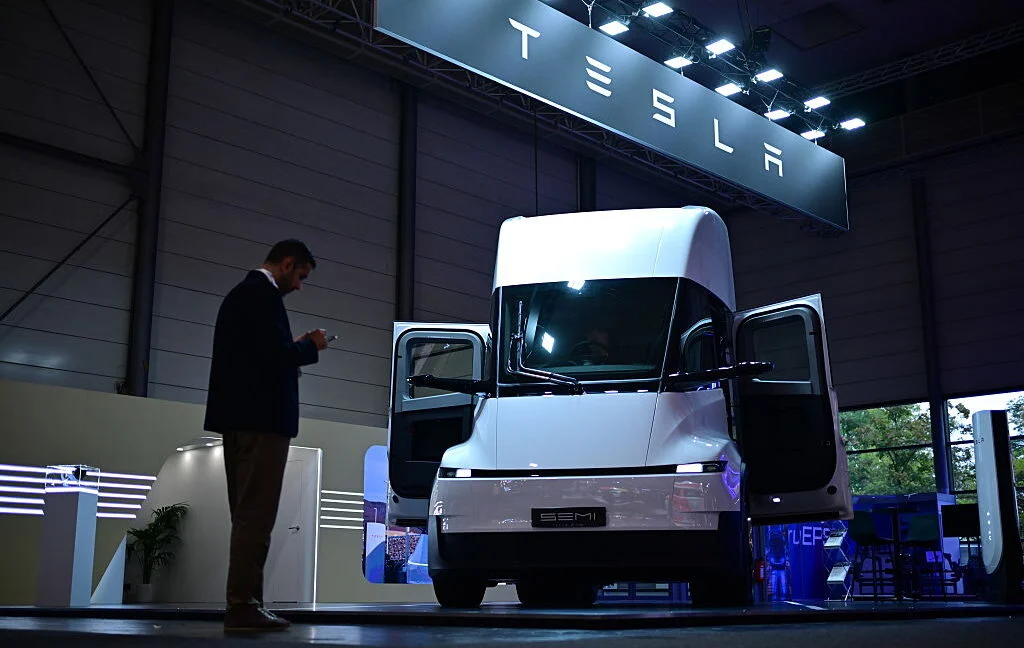
The heavy-duty logistics sector is undergoing a profound transformation as a coalition of global corporate titans, including Microsoft and PepsiCo, finalized a landmark order for 2,500 Tesla Semi electric trucks. This massive procurement, slated for delivery over the next 18 months, represents a pivotal moment for the commercial trucking industry, which has historically been tethered to the volatility of global diesel markets. The deal arrives amid a complex geopolitical and regulatory landscape, where the push for decarbonization is currently contending with shifting federal priorities in Washington.
The Macroeconomic Catalyst for Electrification
While the transition to electric vehicles (EVs) has often been framed through the lens of environmental sustainability, the current adoption surge is being driven primarily by cold, hard economics. The global energy market is currently navigating a period of intense instability, exacerbated by the ongoing conflict in the Middle East. As oil production and shipping lanes face continued disruption, US diesel prices have ascended to record highs, nearly doubling in cost compared to this time last year.
For major shippers, fuel represents one of the largest and most unpredictable operating expenses. In a pre-taped address regarding the new fleet acquisition, Elon Musk highlighted the pragmatic advantage of the shift. "The truck is going to make a ton of sense economically because the cost of electricity is much less than the cost of diesel, especially in these crazy times," Musk noted. By insulating their supply chains from the price swings of petroleum-based fuels, companies like PepsiCo and Microsoft are attempting to stabilize long-term operational overhead, turning to the predictable, grid-based pricing of electricity as a hedge against global instability.
Navigating a Hostile Regulatory Environment
The push toward heavy-duty electrification is occurring despite a distinct lack of federal enthusiasm. The current administration, bolstered by a Republican majority that has historically prioritized traditional energy sectors, has actively moved to dismantle previous federal supports for the EV industry. Last year, the government cut billions of dollars in federal subsidies and tax credits intended to catalyze the adoption of electric heavy-duty vehicles.
Furthermore, the administration is pursuing a roll-back of fuel economy standards for heavy-duty truck engines. These standards were originally designed to compel manufacturers to adopt more efficient technologies and meet aggressive climate benchmarks. The timing of this deregulation is significant, as heavy-duty trucks are responsible for approximately 7 percent of total greenhouse gas emissions in the United States. Critics of the rollback argue that by lowering the barrier to entry for inefficient combustion engines, the federal government is effectively extending the lifespan of the most polluting segment of the American transportation infrastructure.
A Chronology of the Tesla Semi
The path to this record-setting order has been long and marked by significant delays. When the Tesla Semi was first unveiled in 2017, the company made ambitious promises regarding production capacity and the integration of advanced automation features.
- November 2017: The Tesla Semi is officially unveiled. Elon Musk promises a 500-mile range and the availability of "Enhanced Autopilot" at launch.
- 2018–2021: Repeated production delays occur due to battery supply chain constraints and the prioritization of passenger vehicle lines.
- December 2022: Initial deliveries of the Semi finally commence, with PepsiCo receiving the first fleet units.
- 2023: Federal funding for EV infrastructure faces legislative scrutiny, creating uncertainty for prospective fleet operators.
- Current Period: The formation of a purchasing alliance allows for economies of scale, leading to the massive 2,500-unit order that promises to nearly double the number of heavy-duty electric trucks currently on US roads.
Assessing the Competition and Technical Capabilities
The decision to choose Tesla was not made in a vacuum. The purchasing alliance, facilitated by the nonprofit Smart Freight Centre, utilized a rigorous vetting process to determine which manufacturer could best meet the demands of high-frequency commercial logistics. According to Meena Bibra, a spokesperson for the Smart Freight Centre, the selection committee conducted a comprehensive assessment of "price, performance, production capability, and service support."
While Tesla emerged as the victor for this specific contract, the market for electric freight remains competitive. Major industrial players such as Kenworth, Volvo, and the newcomer Ride are actively courting the same logistics giants. These companies offer established service networks and, in some cases, vehicle configurations that are more compatible with the existing operational workflows of legacy logistics firms. The ability to "pool" demand—combining the purchasing power of multiple smaller and medium-sized carriers—has been a decisive factor in bringing down unit costs, making electric trucks a viable financial alternative for companies that might otherwise be unable to afford the initial capital expenditure.
The Future of Autonomy in Freight
A notable absence in the current Tesla Semi specifications is the company’s signature "Full Self-Driving" (FSD) software. While Tesla has aggressively marketed its FSD (Supervised) suite for passenger cars, it has yet to be deployed in the commercial trucking sector. During his address, Musk acknowledged the gap, noting that the technology would debut in the "very near future."
Industry analysts remain cautious about the timeline for autonomous trucking. The complexities of long-haul logistics—including varying weather conditions, complex loading docks, and the legal liability associated with 80,000-pound vehicles—present a far steeper challenge than suburban passenger driving. While the integration of automated driver-assistance systems could theoretically improve safety and fuel efficiency through optimized platooning, the lack of current availability suggests that the immediate focus for the alliance is on the transition to electric powertrains rather than full automation.
Implications for the Logistics Sector
The impact of this order extends beyond the balance sheets of the involved corporations. By nearly doubling the number of heavy-duty electric trucks on the road, the deal will provide critical data on how these vehicles perform under real-world, high-utilization conditions. This "proof of concept" is essential for smaller regional shippers who have remained on the sidelines, waiting for the technology to mature and for the total cost of ownership to reach parity with diesel.
However, the industry faces a significant hurdle: infrastructure. The successful deployment of 2,500 electric trucks requires a massive expansion of high-capacity charging networks along major freight corridors. While the federal government has historically been slow to subsidize this infrastructure, private investment is beginning to fill the gap. Major retailers and energy companies are increasingly viewing the electrification of the "middle mile" as a necessary evolution of the supply chain.
As the US logistics sector enters this new phase, the tension between environmental policy and economic necessity remains palpable. The record order for Tesla Semis suggests that for large-scale shippers, the economic logic of electrification has become undeniable, regardless of the regulatory environment in Washington. Whether this trend can sustain its momentum without federal backing remains the central question for the industry as it moves toward a future that is, by necessity, increasingly electric.