
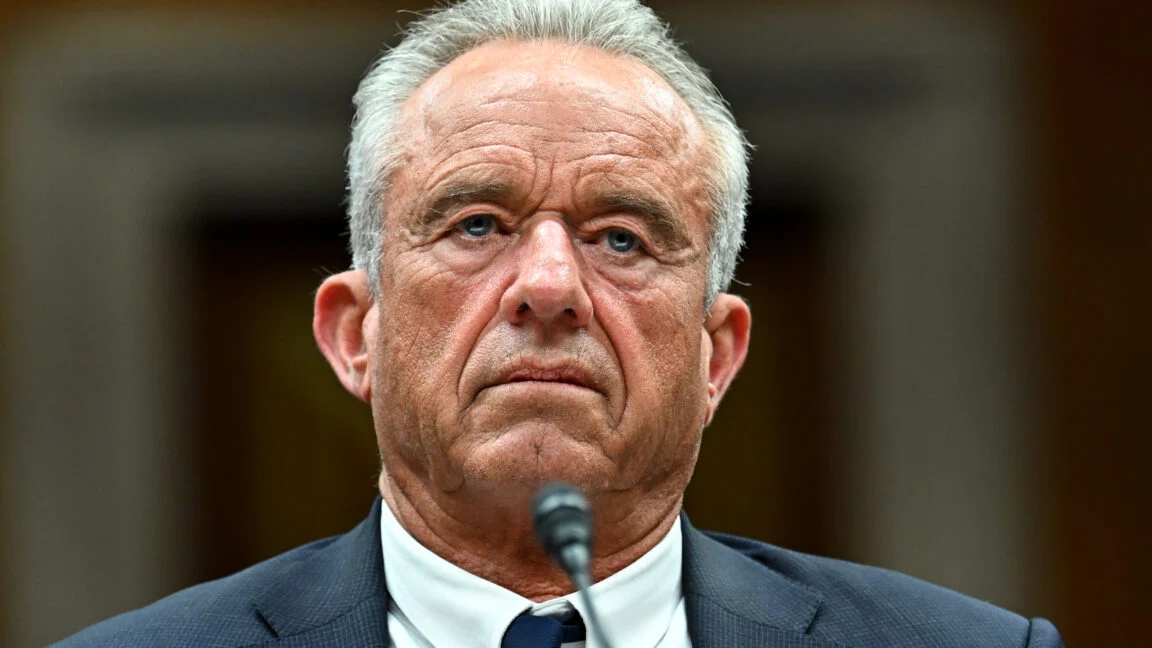
The U.S. Department of Health and Human Services (HHS) confirmed on Thursday that the federal ordering system for COVID-19 vaccines has finally resumed, ending a period of unexplained disruption that had left healthcare providers and immunization clinics in a state of operational limbo. Despite inquiries from media outlets and industry stakeholders regarding the nature of the suspension—and the mechanics of its eventual resolution—HHS officials declined to provide specific details, maintaining a posture of official silence regarding the cause of the technical or administrative freeze.
This development occurs against the backdrop of a broader, high-stakes ideological shift in federal health policy under the current administration. Robert F. Kennedy Jr., serving as Health Secretary, has long maintained a combative stance toward COVID-19 immunization efforts. His tenure has been marked by repeated, unsubstantiated claims characterizing the vaccines as the “deadliest vaccines ever made,” alongside formal petitions to the Food and Drug Administration (FDA) to strip the shots of their regulatory approval. Last year, in an act that sent shockwaves through the public health establishment, Kennedy unilaterally revoked the Centers for Disease Control and Prevention’s (CDC) universal recommendations for COVID-19 vaccination, dismantling years of established immunization protocols.
A Chronology of Policy Disruption
The current state of vaccine administration is a result of a protracted tug-of-war between the Department of Health and Human Services and the federal judiciary. The friction began in earnest last year when Secretary Kennedy sought to fundamentally alter the CDC’s immunization framework.
In March, a federal judge intervened, issuing an order that effectively halted a series of policy adjustments pushed by Kennedy and his political allies. This judicial injunction created a regulatory stalemate. The court’s intervention froze the CDC’s vaccine recommendations at their July 2025 status. According to that benchmark, the CDC’s official guidance limits the recommendation for children aged 6 months to 17 years to those who are moderately to severely immunocompromised. For healthy children within the same age bracket, the CDC’s stance remains tied to “shared clinical decision-making,” a policy that effectively offloads the responsibility of immunization to individual consultations between patients, parents, and their healthcare providers.
The situation was further clarified—and complicated—in a recent update to the CDC’s clinical guidance. A notice added to the agency’s portal yesterday explicitly stated: “Because of legal uncertainties and inquiries, the CDC states the recommendations for COVID-19 vaccination from the July 2025 immunization schedule remain in effect for the 2026-2027 respiratory illness season.”
Divergence Between Federal Policy and Clinical Standards
The adherence to the July 2025 schedule has created a notable chasm between the CDC’s official federal position and the recommendations issued by the nation’s leading medical societies. Major organizations, including the American Medical Association (AMA) and various pediatric professional associations, have issued guidance for the current fall season that directly contradicts the current federal baseline.
Medical experts and professional groups maintain that the public health interest is best served by broader coverage. Their current recommendations suggest that all infants between 6 months and 23 months of age should receive the COVID-19 vaccine. For children aged 2 to 18, the professional consensus advocates for vaccination for those at higher risk of complications, or for those who express a personal desire to be vaccinated.
This divergence places physicians in a difficult professional position. While clinicians are accustomed to weighing federal guidance, the existence of a “frozen” regulatory state forces them to navigate a conflict between the current CDC administrative position and the consensus of the medical scientific community.
Supporting Data and Public Health Implications
The impact of these policy changes is best measured by the shifting landscape of vaccine uptake. During the height of the national immunization program, the federal government maintained a robust supply chain and a consistent, unified message regarding the safety and efficacy of the COVID-19 vaccine.
According to data tracked by the CDC, the previous universal recommendation framework resulted in significantly higher uptake rates among the pediatric population. Public health analysts point out that when immunization recommendations become localized or contingent upon individual clinical consultation, there is often a measurable decline in total population immunity. In the context of respiratory illness seasons, where hospital capacity is often strained by a combination of influenza, RSV, and COVID-19, any reduction in vaccination coverage can lead to increased pediatric hospitalizations.
Furthermore, the uncertainty surrounding the ordering process—even if now resolved—has caused logistical headaches for community clinics and pharmacies. Vaccine distribution requires precise cold-chain management and inventory planning. When ordering systems are suspended without notice, providers are unable to schedule patient appointments or secure sufficient doses, leading to missed opportunities for immunization that are often difficult to recapture later in the season.
The Role of Regulatory Stability in Public Health
The ongoing legal challenges and the subsequent regulatory freezing of health guidelines highlight a fundamental tension in the American administrative state. Historically, the CDC has functioned as a science-driven body, with its recommendations guided by the Advisory Committee on Immunization Practices (ACIP), a group of external experts who review data before proposing guidelines.
The move to circumvent or alter these established processes has drawn sharp criticism from public health advocates who argue that clinical guidance should be insulated from political shifts. By tethering current policy to a past mandate—the July 2025 guidelines—the federal government has effectively created a policy silo that does not account for the latest clinical data or the evolving nature of the virus itself.
Fact-based analysis of the current state of affairs suggests that the repercussions of these legal battles extend well beyond the current respiratory season. When professional medical organizations and federal health agencies issue conflicting guidance, it historically leads to increased vaccine hesitancy among the general public. Parents, confronted with disparate information, are more likely to opt out of vaccination altogether rather than navigate the complexities of competing recommendations.
Official Responses and the Path Forward
HHS has not addressed the specific operational failures that led to the recent ordering delay. In response to inquiries from the press, the department’s public relations office offered a terse confirmation that the system is once again operational, declining to elaborate on the nature of the “legal uncertainties” mentioned in the CDC’s latest guidance.
The silence from the department underscores the sensitivity of the issue. With Secretary Kennedy’s history of public opposition to federal vaccine mandates and the ongoing scrutiny from the judiciary, the HHS is operating within a highly constrained environment. Any move to update the current guidelines could be interpreted as a violation of the court order, while maintaining the status quo risks further alienating the medical community that relies on the CDC for evidence-based best practices.
Long-term Outlook
As the 2026-2027 respiratory illness season progresses, the consequences of this regulatory paralysis will likely become more evident in the data. Health departments across the country are now left to determine how to communicate the distinction between the CDC’s current, court-mandated guidance and the broader, more aggressive recommendations of their professional medical societies.
For the healthcare provider, the priority remains the delivery of evidence-based care. However, as long as the federal government remains embroiled in legal disputes regarding the scope of its own power to set health policy, the consistency of the nation’s vaccination program remains in jeopardy. The resumption of vaccine ordering is, at best, a return to baseline functionality; it does not resolve the underlying fundamental disagreements about the role of the state in directing the clinical choices of the American public.
Until such time as the legal proceedings conclude or a new administrative consensus is reached, the landscape of pediatric and adult COVID-19 vaccination will remain defined by this uneasy, bifurcated reality—where official federal guidance lags behind the active recommendations of the physicians who serve on the front lines of public health.