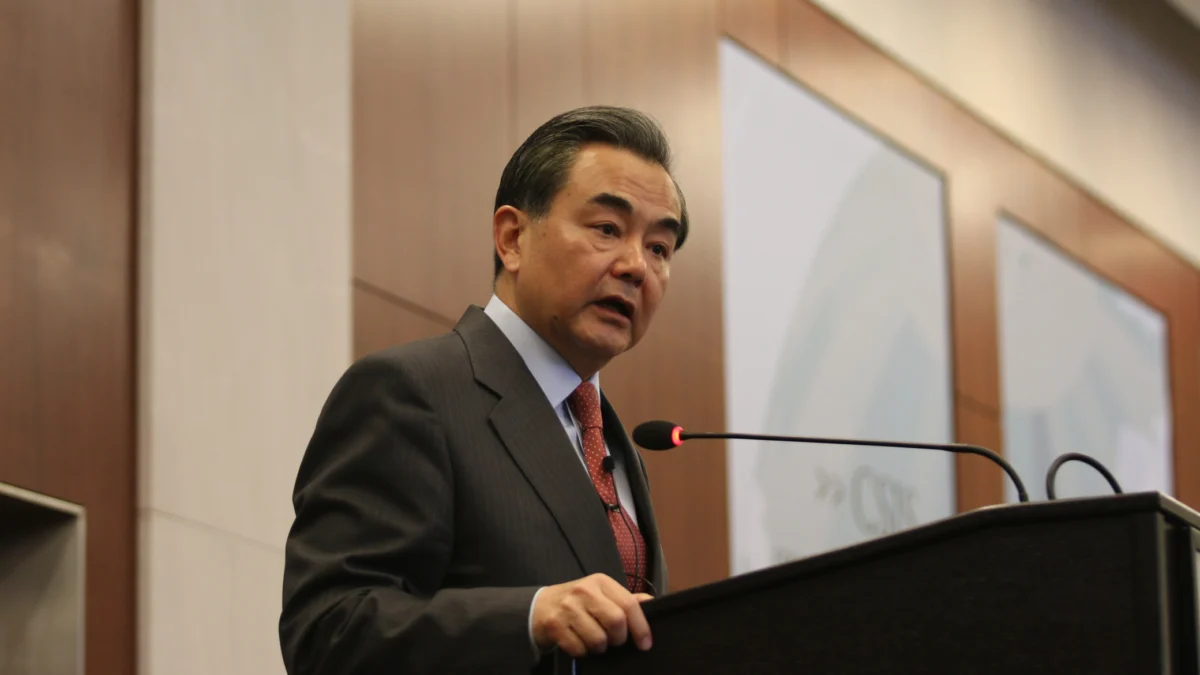
On February 25, 2016, the Center for Strategic and International Studies (CSIS) hosted a high-profile Statesmen’s Forum featuring Wang Yi, the Minister of Foreign Affairs of the People’s Republic of China. The event, which took place in Washington, D.C., served as a critical platform for exploring the evolving architecture of U.S.-China relations and the shifting paradigms of Beijing’s global foreign policy. Welcomed by CSIS President and CEO John Hamre and moderated by Christopher Johnson, then-Freeman Chair in China Studies, the discussion offered a rare glimpse into the diplomatic priorities of the Chinese government during a period of intensifying bilateral complexity.
Historical Context of the 2016 Diplomatic Climate
The 2016 visit by Foreign Minister Wang Yi occurred at a pivotal juncture in the geopolitical landscape. At the time, the Obama administration was finalizing its “pivot” or “rebalance” to the Asia-Pacific, a strategic shift intended to solidify U.S. engagement in the region. Simultaneously, China was accelerating its transition toward a more assertive foreign policy posture, characterized by the advancement of the Belt and Road Initiative (BRI) and increased activity in the South China Sea.
The diplomatic environment was marked by significant friction. Tensions over maritime sovereignty, cyber espionage, and trade imbalances were constant points of contention. The CSIS event provided a structured environment for the Chinese leadership to articulate its perspective on these issues directly to an American audience of policymakers, academics, and industry analysts, emphasizing the necessity of “a new type of major-power relations.”
Chronology of Bilateral Engagements Leading to the Forum
To understand the weight of the February 2016 forum, it is essential to view the event within the broader timeline of U.S.-China diplomacy during the mid-2010s:
- September 2015: President Xi Jinping conducted a state visit to the United States, where he and President Barack Obama reached a landmark agreement to refrain from state-sponsored cyber theft of intellectual property.
- January 2016: Foreign Minister Wang Yi engaged in extensive consultations with U.S. Secretary of State John Kerry regarding the denuclearization of the Korean Peninsula following North Korea’s fourth nuclear test.
- February 25, 2016: The CSIS Statesmen’s Forum serves as a platform for Wang to reinforce the outcomes of these high-level talks and address the American foreign policy establishment.
- July 2016: The Permanent Court of Arbitration in The Hague issued its ruling in the Philippines v. China case, which invalidated many of Beijing’s maritime claims in the South China Sea, creating a new focal point for diplomatic confrontation.
Core Themes and Strategic Messaging
During the forum, Minister Wang Yi emphasized the concept of “win-win cooperation,” a central tenet of Chinese diplomatic rhetoric. The discussion centered on the idea that the two nations could manage their systemic differences without sliding into the “Thucydides Trap”—the theory that a rising power and an established power are destined for conflict.

Wang articulated Beijing’s desire for a stable international order that respects China’s “core interests.” He addressed concerns regarding the South China Sea by framing Chinese infrastructure development as civilian-focused and necessary for search-and-rescue operations, a stance that was met with skepticism by Western observers who pointed to the militarization of these features. Furthermore, the dialogue touched upon the importance of economic integration. At the time, bilateral trade between the U.S. and China was approaching $600 billion annually, making the two economies deeply interdependent despite their security-related disagreements.
Supporting Data and Economic Realities
The economic backdrop of 2016 was a major driver for the diplomatic overtures made during the forum. According to U.S. Census Bureau data, the trade deficit with China in 2016 was approximately $347 billion, a figure that would eventually become a primary catalyst for the trade wars that began in 2018.
Investment trends were also shifting. In 2016, Chinese Foreign Direct Investment (FDI) into the United States reached a record high of approximately $46 billion, a significant increase from previous years. This surge in capital flow was viewed by the Chinese delegation as a stabilizing force in the bilateral relationship, while U.S. regulators were simultaneously beginning to express concerns regarding national security implications for sensitive technologies.
Analytical Perspectives on the Forum
The participation of John Hamre and Christopher Johnson provided a balanced intellectual framework for the event. Hamre, known for his deep expertise in national security, facilitated a discussion that moved beyond standard talking points. Johnson, an expert on the inner workings of the Chinese Communist Party, used his tenure at the Freeman Chair to probe the motivations behind China’s regional maritime strategies.
From an analytical standpoint, the 2016 forum highlighted a fundamental divergence in expectations. While U.S. officials viewed these dialogues as opportunities to define "rules of the road" for competition, Chinese officials viewed them as mechanisms to gain recognition for China’s status as a co-equal superpower. The diplomatic dance performed at the CSIS stage was emblematic of the era: a delicate balance of public cooperation and private apprehension.
Reactions and Official Responses
In the aftermath of the forum, reactions within Washington were mixed. Many analysts noted that while the rhetoric from Minister Wang was conciliatory, it lacked substantive concessions on issues like maritime sovereignty or human rights. State Department officials, while maintaining the importance of the dialogue, continued to emphasize that rhetoric must be matched by action, particularly regarding the implementation of the cyber-theft moratorium agreed upon by the two presidents months earlier.

Chinese state media, such as the Xinhua News Agency and the People’s Daily, framed the event as a success for Chinese diplomacy, emphasizing the reception the Minister received at a premier American think tank. They highlighted the parts of his speech that called for "mutual respect" and "avoiding confrontation," using the forum as a vehicle to signal to a domestic audience that China was actively shaping the global narrative in the heart of the "Western" political establishment.
Broader Implications and Long-term Impact
The 2016 Statesmen’s Forum stands as a historical marker for the period immediately preceding the rise of more confrontational U.S. policies toward China. The themes discussed—maritime disputes, trade imbalances, and the definition of a "major-power" relationship—remain the primary issues in the contemporary U.S.-China dynamic.
The forum illustrated that even during periods of relative stability, the underlying structural tensions between the two nations were profound. The reliance on diplomatic forums such as the CSIS Statesmen’s Forum was essential in 2016 to prevent miscalculation, yet the events that followed—the 2016 South China Sea ruling, the 2018 trade war, and the subsequent technological decoupling—demonstrate that these dialogues were unable to resolve the fundamental contradictions in the bilateral relationship.
Today, the 2016 appearance of Wang Yi at CSIS is often cited in academic circles as a case study in the limitations of "engagement" policies. It serves as a reminder of a time when direct, high-level access was the primary tool for managing friction, a tool that has become increasingly strained as the strategic competition between Washington and Beijing has deepened. For observers of international relations, the event remains a vital data point in the chronology of the 21st century’s most consequential geopolitical rivalry.