The landscape of German politics is undergoing a seismic shift that threatens to dismantle the foundational consensus of the postwar Federal Republic. For Friedrich Merz, who ascended to the Chancellery in May 2025 with the explicit mandate to stabilize the economy and neutralize the rise of the Alternative for Germany (AfD), the recent electoral drubbing in Saxony-Anhalt serves as a stark indictment of his administration. What was intended to be a robust, reform-oriented tenure characterized by fiscal discipline and strategic military leadership has instead devolved into a struggle for the political survival of the center-right.
The decline of the Christian Democratic Union (CDU) in regional strongholds is not an isolated phenomenon but a symptomatic failure of the current governing coalition. As the AfD—a party labeled by domestic intelligence agencies as right-wing extremist in various jurisdictions—surges in national polls to capture nearly one-third of the electorate, the "firewall" (Brandmauer) meant to protect German democracy from extremist infiltration appears increasingly porous.
A Chronology of Declining Influence
The trajectory of the current political crisis can be traced back to the early ambitions of the Merz leadership. When he first vied for the party chairmanship in 2018, Merz articulated a clear, albeit ambitious, objective: to halve the electoral support of the far-right.
- 2018–2021: Merz establishes himself as the primary opposition figure, emphasizing traditional conservative values and economic liberalization.
- May 2025: Merz is sworn in as Chancellor, leading a "Grand Coalition" designed to bypass the gridlock of the previous federal election. He promises to revitalize the German economy, increase defense spending, and restore the CDU’s identity as the country’s premier conservative force.
- Early 2026: The administration faces immediate pressure as stagnant growth, high energy costs, and geopolitical volatility dampen public optimism.
- May 2026: A public relations crisis emerges following comments regarding the German workforce, forcing a contrite Merz to admit to communication failures.
- July 2026: Merz reverses his position on the constitutional "debt brake," attempting to loosen borrowing limits to fund infrastructure—a move that alienates fiscal hawks within his own party and provides the AfD with ammunition.
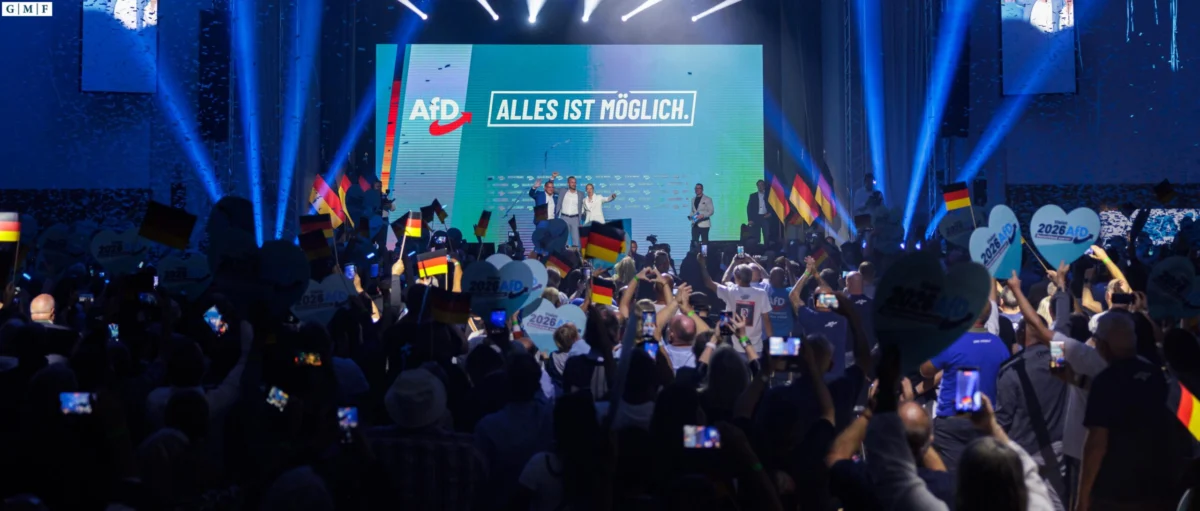
- September 2026: The Saxony-Anhalt regional election results confirm a significant loss for the CDU, triggering internal dissent and widespread speculation regarding the Chancellor’s future.
The Economic Catalyst and Political Gridlock
The surge in AfD support is inextricably linked to the performance of the German economy. Despite Merz’s private-sector background, his attempts to overhaul welfare and pension systems have been widely criticized as both insufficient and poorly timed. German businesses, caught between the hammer of high domestic production costs and the anvil of protectionist American tariffs and aggressive Chinese competition, have seen their margins erode.
The decision to pivot on the debt brake—a cornerstone of the German constitutional fiscal framework—has been particularly damaging. By signaling a willingness to increase state spending, Merz failed to appease the left while simultaneously infuriating his base, who view fiscal restraint as an article of faith. This flip-flop has allowed the AfD to frame the government as both incompetent and ideologically adrift. Furthermore, the party’s questioning of defense spending in Ukraine has resonated with a segment of the electorate weary of inflation and foreign entanglements, effectively weaponizing the cost-of-living crisis against the current administration.
Intelligence Classifications and the Firewall
The German domestic intelligence agency, the Federal Office for the Protection of the Constitution (BfV), has consistently raised alarms regarding the radicalization of the AfD. By classifying the party—and specifically its chapters in states like Saxony-Anhalt—as right-wing extremist, the state has identified a clear threat to the constitutional order.
However, the "firewall" strategy, which dictates that no mainstream party should cooperate or enter into a coalition with the AfD, is currently under unprecedented strain. The fundamental tension lies in the fact that the CDU and the AfD share common ground on migration and specific social issues, yet remain diametrically opposed on the principles of Westbindung. Established by Konrad Adenauer, this principle of Western integration is the bedrock of German foreign policy. The AfD’s overtures toward Moscow and its skepticism of the Eurozone represent a radical departure from the pro-Western orientation that has defined Germany since 1949.
The Institutional Response and Implications
The failure of the current Grand Coalition to address these issues has left a vacuum in the political center. When the Federal Republic was founded, the Grand Coalition was a rare, emergency measure; today, it is becoming the norm, signaling a breakdown in the traditional competition between the center-left and center-right. Voters perceive these coalitions as "cartel politics," where the interests of the establishment take precedence over the needs of the citizen.
The implications of this shift extend far beyond Germany’s borders. As a cornerstone of the European Union and the de facto leader of Europe’s military response to Russian aggression, Germany’s stability is a prerequisite for continental security. If the CDU continues to falter, the potential for a total realignment of German politics—or worse, a period of sustained political instability—increases significantly.
Expert Analysis: The Challenge of Competence
Political analysts suggest that moral condemnation of the AfD has reached a point of diminishing returns. The electorate, particularly in the eastern states, is driven by grievances related to public service delivery, educational quality, and local economic decline. The AfD excels at channeling this anger, providing a narrative of decline that, while lacking in actionable policy, resonates with a disenfranchised population.
The democratic mandate for the CDU, therefore, is not merely to "beat" the far-right in rhetoric but to out-govern them. This requires a level of political courage that has thus far been absent. For Merz, the window to reshape his legacy is rapidly closing. His tenure will likely be judged not by his ability to retain the Chancellery, but by his ability to steer the CDU back to a position of strength through tangible, high-impact reforms.
Looking Toward the Future
As Germany prepares for subsequent regional elections later this month, the stakes could not be higher. Should the trend in Saxony-Anhalt be replicated, the pressure on Merz to step aside will transition from an internal party murmur to a deafening public roar.
The task facing the Chancellor is two-fold: he must stabilize the economic conditions that have fueled the populist surge while simultaneously defending the integrity of the postwar democratic institutions. If he fails, the "firewall" may not hold, and Germany may find itself grappling with a political landscape it has spent the better part of a century attempting to prevent. The eyes of the Atlantic community are fixed on Berlin, watching to see if the lessons of history can still serve as a guide for modern governance or if the erosion of democratic norms is now an irreversible process.
Ultimately, the survival of the current order depends on the ability of the center-right to provide a coherent, effective, and visionary alternative to the politics of grievance. Competence is the only effective antidote to the radicalism now knocking at the gates of the Chancellery. Whether Merz possesses the political capital and the resolve to pivot toward such an agenda remains the most critical question in European politics today.