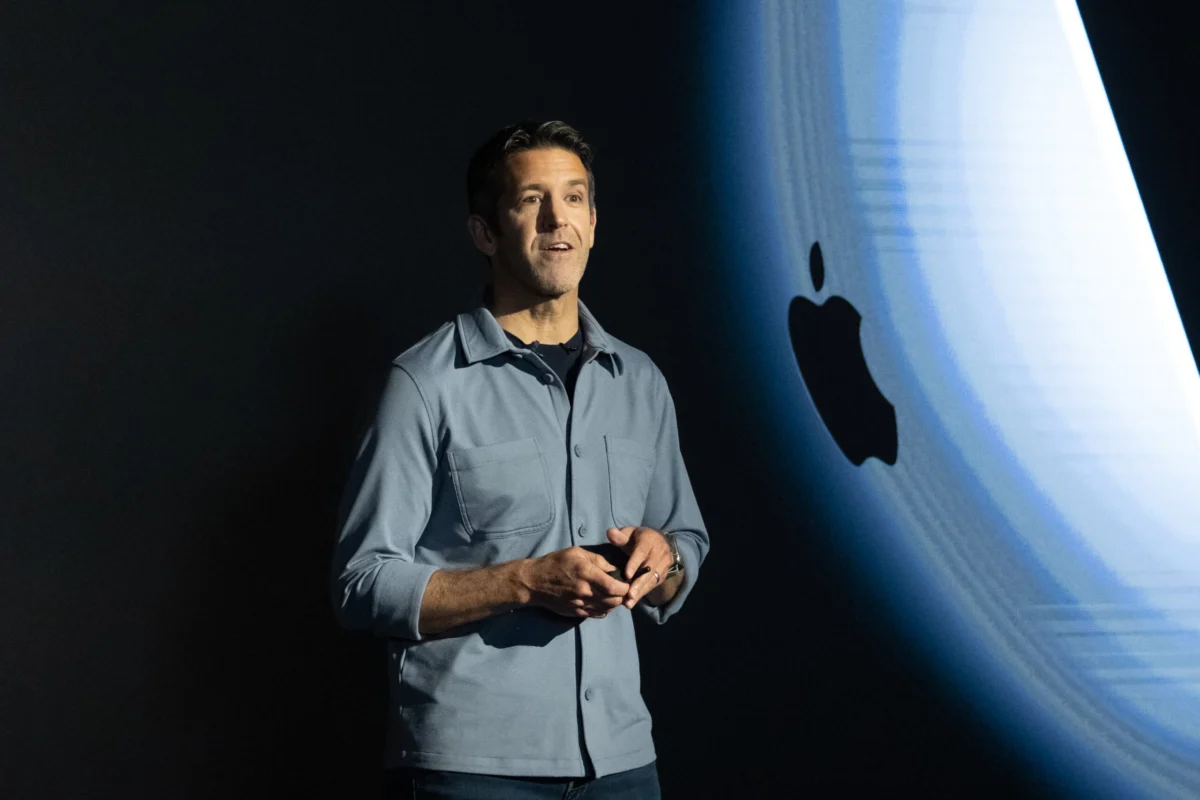
Apple is planting its flag firmly in familiar territory. During his debut keynote address, newly appointed Apple CEO John Ternus delivered a resounding endorsement of the company’s flagship product, making it abundantly clear that the iPhone will remain the cornerstone of Apple’s long-term product strategy. As the technology sector races headlong into the artificial intelligence era, skeptics and industry analysts have increasingly questioned the longevity of the smartphone, suggesting that the industry is overdue for a post-iPhone paradigm. Ternus, however, has firmly rejected this narrative, positioning the ubiquitous device not as a dying relic of past innovation, but as the most sophisticated and capable intelligent personal hub ever engineered.
This strategic positioning marks a subtle yet significant philosophical pivot from the tenure of his predecessor, Tim Cook. Throughout his years at the helm, Cook frequently sought to diversify Wall Street’s perception of Apple, working tirelessly to convince investors and consumers alike that the technology giant was far more than a single-product company. Under Cook’s leadership, services, wearables, and ecosystem expansions were pushed to the forefront to mitigate over-reliance on hardware sales. Ternus, conversely, is leaning directly into the hardware anchor that built the modern Apple empire, arguing that the smartphone’s unique convergence of computing power, portability, and personal intimacy makes it irreplaceable in the burgeoning age of on-device artificial intelligence.
The Defensive Play Against Industry Skeptics
Ternus’s remarks served as a direct rebuttal to a chorus of recent industry commentary predicting the imminent demise of the smartphone. Over the past year, technology pundits and market researchers have published numerous analyses suggesting that ambient computing, spatial interfaces, and dedicated wearable AI pins would soon render traditional handheld screens obsolete. Headlines declaring that the smartphone’s days are numbered have become commonplace across financial and tech publications, framing the transition of leadership at Apple as an existential crisis centered on the elusive search for a post-smartphone successor.
By addressing these concerns head-on, Ternus sought to dismantle the premise that hardware maturity equals obsolescence. During his keynote, he laid out the structural criteria required for an ideal intelligent personal hub, noting that any successful device must combine a high-performance neural processor, advanced multi-lens camera systems, persistent low-power networking capabilities, and robust on-device artificial intelligence architectures. When measured against these parameters, Ternus argued, no emerging wearable or ambient gadget comes close to matching the raw capabilities already packed into the standard pocket-sized form factor.
Echoes of 2001: The Steve Jobs Playbook
To contextualize his defense of the iPhone, Ternus drew a compelling historical parallel to one of Apple’s most famous keynote moments: Steve Jobs’s presentation at Macworld New York in July 2001. At the dawn of the digital hub era, technology critics were similarly eager to write the obituary for the personal computer, arguing that the rise of digital cameras, camcorders, and standalone music players would marginalize the desktop machine.
During that 2001 address, Jobs famously projected a tombstone bearing the words "Beloved PC" onto the stage screen to mock bearish commentary from industry analysts and competitors such as Compaq and Gateway. Jobs pushed back fiercely against the narrative, arguing that the personal computer was not dying, but merely entering its third great age. He envisioned the Mac not as a static workstation, but as the central organizing hub that would connect, manage, and add value to an expanding constellation of digital peripherals.
Just months after that declaration, Jobs pulled the original iPod from his pocket, introducing a device that would revolutionize the consumer electronics market, supercharge Apple’s financial growth, and ultimately lay the foundational groundwork for the development of the iPhone. Today, as the iPhone approaches its twentieth anniversary, Ternus finds himself managing a remarkably similar rhetorical challenge. While market observers continue to speculate about whether Apple is quietly developing a revolutionary wearable capable of eventually replacing the phone, Ternus is aggressively defending the present dominance of the iPhone as the ultimate consumer computing nexus.
Hardware Supremacy in the Compute-Hungry AI Era
The argument for the iPhone’s enduring relevance is heavily underpinned by advancements in silicon engineering. Modern smartphones are no longer mere communication tools; they are among the most powerful personal computing devices in existence. Apple’s proprietary A-series processors—exemplified by high-performance benchmarks in recent pro chip iterations—boast dedicated neural engine cores capable of executing billions of machine learning operations per second directly on the device.
This localized computing power is critical for modern artificial intelligence applications. While cloud-based AI models handle massive computational loads in remote data centers, privacy-conscious consumers increasingly demand on-device processing for personal assistant tasks, real-time translation, predictive text, and contextual data analysis. The iPhone’s unique combination of high-density battery technology, thermal management systems, and advanced silicon allows it to execute these complex models efficiently without draining power or sacrificing user privacy.
Furthermore, human behavior heavily favors the smartphone over alternative form factors. While consumers frequently leave laptops, tablets, and smart home accessories behind when stepping out of their homes, the smartphone remains an indispensable constant. Market studies consistently show that over ninety percent of active mobile users keep their phones within arm’s reach for the entirety of their waking hours. This unmatched level of physical intimacy and daily reliance ensures that any AI-driven personal assistant will achieve its highest utility when deployed on a device that users already carry everywhere.
The Broader Implications for Competitors and the Market
Ternus’s strategy carries profound implications for the broader technology ecosystem. Over the past several years, numerous venture-backed startups and established competitors have attempted to unseat the iPhone by introducing standalone AI hardware, ranging from smart pendants and augmented reality glasses to gesture-controlled wristbands. Thus far, these products have struggled to achieve mainstream adoption, often hampered by battery life limitations, reliance on cloud connectivity, lack of intuitive displays, and the psychological friction of carrying yet another gadget.
By doubling down on the smartphone as the primary vessel for artificial intelligence, Apple is signaling to the market that consumers do not necessarily want new form factors; rather, they want the tools they already trust to become smarter, faster, and more intuitive. This approach mitigates the adoption barrier that plagues novel hardware categories, allowing Apple to deploy advanced AI features to an installed base of over a billion active iPhone users simultaneously.
For the industry at large, Ternus’s keynote establishes a pragmatic baseline for product evolution. It suggests that the next major technological leap will not necessarily be defined by the invention of an entirely new physical device, but by the software-driven transformation of the devices we already own. As Apple navigates its post-Cook era under Ternus’s technical leadership, the company is betting its future not on abandoning its past successes, but on weaponizing them for the future. Whether this strategy will successfully fend off long-term industry disruption remains to be seen, but for now, Apple has made its stance unequivocal: the iPhone is here to stay, and it intends to rule the artificial intelligence era from the palm of your hand.