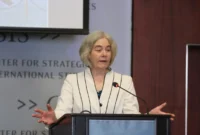
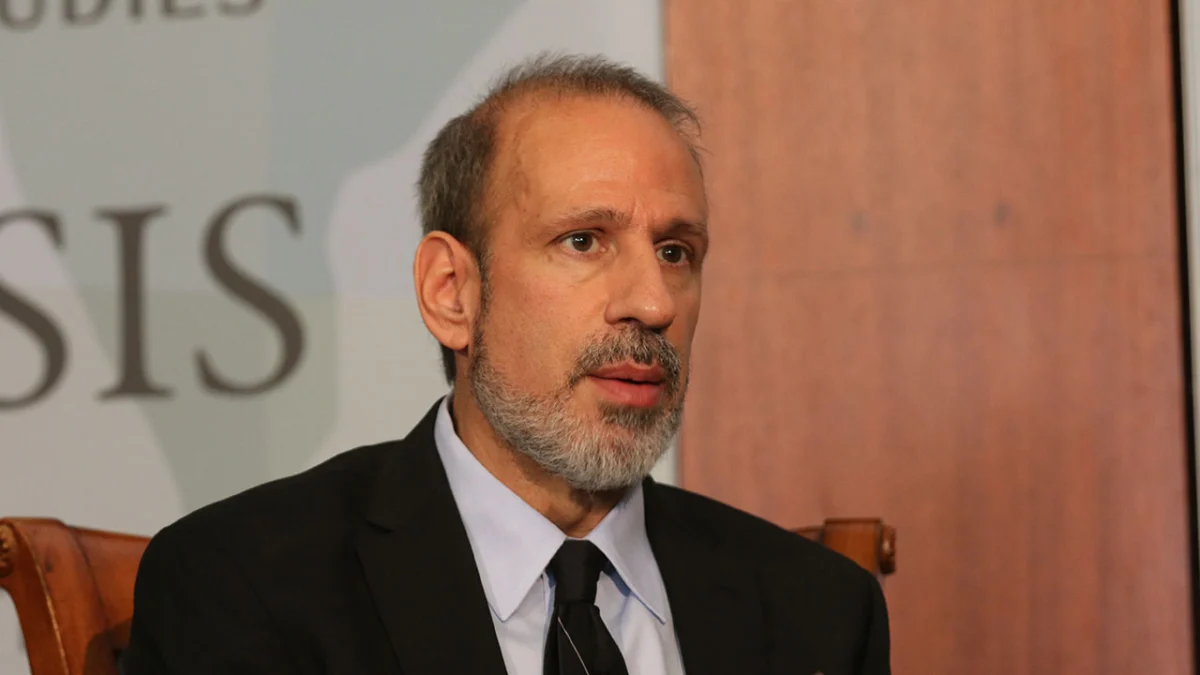
The Center for Strategic and International Studies (CSIS) International Security Program hosted a high-profile, half-day Defense360 conference bringing together top Pentagon officials, defense economists, and national security experts to dissect the newly released fiscal year 2017 (FY2017) defense budget request. Held in Washington, D.C., the event served as a critical platform for examining the fiscal and strategic calculus underpinning the administration’s military spending plans, providing policymakers, defense contractors, and analysts a rare window into how the Department of Defense (DoD) intends to balance readiness, modernization, and force structure under continuing legislative constraints.
With geopolitical tensions rising globally, the rollout of the defense budget is perpetually one of the most scrutinized executive branch submissions of the year. The FY2017 request arrived amid a complex security environment defined by resurgent near-peer competitors like Russia and China, ongoing counterterrorism operations in the Middle East, and the persistent shadow of the Budget Control Act (BCA) of 2011. The CSIS conference sought to untangle these competing pressures, offering a detailed breakdown of how the Pentagon calculated its priorities and how independent experts view the alignment between national strategy and available resources.
Main Facts of the FY2017 Budget Proposal and Conference Agenda
The conference opened with remarks by Dr. John Hamre, President and Chief Executive Officer of CSIS, who framed the overarching challenges facing the defense enterprise. Hamre emphasized that the intersection of flat budgets, rapidly advancing technology, and expanding global commitments has created an exceptionally tight margin for error within the Department of Defense.
Following the opening address, the morning’s primary policy discussion featured three key architects of the defense budget: Mike McCord, Under Secretary of Defense (Comptroller) and Chief Financial Officer; Dr. Jamie Morin, Director of Cost Assessment and Program Evaluation (CAPE); and Robert Scher, Assistant Secretary of Defense for Strategy, Plans, and Capabilities. Moderated by Todd Harrison, Director of Defense Budget Analysis and Senior Fellow with the CSIS International Security Program, this session focused directly on the fiscal baseline of the president’s request and the strategic rationale driving the allocation of funds across the military services.
The high-level administration panel was followed by a subsequent expert panel discussion from 10:30 a.m. to 11:30 a.m. This second tier of analysis brought in external and former government voices to critique the budget’s connectivity to long-term national security strategy. The panelists included Tina Jonas, former Under Secretary of Defense (Comptroller) and Senior Adviser at CSIS; Andrew Hunter, Director of the Defense-Industrial Initiatives Group at CSIS; Mark Cancian, Senior Adviser in the CSIS International Security Program; Shawn Brimley, Executive Vice President and Director of Studies at the Center for a New American Security (CNAS); and Roger Zakheim, Visiting Fellow at the American Enterprise Institute (AEI). Todd Harrison returned to moderate this second discussion, ensuring a continuous thread of inquiry from the administration’s official presentation to independent evaluations.
Background and Chronology of the Defense Budgetary Process
To understand the weight of the discussions at the CSIS Defense360 conference, it is essential to contextualize the timeline and legal framework governing the defense budget. The formulation of the FY2017 defense budget began nearly a year prior to its public release, originating deep within the Pentagon through the internal strategic portfolio reviews managed by the Office of the Secretary of Defense (OSD) and the military departments.
By late summer and early autumn, the military services submit their Program Objective Memorandums (POMs), outlining their spending plans for the upcoming fiscal year and the subsequent four years. These requests are filtered through CAPE, headed at the time by Dr. Jamie Morin, to ensure cost realism and alignment with the overarching Defense Strategic Guidance. Once the internal battles over top-line figures and programmatic winners and losers are resolved by the Secretary of Defense and the White House Office of Management and Budget (OMB), the budget is officially finalized for inclusion in the president’s broader federal budget request, typically submitted to Congress in February.
The FY2017 submission arrived at a precarious juncture in the post-9/11 defense era. The Bipartisan Budget Act of 2015 had provided a temporary two-year reprieve from the harshest automatic sequestration cuts mandated by the Budget Control Act for fiscal years 2016 and 2017. However, the top-line caps remained in place, preventing the DoD from pursuing the level of expansive modernization many military leaders argued was necessary to counter modern threats. Consequently, the FY2017 request was heavily scrutinized for how it chose to trade off end-strength (troop numbers) against research, development, test, and evaluation (RDT&E) funding, as well as procurement accounts for next-generation platforms.
Supporting Data and Fiscal Realities
The figures presented by Comptroller Mike McCord and CAPE Director Jamie Morin during the opening session reflected a deliberate strategy to prioritize capability over capacity. The FY2017 request typically hovered around a base budget of approximately $583 billion, split between the DoD base budget and Overseas Contingency Operations (OCO) funding.
A significant point of discussion during the conference was the reliance on OCO funding to bridge gaps in the base budget. While OCO was originally designed as an emergency, temporary funding stream to support immediate wartime operations in Iraq and Afghanistan, it has increasingly been utilized to fund enduring baseline requirements that could not fit beneath the statutory spending caps of the Budget Control Act. Analysts at the conference, particularly those from CSIS and allied think tanks, frequently highlighted this fiscal accounting mechanism as a point of structural vulnerability.
Furthermore, the data underpinning the modernization accounts revealed a heavy emphasis on preserving technological superiority. Investments in electronic warfare, cyber capabilities, long-range precision strike weapons, and the continued procurement of the F-35 Lightning II joint strike fighter commanded substantial portions of the budget. However, these high-end modernization priorities came at the expense of force size. The Army and Marine Corps, in particular, faced difficult trajectories regarding active-duty end-strength reductions, a tension that was heavily explored by the expert panel moderated by Todd Harrison.
Official Responses and Administration Justifications
During the administration panel, McCord, Morin, and Scher defended the fiscal posture of the department by emphasizing the necessity of balancing the "3 Rs"—readiness, modernization, and force structure. McCord explained that the comptroller’s office had to make agonizing choices to ensure that forces deployed today were adequately trained and equipped, even if it meant accepting calculated risks in long-term capacity.
Robert Scher articulated the strategic framework, noting that the defense strategy was pivoting away from counterinsurgency-dominated paradigms toward full-spectrum conflict deterrence against major state actors. This pivot required shifting resources toward high-end operational concepts, command and control networks, and resilient logistics chains. Dr. Jamie Morin elaborated on the analytical rigor applied by CAPE, detailing how cost estimation models were used to prevent severe cost overruns in major defense acquisition programs (MDAPs), ensuring that taxpayers received maximum value from every procurement dollar.
Independent Assessments and Expert Commentary
While the administration officials presented a coherent narrative of disciplined prioritization, the independent panel comprising Tina Jonas, Andrew Hunter, Mark Cancian, Shawn Brimley, and Roger Zakheim offered a more skeptical, multifaceted critique.
Andrew Hunter and Mark Cancian focused heavily on the health of the defense-industrial base and the disconnect between program ambitions and actual procurement velocity. Hunter noted that while the RDT&E accounts were robust, the transition from development to serial production often suffered from bureaucratic friction and budgetary instability driven by continuing resolutions (CRs).
Shawn Brimley of CNAS and Roger Zakheim of AEI brought a broader geopolitical and legislative perspective to the table. Brimley argued that while the strategy correctly identified the return of great power competition, the actual resources requested were insufficient to execute a two-theater war strategy credibly. Zakheim focused on the legislative outlook, expressing concern over Congress’s propensity to alter defense priorities through earmarks and legislative riders while failing to enact a permanent legislative fix to the Budget Control Act.
Tina Jonas, drawing on her extensive background as a former Pentagon comptroller, provided valuable context regarding the administrative burdens placed on the department. She emphasized that financial management reform and clean audit readiness remain paramount, warning that inefficiencies within the department continue to erode purchasing power that could otherwise be directed toward critical warfighting capabilities.
Broader Impact and Strategic Implications
The CSIS Defense360 conference on the FY2017 defense budget underscored a fundamental dilemma that continues to plague U.S. national security policy: the persistent mismatch between ends, ways, and means. As highlighted by the diverse array of speakers, the Department of Defense was attempting to execute a global strategy designed to deter multiple advanced adversaries simultaneously while operating under self-imposed fiscal restraints that treat defense spending as a zero-sum domestic political bargaining chip.
The discussions also served as an early warning system for trends that have since defined subsequent defense budgets. The emphasis on artificial intelligence, hypersonics, and autonomous systems discussed during the FY2017 rollout laid the groundwork for the modern technological competition defining contemporary military strategy. Furthermore, the conference’s interrogation of the OCO funding mechanism highlighted the unsustainable nature of budgetary gimmicks, ultimately driving later legislative efforts to normalize defense top-lines through bipartisan budget agreements in subsequent fiscal cycles.
In addition to the policy debates, the conference organizers leveraged the event to gather broader community feedback, directing attendees to an online survey on defense reform hosted via SurveyMonkey. This interactive component underscored CSIS’s ongoing mission to foster continuous dialogue between government practitioners, defense industry leaders, and independent analysts.
Ultimately, the half-day conference provided a comprehensive snapshot of a pivotal moment in American defense policymaking. By bringing together the officials responsible for drafting the budget and the independent experts tasked with holding them accountable, the CSIS International Security Program facilitated a transparent, rigorous examination of the choices that shape the defensive shield of the United States.